A note of acknowledgement
We would like to thank the people with bipolar disorder who shared their experiences with us, some of which are described in this report. We would also like to thank the healthcare staff who engaged with the investigation for their openness and willingness to support improvements in this area of care.
About this report
This report is intended for healthcare organisations, policymakers and the public to help improve patient safety in relation to the use of lithium as a treatment for people with bipolar disorder. For readers less familiar with this area of healthcare, medical terms are explained in section 1.
Before reading this report
This report considers the care of people with a mental health problem and has some references to self-harm and suicide. Some readers may find the contents of this report distressing. Information about how to access mental health support can be found on the NHS website.
Executive summary
Background
Bipolar disorder is a serious mental illness characterised by periods of mania (feeling highly excited, overactive or distracted) or hypomania (a noticeable change in mood or behaviour, but less severe than mania), usually associated with episodes of depression. It is highly recurrent, with periods of stable mood between episodes of illness. For some people, bipolar disorder can have a significant impact on their day-to-day life, relationships, employment and physical health. Treatment may include medication, psychological therapies and wider support from primary and secondary care services, such as GP and hospital-based mental health services.
Lithium is a mood stabiliser used in the long-term treatment of bipolar disorder and has the largest evidence base for efficacy in bipolar disorder compared to any other treatment. National guidance (National Institute for Health and Care Excellence, 2025) recognises lithium as the recommended first-line medication for the long-term pharmacological treatment of bipolar disorder. It can be highly effective for some people and can also reduce the risk of self-harm and suicide in people with bipolar disorder.
Despite this, the use of lithium has declined. The investigation sought to understand why a treatment recognised as effective and recommended in national guidance may not always be considered or offered to people who could benefit from it.
The investigation
The patient safety issue was highlighted to HSSIB by national stakeholders who were concerned that some people with diagnosed bipolar disorder were not being offered lithium as a treatment option. HSSIB corroborated this concern through academic literature, national prescribing data, patient experiences, and insights from clinicians and national organisations.
This investigation explored the factors that influence whether lithium is considered, offered and prescribed for adults with diagnosed bipolar disorder. The investigation recognises that some people with bipolar disorder may have co-occurring needs such as drugs and/or alcohol use. The investigation has not focussed specifically on people with co-occurring needs. It did not examine the diagnosis of bipolar disorder in detail, although the investigation heard that delays in diagnosis and wider issues in care for people with bipolar disorder may influence their access to effective treatment.
Findings
- Contrary to national guidance, some people with bipolar disorder are not offered lithium as the first-line long-term pharmacological treatment option. Some described trying several other medications before the option of lithium was raised with them.
- Discussions with people with bipolar disorder about lithium often focus on the medication’s risks, side effects and monitoring requirements before explaining its potential benefits, potentially biasing the patient’s decision whether to take lithium or not.
- The availability and visibility of alternative medications can influence clinicians' prescribing decisions, even where those medications may not be as effective as lithium for long-term pharmacological treatment of bipolar disorder.
- The practical requirements of lithium monitoring can affect whether clinicians feel confident about starting a patient on lithium. These requirements include arranging blood tests, reviewing results, adjusting doses and ensuring follow-up.
- Monitoring arrangements vary across primary and secondary care. Some people taking lithium described well-organised monitoring and good support, while others described having to organise their own blood tests or remind services when their monitoring was due.
- There is limited national assurance about whether lithium monitoring is being carried out in line with guidance, particularly for people whose monitoring is managed in primary care.
- Dedicated lithium clinics can provide reassurance, support and oversight to people taking lithium and clinicians. However, these clinics are no longer widely available.
HSSIB makes the following safety recommendations
Safety recommendation R/2026/103:
HSSIB recommends that the Royal College of Psychiatrists works with relevant stakeholders to publish a position statement and protocol on the use of lithium for bipolar disorder. The protocol should include the expectations in relation to monitoring, local oversight and assurance. This is to reiterate the importance of the consideration of lithium as the first line pharmacological treatment for people with bipolar disorder.
Safety recommendation R/2026/104:
HSSIB recommends that NHS England/the Department of Health and Social Care establishes national oversight and assurance processes to measure and improve the quality and safety of lithium treatment across care settings. This should include initiation and prescribing, adherence to recommended monitoring, identification of higher-risk patients, and appropriate action in response to abnormal results and changes over time. This would promote greater confidence for people with bipolar disorder and prescribing clinicians.
HSSIB makes the following safety observation
Safety observation O/2026/099:
Organisations involved in caring for patients who take lithium can improve patient safety by having clear pathways with physical health teams for timely follow-up if a person’s physical health is affected by their medication. This should include shared discussions between specialities to ensure the patient receives a consistent message of the balance of risks.
Local-level learning prompts
The following prompts are provided by HSSIB to help primary care and mental health organisations and staff identify and think about how to respond to specific patient safety concerns at the local level.
These prompts aim to help organisations improve their approach to the consideration, prescription and monitoring of lithium for people with bipolar disorder.
- How does your organisation support staff to consider and discuss lithium as a first-line option for long-term treatment for people with bipolar disorder, in line with national guidance?
- How does your organisation support staff to frame discussions about lithium so that potential benefits, risks, side effects and monitoring requirements are explained in a balanced and accessible way?
- Does your organisation offer opportunities for patients to hear from, or be signposted to, others with lived experience of using lithium where this would support informed decision making?
- How does your organisation review patients diagnosed with bipolar disorder not currently prescribed lithium as a long term pharmacological treatment?
- How does your organisation identify health inequality related barriers to receiving lithium as a pharmacological treatment for bipolar disorder, this might include communication, access and health-inequality-related barriers?
- How does your organisation support staff with systems and processes to arrange appropriate monitoring, review results, act on out-of-range results and communicate follow-up actions to patients and clinicians?
- How does your organisation work with other local services to co-ordinate care for patients using lithium?
- How does your organisation support patients and clinicians to feel confident about the infrastructure in place to support the safe management of lithium?
- Has your organisation explored whether existing local infrastructure, such as clozapine clinics, can be adapted to support safer and more consistent lithium monitoring?
- How does your organisation monitor how many patients are taking lithium and use this information to support monitoring and follow-up?
- How does your organisation enable mental health, primary care, and secondary care physical health services to work together when lithium affects, or may affect, a patient’s physical health?
- How does your organisation provide assurance that responsibility for lithium monitoring remains clear when patients move between teams, organisations, or primary and secondary care?
1. Background and context
1.1 Introduction
1.1.1 This investigation explores the factors which may influence why lithium may not be offered as a treatment option to people with bipolar disorder. This is important as lithium can be “lifechanging” for people with bipolar disorder but is being prescribed less, despite National Institute for Health and Care Excellence guidance (2025) supporting its use and its effectiveness in the long-term management of symptoms.
1.1.2 While data on lithium prescribing is limited, a discussion with a lithium manufacturer indicated a consistent annual decrease in sales of 2% to 3% over the previous 5 years within the UK (of which England accounts for approximately 85%). The decline is widely acknowledged in academic literature, with some studies indicating a reduction in the number of people with bipolar disorder in the UK being prescribed lithium from around 30% in 2001 to around 16% in 2018 (Ng et al, 2021).
1.2 Bipolar disorder
1.2.1 Bipolar disorder is a mental illness characterised by severe mood swings. About 1 in 50 adults experience it during their lives (Royal College of Psychiatrists, 2020).
1.2.2 People experience bipolar disorder in different ways. The most common types are:
- Type I where people experience depression, hypomania and mania.
- Type II where people experience hypomania and long periods of depression.
- Cyclothymia where people experience periods of depression and elevated mood for a least two years. (Bipolar UK, n.d.)
1.3 Lithium
1.3.1 As described by the NHS (2023), lithium is a type of medicine known as a mood stabiliser. It is used to treat mood disorders such as:
- mania (feeling highly excited, overactive or distracted)
- hypo-mania (similar to mania, but less severe)
- regular periods of depression, where treatment with other medicines has not worked
- bipolar disorder, where a person’s mood changes between feeling very high (mania) and very low (depression).
Lithium can also help reduce aggressive or self-harming behaviour.
1.3.2 Lithium is available as lithium carbonate (tablet form) and lithium citrate (liquid form). These two forms are not dose equivalent (meaning the same dose of each medication may not have the same effect in a person’s body). Therefore, lithium should be prescribed by brand name to avoid a person taking ineffective or toxic doses (British National Formulary, n.d.).
1.3.3 Lithium has a narrow therapeutic range, meaning there is only a small difference between a dose that is effective and a dose that may cause harm. Because of this, a person taking lithium needs to have their blood monitored regularly. Lithium levels in the body can be affected by the amount of water or salt in the body and so can be impacted by medications, fever (infection), heatwaves, caffeine use, exercise, alcohol and other lifestyle choices (Mind, 2020). Such interactions are important considerations for whether lithium would be a suitable option for a person with bipolar disorder.
1.3.4 If a person has not previously been treated with lithium it should be initiated by a psychiatrist in a secondary care mental health team (National Institute for Health and Care Excellence, 2025). Thereafter, lithium can be prescribed and monitored in primary care (that is, by a GP) under a shared care agreement. This sharing of responsibility should only take place after at least 4 weeks of treatment and once the dose has been optimised (NHS England, 2022). Studies have found that the majority of people with bipolar disorder who are taking lithium have their lithium prescribed and monitored in primary care (Schliffer, H et al, 2026).
1.3.5 When lithium is effective it is transformative and can enable some people with bipolar disorder to maintain positive work, social and family lives as well as improving cognitive functioning.
1.3.6 Patients with bipolar disorder account for 8% of people with a primary mental health diagnosis who die by suicide, with an average of 136 such deaths each year (National Confidential Inquiry into Suicide and Safety in Mental Health, 2025). Studies suggest that up to 50% of people with the condition attempt suicide at least once, and 15% to 20% die by suicide. Lithium is the only medication that has been proven to reduce suicidal behaviour (Lewitzka et al, 2015) and therefore a reduction in its use may have a significant impact on the number of deaths in this patient group.
1.3.7 People taking lithium can experience side effects, including some which can affect kidney and thyroid function. Lithium also carries a risk of toxicity, which can be serious and in severe cases can cause death (British National Formulary, n.d.). Lithium toxicity can occur for a number of reasons, including medication interactions, dehydration and having a low sodium diet.
Lithium monitoring
1.3.8 People who take lithium need to have regular blood tests to ensure their lithium levels remain within the therapeutic range. The British National Formulary (n.d.) states that blood samples for lithium levels should be taken 12 hours post-dose’ which often means blood should be taken in the morning, following an evening dose.
1.3.9 Lithium level blood tests are carried out frequently (often weekly or fortnightly) when a patient starts on lithium. Once their levels are stable, a person will have a blood test typically every 3 months for the first year and every 6 months thereafter. Additional monitoring is required for calcium levels and to check kidney and thyroid function; these blood tests are commonly undertaken at least every 6 months (National Institute for Health and Care Excellence, 2025).
1.3.10 Point of care testing (testing which takes place outside of a laboratory) for lithium monitoring is currently being trialled; the study was still ongoing at the time of this investigation (King’s College London, 2025).
1.3.11 In addition to regular blood tests, National Institute for Health and Care Excellence guidance states that a comprehensive health check focusing on physical health problems should be undertaken at least annually, including:
- ‘weight or BMI [body mass index], diet, nutritional status and level of physical activity
- cardiovascular status, including pulse and blood pressure
- metabolic status, including fasting blood glucose or glycosylated haemoglobin (HbA1c), and blood lipid profile
- liver function
- renal and thyroid function, and calcium levels, for people taking long-term lithium.’ (National Institute for Health and Care Excellence, 2025)
2. The patient safety risk
This section describes the concerns shared with the investigation about the potential risks to patient safety posed by the decline in the use of lithium for people with bipolar disorder. It includes extracts from a survey designed for this investigation, which was completed by 645 people with bipolar disorder.
2.1 Lithium has been recommended as a first-line treatment for the long-term pharmacological treatment of bipolar disorder since 2014 (National Institute for Health and Care Excellence, 2025) and was consistently described by stakeholders as the “gold standard” medication for long-term treatment of bipolar disorder. Lithium is not effective for everyone with bipolar disorder; stakeholders told the investigation that about a third of people “live well” on lithium, another third respond well to it, while it is not effective for the other third. This is supported by literature (Ulrichsen et al, 2023).
2.2 Lithium use is in decline for bipolar disorder (see 1.1.2). There was variable recognition among clinicians and national stakeholders of this decline. Many had not recognised a decline, although they acknowledged they had not seen an increase either. Clinicians’ views on the prevalence of lithium use also varied across care settings including pharmacy teams, primary care, and inpatient and community services within secondary mental health care.
2.3 Stakeholders said that the most significant impact caused by the decline in lithium use was that patients were not benefiting from the proven reduction in instances of self-harm and suicidal ideation (Lewitzka et al, 2015).
2.4 The annual report of the National Confidential Inquiry into Suicide and Safety in Mental Health (2025) found that:
‘Many patients with bipolar disorder who die by suicide appear not to be receiving optimal treatment. This should be provided in line with NICE [National Institute for Health and Care Excellence] guidance, including lithium treatment and consideration of psychological interventions, as a key suicide prevention measure.’
2.5 As well as a reduction in suicidal ideation, the investigation was told by national stakeholders, clinicians and people with bipolar disorder that the decline in the use of lithium is leading to other patient harm. This harm was articulated in terms of people not receiving the benefits of the medication, which was consistently described as the “best” mood stabiliser. People with bipolar disorder told the investigation that they may experience years of living with a poor mental state and admissions to hospital, which might have been reduced or eradicated if they had been prescribed lithium earlier. Reflecting this, comments by people with bipolar disorder included that since starting lithium they had ‘not had a hospital admission in 20 years’ and that it had ‘literally saved my life’. Studies have also suggested that population level outcomes of bipolar disorder could be improved by increasing the number of patients using lithium (Sköld M et al, 2021).
2.6 A senior leader in NHS England told the investigation any investigation to explore the decline in lithium use “would be indicated, important and add to efforts to redress an issue that leads to loss of life, increased hospitalisations and disability”.
3. Analysis and findings
From evidence gathered through interviews, site visits, survey feedback and literature, the investigation identified two main areas which impacted on the use of lithium. The findings are presented within these themes:
- consideration of lithium as a treatment option
- lithium monitoring.
3.1 Consideration of lithium as a treatment option
3.1.1 Clinicians' and patients' decisions about whether to consider lithium were shaped by perceptions of risk and benefit, the availability and visibility of alternative treatments, and the practical realities of care delivery. These included monitoring challenges, the side effects of lithium, concerns from clinicians and people with bipolar disorder, alternative medications being available, patient choice, and the safety of prescribing lithium for certain groups of patients with bipolar disorder.
3.1.2 Together, these factors made the decision making process associated with lithium prescribing more complex and contributed to variation in how lithium was considered in practice, despite its recognised effectiveness.
Age of medication
3.1.3 Lithium as a treatment for bipolar disorder was first introduced in the mid-19th century and then reintroduced to psychiatry in 1949 (Shorter, 2009). The investigation often heard lithium being referred to as an ‘older’ medication, which brought mixed views, primarily among people with bipolar disorder. For some, the fact it had been used for a long time provided assurance it was a well-established and safer medication. One person who took lithium stated in their survey response: ‘It reassured me to know that this is a proven and tested medication and one of the first and most effective medications in treating mental health conditions.’
3.1.4 For other people with bipolar disorder, the fact that lithium had been used for a long time was seen as a negative, with the assumption there might be newer, better medications available. One person with bipolar disorder wrote in their survey response: ‘I heard it was the gold standard treatment but I was nervous about it being old/outdated and potentially toxic.’ Another said: ‘I was worried it was an old fashioned drug with lots of dangerous side effects.’
3.1.5 The investigation noted a perception among some clinicians that there was limited new research or evidence highlighting lithium’s effectiveness at treating bipolar disorder. One study refers to lithium’s lack of ‘21st-century sheen’ impacting its use (Shivakumar et al, 2026). As many of the alternative medications are newer, there was said to be a more recent evidence base to support their use and clinicians told the investigation this could influence both patients’ and clinicians’ in considering a medication other than lithium.
3.1.6 However, a study by Kessing et al (2018) looked at real-world use of lithium for bipolar disorder compared with other mood stabilisers. It found that people taking lithium alone were less likely to relapse than those taking other commonly used medications such as valproate, lamotrigine, olanzapine or quetiapine. Overall, the study suggested that lithium on its own remains more effective than these alternatives for preventing future episodes.
3.1.7 Newer medications have benefited from more recent promotion and visibility, including through pharmaceutical marketing, which may contribute to greater familiarity and confidence among clinicians and people with bipolar disorder. In contrast, there is limited, if any, comparable promotion of lithium, which may influence its visibility as a treatment option within clinical practice.
Familiarity with lithium
3.1.8 During the investigation, national stakeholders identified that education for clinicians around the use of lithium might be a factor contributing to its decline. They also said that with its decline in use, there was potentially reduced exposure for resident doctors to learn about it in practice. This was not supported by evidence gathered during the investigation’s site visits and interviews. Clinicians described that the use of lithium consistently featured in education programmes, with examples being provided of recent medical examinations undertaken by resident doctors where questions on lithium featured often. This was consistently reported by the resident doctors who were interviewed as well as those involved in curriculum setting.
3.1.9 Examples were also provided by resident doctors of lithium being used in practice and they reported feeling confident in prescribing lithium, recognising many of the benefits of the medication for people with bipolar disorder. Instead, the investigation heard that other factors impacted on clinicians’ decision making when considering lithium (see below).
How people with bipolar disorder may perceive lithium
3.1.10 Survey responses showed that some people with bipolar disorder were unaware of lithium therapy prior to it being offered as a treatment, while others had pre-existing positive or negative perceptions of the medication. One person wrote that they had ‘heard from forums and doctors [that] lithium was the best drug to help stabilise bipolar’, while another stated: ‘[I had] heard good things about how effective it can be and the psychiatrist enforced it and talked me through it.’ By contrast, several people described their negative perceptions. One person said: ‘I thought it was a really serious drug that was very risky to take. The fact that I needed to take regular blood tests backed up that it was quite dangerous.’ Another said: ‘I heard concerns about the potentially serious side effects.’
3.1.11 Lithium was described by some as a “famous medication”, which people were aware of outside of clinical settings as it was sometimes featured in TV, film or music. Stakeholders highlighted to the investigation that lithium was often portrayed negatively in the media, with people taking this medication being depicted as unstable and a risk to others. Some stakeholders thought these portrayals influenced how patients who may be offered lithium perceive it. The investigation’s engagement with people with bipolar disorder and clinicians showed no clear link between media depictions and a reluctance to take lithium.
3.1.12 People with a parent or full sibling with bipolar disorder are five times more likely to develop the disorder (Clarity Informatics, 2026). The investigation heard that some people associated the manic or depressive episodes they saw in their family member not just with bipolar disorder but with lithium. This association could create a fear around this medication, as it was seen as the cause of, rather than treatment for, these episodes.
3.1.13 Some people with bipolar disorder also spoke of concerns about how long they needed to take lithium to understand whether it was going to work well for them, with some stating they had been told 5 years. Lithium is known as a longer-term medication which can take weeks or months to be effective (NHS, 2023). These sorts of timeframes reinforced the perception of lithium as a “serious medication”, and also impacted on people’s willingness to take it.
3.1.14 The investigation heard from patients and clinicians that the way in which lithium was presented as a treatment option had a significant impact on whether people were willing to try it. They described that because of the monitoring and lifestyle considerations surrounding lithium, as well as the long-term nature of the medication, it was important for people to be on board and invested in this treatment. It was described how the risks, monitoring and potential side effects of lithium were often the first things discussed, rather than how effective the medication could be, and this approach could put people off. Research has shown that how healthcare professionals' communicate can affect patients' participation in treatment decisions (Land, Parry and Seymour, 2017).
3.1.15 The investigation engaged with an academic working in patient experience and health equity. They shared reflections on ways they had heard lithium described in discussions within some Black communities. These insights indicated that before any engagement with healthcare services relating to lithium, there were perceptions that lithium was a ‘strong’ medication and ‘not something you start with’. From its own engagement with patients, the investigation noted that these perceptions were held by many other groups too.
While these perceptions did not represent how discussions around the medication were framed by clinicians, they shaped expectations which clinicians may need to incorporate into balanced discussions with people about the benefits of the medication, as well as the risks. These perceptions made the careful framing of discussions even more important, especially for groups who may experience barriers to engaging with mental health services (Health Equity Evidence Centre, 2025). Studies have shown that in addition to framing, a good relationship between the clinician and patient is important to the management of long term conditions (Hsieh, W.L. et al, 2022). Such relationships enable discussions about fears and expectations with the patient feeling safe to raise these and the clinician responding to these.
Healthcare setting
3.1.16 Clinicians told the investigation that the timing and setting in which lithium is prescribed to someone are also important considerations. Some clinicians described how people were often very unwell when they assessed them, and this could make it more challenging to have a conversation about lithium. This is because a person needs to be fully counselled on the risks and benefits to make an informed decision regarding their treatment. Often, antipsychotic medications can be needed to help manage a person’s manic and hypomanic episodes (when someone is likely to be experiencing severe symptoms such as extreme risk-taking behaviours, hallucinations or delusions) (Mind, 2022). Use of antipsychotic medications during acute stabilisation is recommended in National Institute for Health and Care Excellence guidance (2025).
3.1.17 Once a person with bipolar disorder is stable, lithium may be considered as a long-term medication to manage their condition. Some clinicians described that if an alternative medication to lithium has worked to help stabilise someone’s mood, there can be a reluctance from the clinician and the person with bipolar disorder to change to lithium.
3.1.18 The investigation heard from clinicians who worked in a range of mental health care settings, including inpatient settings and the community. Clinicians working in an inpatient setting reported having more time to spend with someone to counsel them on lithium, and having multiple opportunities during the person’s hospital stay to revisit the conversation. By contrast, clinicians working in the community would often see a person for a small amount of time. They did not always have the opportunity to discuss things fully or have multiple conversations at different times, when the person with bipolar disorder may be feeling more able to engage in the discussion. The care setting also influenced clinicians’ feelings towards monitoring arrangements; this is explored in section 3.2.
3.1.19 Some clinicians also reflected that the main focus of mental health care was on management of the acute presentation (that is, a person’s immediate symptoms) rather than long-term management and relapse prevention. This has also been recognised more widely and there are efforts to bring this into balance (HM Government, 2026). Clinicians said this focus on crisis management had occurred due to pressures on the healthcare system, but greater focus on long-term management would create significant benefits to patients and to the wider NHS.
Individual characteristics
3.1.20 One clinician described lithium as the “best to use, if safe to use, but sometimes it isn’t”. People’s individual characteristics were described as a factor in clinicians’ decision making. Some clinicians highlighted that lithium may not be suitable for older people as they may already have deteriorating kidney function, which could be made worse by lithium. Other clinicians highlighted that the specific risks and benefits of Lithium in the context of living with reduced kidney function, need to be considered on a person by person basis, and not determined by age. The potential effects of lithium for mother and baby during pregnancy may also be a consideration when clinicians are considering treatment for female patients who could become pregnant. Where someone lives may also contribute to decision making; clinicians and people with bipolar described that for a person living in a particularly rural area, the necessary physical health monitoring could be more challenging due to limited access to blood tests.
3.1.21 One example was provided by a clinician who worked within a team supporting adults with a lower than average intelligence quotient (IQ) level. People with a lower than average IQ level may have challenges with memory and verbal comprehension (Very Well Mind, 2026). The investigation heard that this created possible complexities associated with prescribing lithium to people with bipolar disorder in this group. The clinician described that they would “really worry” about the safety of prescribing lithium, and in particular people’s ability to comply with monitoring requirements. Examples were given of information being provided in easy-read formats, though clinicians described still not feeling “confident” that all people in this cohort could manage such rigid monitoring requirements without appropriate support.
Pharmacological treatment decisions
3.1.22 Despite the effectiveness of lithium for long-term treatment of bipolar disorder, it was not consistently being put forward as a potential treatment option by clinicians. People with bipolar disorder and bipolar disorder support organisations described “cycling through so many medications” before lithium was offered. People with bipolar disorder, academics and clinicians described lithium as being seen by some as a “last resort” as opposed to a “first-line” medication.
3.1.23 Reflecting this, one person with bipolar described only knowing about lithium and its potential benefits through their work for a bipolar disorder support organisation; they had not had this medication offered and explained to them as a potential treatment option. Clinicians identified similar issues, citing examples such as seeing people’s bipolar disorder being managed with a “cocktail” of antidepressants and antipsychotic medications, rather than lithium being considered as an option. A charity told the investigation that people were not telling them ‘they won’t give me Lithium when I want it’, but rather “it is never presented as an option in the first place”. This is supported by literature which has identified a gap between the recommended evidence-based treatment (lithium) and clinical practice (Lyall et al, 2019).
3.1.24 Some national organisations raised the question of whether paternalism (when clinicians make choices for people without a person’s full input, based on the belief that the clinician knows best) was playing a role in the consideration of offering lithium, as it is a medication with a widely known risk profile in terms of both side effects and the risk of toxicity. Similarly, a charity told the investigation that, from its experience, people with bipolar disorder were more likely to be “told what they need or what is good for them”, than people with other mental health conditions.
3.1.25 Antipsychotic medications, particularly second-generation antipsychotics (introduced from the 1970s onwards) such as olanzapine, quetiapine and aripiprazole were mentioned by clinicians as alternative medications that might be considered before lithium for long term relapse prevention. These medications can have some impact on stabilising a patient’s mood, but are not primarily intended as a long term mood stabilising medication in the way that lithium is. Several people with bipolar disorder told the investigation that they had tried several antipsychotic medications before taking lithium and none had been as effective, though one person described they had ‘managed well on a combination of anticonvulsants and antipsychotics’.
3.1.26 Clinicians said that second-generation antipsychotics were considered instead of lithium because they were “just as good”, did not cause toxicity, and carried fewer perceived risks. One consultant told the investigation: “… if there had not been an alternative that did exactly the same job then it [lithium] would be prescribed more.” However, this thinking was not in line with either national guidance or studies on the effectiveness of lithium.
3.1.27 While all medications carry risk, the investigation found that lithium was considered more ‘risky’ than other medications a clinician may consider. Reflecting this, a clinician told the investigation that “it does feel different initiating lithium, compared with other medications”. The investigation heard from clinicians that “cultural attitudes” of peers could affect the decision to prescribe lithium. Some clinicians described colleagues giving a “sharp intake of breath”, or asking why they would consider such a risky medication, when lithium was mentioned. A resident doctor told the investigation: “… in training it feels like other meds as a priority and then lithium after, even though that shouldn't be the case.” It was also highlighted that the influence of a consultant’s view of a particular medication on resident doctors could be significant and impact on their onward use of that medication.
3.1.28 The investigation heard that many clinicians who had concerns about prescribing lithium had negative experiences of prescribing this medication. These included incidents where people under their care had become physically unwell or died while using lithium.
3.1.29 While negative experiences had understandably influenced some clinicians’ willingness to consider lithium, the investigation also heard many positive accounts. Some clinicians reported some people had been “living well” on lithium for 30 or 40 years; this was echoed by some people with bipolar disorder.
3.1.30 Some clinicians reflected that they did unconsciously emphasise the risks and monitoring requirements over the benefits of lithium, and that this was not necessarily something they did with other medications which could be prescribed for bipolar disorder. For example, quetiapine (which is sometimes prescribed for bipolar disorder) has known increased rates of cardiovascular disease (Fiorillo et al, 2023), but clinicians said these risks were not emphasised to patients as clearly as those associated with lithium. Some clinicians felt this was due to lithium toxicity being directly related to the medication, and in some cases clinicians had witnessed these impacts. By contrast, the effect of medications on cardiovascular health were felt to be less direct and also more difficult to attribute directly to the medication alone. Reflecting this, one person with bipolar disorder told the investigation of serious side effects that they had experienced while taking quetiapine, and how they felt that these side effects were dismissed by the GP as being linked to their medication.
Lithium management
3.1.31 NHS England (2022) published ‘risk minimisation resources’ to ‘support the safe use of high-risk medications’, including some specific to lithium. An alert card, patient information book and monitoring book (also known as a lithium book or purple book) were all developed, to be held by people taking lithium. The monitoring book was designed with spaces for the person to fill in their blood test results, so that a dispensing pharmacy could be reassured that they were having their required blood tests, and that their levels were within the expected range. It was also designed for ‘the patient to keep a record of their serum plasma lithium levels [the amount of lithium in their blood]’ to enable self-management and co-ownership of their healthcare.
3.1.32 The investigation heard that people with bipolar disorder were commonly provided with a lithium monitoring book when they started the medication. However, these resources were not well used after this point, with many people not presenting them when collecting prescriptions. The books were often lost, incomplete, or not used at all.
3.1.33 People with bipolar disorder and clinicians described the monitoring books as old fashioned and not in keeping with modern processes, as they are paper-based resources. The investigation was told about apps that had been developed as an alternative way for patients to hold a record of their lithium levels. Knowledge of such apps and their availability on all platforms was variable. It was also highlighted that a move towards digital solutions can exacerbate health inequalities through digital exclusion.
3.1.34 In addition, the investigation noted that the Specialist Pharmacy Service (2026) guidance on supporting lithium safety across the healthcare system, states that healthcare professionals should ‘Ensure there are defined responsibilities for… Compiling and managing a lithium patient register, where required’. The investigation was unable to identify any primary or secondary healthcare provider that had a comprehensive lithium patient register. The investigation was aware of some providers that had previously held such registers, but there was a lack of clarity about whether these were still operating. Others conducted records searches for patients on lithium, but were not confident in the results delivered. National stakeholders told the investigation that maintaining lithium registers had been problematic for some providers due to information governance concerns and this could depend on the technology in use.
3.1.35 The investigation found that paper-based resources and inconsistent requirements were leading to significant variability in approaches to the management of lithium. This, coupled with the culture and perceptions around lithium (explored in 3.1.27 and 3.1.28), was impacting on its use and demonstrated the need for renewed consideration and a more standardised approach. The investigation also noted that local audits undertaken in secondary care (see 3.2.19) showed that there were gaps in monitoring adherence and consistent local assurance of this may be beneficial.
3.1.36 The Royal College of Psychiatrists told the investigation that it had identified some other medications where there was “under prescribing” and were considering the publication of position statements in relation to these. This was to highlight the College’s support for the prescribing of these medications and to try and combat the myths surrounding them. During the investigation, a position statement along with a protocol for the use of other medications were issued (Royal College of Psychiatrists, 2026). The investigation discussed with the Royal College of Psychiatrists the possibility of developing similar publications on lithium, to try and improve the understanding and prescribing of lithium, and improve consistency in the approach to managing the care of patients who take lithium.
HSSIB makes the following safety recommendation
Safety recommendation R/2026/103:
HSSIB recommends that the Royal College of Psychiatrists works with relevant stakeholders to publish a position statement and protocol on the use of lithium for bipolar disorder. The protocol should include the expectations in relation to monitoring, local oversight and assurance. This is to reiterate the importance of the consideration of lithium as the first line pharmacological treatment for people with bipolar disorder.
3.2 Lithium monitoring
3.2.1 The investigation was told by national stakeholders, academics, clinicians and people with bipolar disorder that the monitoring requirements for lithium (see 1.3.8 to 1.3.11) were a significant factor in the decision to initiate it (start a person with bipolar disorder on it). Various aspects of monitoring were described as leading to challenges around initiation. These are explored below.
Figure 1 Initiating and monitoring lithium: summary of requirements
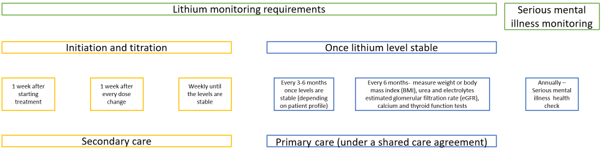
This is intended to represent the general approach to lithium monitoring and does not take into account specific patient factors that may influence individual monitoring requirements
Initiation
3.2.2 The investigation was told that in all trusts across the country, when lithium is first prescribed, the responsibility for monitoring is held by the secondary care provider (mental health trust) where lithium is initiated by the clinician. During this time, monitoring often takes place weekly and includes blood tests to check the person’s lithium levels, and their response to the lithium, often undertaken at the hospital. The medication is titrated (the dose is gradually adjusted) to a level which works for the person to help manage their bipolar disorder.
3.2.3 Prescribing decisions were influenced depending by whether a person with bipolar disorder was receiving care as an inpatient or in the community. Clinicians reported greater confidence in initiating lithium in inpatient settings, where monitoring could be closely managed. By contrast, community-based patients were required to attend blood tests, collect prescriptions, and adhere to a demanding monitoring schedule; this was seen as adding complexity to treatment initiation.
Monitoring in secondary care
3.2.4 Healthcare professionals told the investigation that making sure effective lithium monitoring was happening often felt like a huge individual responsibility on the prescribing clinician, and this created a barrier to prescribing it. One psychiatrist said that the way the monitoring system was set up meant there was a “lot of extra work for follow-up”. They described how this would often involve the clinician setting reminders in their diary to follow up with a patient; this led to concerns about resilience – for example, who would pick this up if they were off work. This was a shared concern among healthcare professionals.
3.2.5 Many clinicians, national organisations and academics noted a contrast between the required approach to lithium and the prescribing and monitoring of clozapine, an antipsychotic medication. Clozapine has an established infrastructure which requires patient monitoring to be managed in a specific clinic, and felt more like “team work” rather than being a reliant on an individual clinician. This, together with increasing pressures and demands on NHS services, and a lack of confidence in the wider system infrastructure to safely support people to use lithium, was described as a significant factor in clinicians’ decision making.
3.2.6 The investigation was also told about practical challenges in arranging lithium monitoring in secondary care. The availability of appointments for phlebotomy clinics (where blood is taken) was sometimes problematic, especially when blood tests were needed at specific times. Another reported barrier was clinicians’ access to the electronic systems through which blood tests were requested. One trust the investigation spoke with had conducted an audit of lithium blood tests and found that 50% were being completed on time. This was described to the investigation as a “system infrastructure issue” and not an issue relating to people not attending clinics.
3.2.7 The investigation heard from resident doctors that they sometimes had more time than their consultant colleagues to arrange and facilitate monitoring requirements. They acknowledged that for a consultant psychiatrist with a heavier workload, this could feel quite different, stating: “I imagine as a busy consultant, you wouldn’t necessarily have time to do all of this.” Clinicians reported that balancing the efficacy of lithium for patients with the practical challenges associated with prescribing it could be difficult.
Monitoring in primary care
3.2.8 When a person with bipolar disorder taking lithium was deemed to be stable, the investigation heard that monitoring arrangements often transferred to their GP through a shared care agreement. Such agreements enable primary care to prescribe and monitor medications started in secondary care, with ongoing specialist input available as required (British Medical Association, 2025). A National shared Care Protocol was developed by NHS England (2022) for ‘lithium patients within adult services’ which sets out the respective responsibilities of secondary care, primary care and patients and/or carers. The investigation learned that when people were prescribed lithium, this shared care protocol, or a locally adapted version of it, was commonly used to specify the roles and responsibilities of clinicians involved in their care. These arrangements enabled the patient to have ongoing access to specialist advice from secondary care while the GP prescribed and monitored their lithium.
3.2.9 People the investigation engaged with who were being prescribed lithium by their GP were commonly unaware that there remained a link between primary and secondary care; it was their perception that they had been “discharged” into the care of their GP. This carried with it the expectation that they would have to be referred back to secondary care if they became unwell. Some people, including some who were not currently taking lithium but were contemplating it, were concerned that if their mental health deteriorated they would need to be re-referred to secondary mental health services and this may take time. This affected their willingness to consider lithium as a treatment option. It also called into question the understanding of the patient’s role in shared care agreements; these agreements are designed to be a ‘shared care and decision making between the patient, specialist service and primary care prescriber in relation to medicines use’ (NHS England, n.d.).
3.2.10 Where shared care protocols had been agreed and monitoring was being carried out by primary care, the investigation heard about variation across the country in how this was managed. Some GP practices had specialist roles for medications deemed to be more high risk, including lithium, and these clinicians would arrange the monitoring schedule. In other practices, some people taking lithium described being “left to it” and how they had to book blood tests themselves when they were needed. The investigation was also told by mental health professionals that pressures in primary care had led to a reluctance to adopt shared care agreements in some regions.
3.2.11 In the investigation’s survey, people with bipolar disorder were asked what could have been improved about how lithium was discussed, started, monitored or reviewed. More than 100 people gave answers relating to better monitoring, better continuity of care and better communication between services.
3.2.12 Stakeholders, clinicians and people with bipolar disorder told the investigation that some GPs did not want to be responsible for monitoring patients who were taking lithium. A person with bipolar disorder told the investigation: ‘It [lithium] was started by a psychiatrist but when I was discharged to the GP, she admitted medication for bipolar disorder was a specialist area and outside her expertise.’ The person went onto say it was then a challenge to access a psychiatrist to monitor their care and review them through the NHS.
3.2.13 Secondary care clinicians described having little confidence that monitoring would be done as needed within primary care, creating concern about prescribing lithium in the first place. The investigation heard that “the state of primary care affects lithium prescribing”, specifically the processes in place and capacity of primary care to deliver the monitoring requirements. The investigation was told by mental health professionals that even when monitoring was done there was not always confidence from secondary care clinicians that an abnormal result would be acted on.
3.2.14 The investigation heard of significant variability in the processes in place to support lithium monitoring in primary care. Some practices had software which invited patients in when they were due for a blood test and enabled the patient to book a test. The system also notified the staff member taking the blood of the reason for the patient’s test. Other practices appeared to have limited or no systems in place to ensure monitoring took place. Reflecting this, one patient described needing to be very organised because they did not receive any reminders about blood tests from their GP and had to remind their GP practice when their blood test was due. Another patient said: ‘… the GP practice lost my blood test and removed lithium from my repeat prescription, thinking I hadn’t had a blood test.’
3.2.15 The investigation also heard about variability in the adherence to other aspects of the monitoring requirements set out in national guidance. For example, a patient who was in their 70s and had been taking lithium for decades described needing to insist on 3-monthly blood tests, as their GP surgery was only offering them every 6 months. This variability created challenges for patients, and the lack of mandatory infrastructure was consistently highlighted to the investigation as undermining safety and discouraging prescribing of lithium.
3.2.16 The investigation’s survey explored monitoring arrangements with patients who had been prescribed lithium at some point, or who were still taking it. For 60.2% of respondents, monitoring took place at their GP practice. Of these, 61.2% felt it was very easy or easy to arrange and attend monitoring appointments; 13.2% felt it was difficult or very difficult.
3.2.17 Other clinicians described shared care protocols working well in their local area and gave positive examples. Some clinicians and primary care staff felt the shared care protocols were supportive for patients because they enabled them to go to their local GP for monitoring rather than a hospital. One patient described having regular reviews through their GP practice, and another said: ‘I am happy with how lithium has been prescribed, monitored and reviewed.’
Assurance
3.2.18 Since 2008, the Prescribing Observatory for Mental Health (POMH) been undertaking nationwide audits on plasma lithium level monitoring, as part of a quality improvement programme that included feedback of benchmarked data on local performance against evidence-based clinical standards and the introduction of the lithium monitoring book (see 3.1.32).
3.2.19 The audits undertaken showed a consistently high level of compliance with the audit requirements (Paton, C et al., 2023). This work was focussed on secondary care mental health services and the investigation noted that while most providers engage with POMH, there was not a mandatory requirement to respond to the audit.
3.2.20 The investigation identified local audits which highlighted monitoring gaps in secondary care (Bridgewater and Kumar, 2023; Hyland et al, 2024; Nafiu et al, 2025). While clinicians clearly stated the need to ensure monitoring of patients on lithium for safety reasons, some also highlighted that the lack of required assurance meant that there was less emphasis on this compared to other medications. For example, one clinician highlighted that due to the regulatory requirements surrounding clozapine, monitoring “always has to happen on time”.
3.2.21 The POMH audit looks at secondary care prescribing; however, the ‘majority of lithium is prescribed in primary care’ (Bennett Institute for Applied Data Science, 2025). The investigation identified no regular audit of lithium monitoring in primary care. The Community Pharmacy Quality Scheme high-risk medicines audit report for 2019/20 did include lithium monitoring and found that ‘95% of patients reported having had their lithium levels monitored as per NICE [National Institute for Health and Care Excellence] guidelines’ (NHS England, 2023). This audit has not been repeated and so the current effectiveness of monitoring in primary care is unknown.
3.2.22 The lack of reliable data means that the negative perceptions around the monitoring of lithium, especially related to primary care’s ability to safety monitor patients who are taking lithium, cannot easily be understood. Increased consistency and confidence in the ability to accurately monitor patients who take lithium may help to enable increased confidence in initiating it.
HSSIB makes the following safety recommendation
Safety recommendation R/2026/104:
HSSIB recommends that NHS England/the Department of Health and Social Care establishes national oversight and assurance processes to measure and improve the quality and safety of lithium treatment across care settings. This should include initiation and prescribing, adherence to recommended monitoring, identification of higher-risk patients, and appropriate action in response to abnormal results and changes over time. This would promote greater confidence for people with bipolar disorder and prescribing clinicians.
Multidisciplinary team (MDT) working
3.2.23 As lithium can affect kidney, thyroid and parathyroid function over time, some patients face decisions about whether to change treatment if they experience these effects. Some choose to continue lithium because of the benefits to their mental health, despite the physical health risks. This demonstrates how life changing the medication can be. One clinician described a patient who had “end stage kidney failure but had lived a good life on lithium”. The investigation also heard that some patients who stopped lithium because of declining kidney function experienced deterioration in their mental and overall health, leading some to restart lithium.
3.2.24 The investigation heard that there was variability in how well mental health and physical health services worked together when a patient on lithium had deteriorating physical health. Some services reported links and communication with teams such as renal physicians (kidney specialists), and good MDT working to enable holistic management of a patient’s physical and mental health. Others found this approach lacking, with difficult lines of communication and a lack of joined-up working to enable good overall care. Mental health teams described how collaborative working was particularly important for patients who take lithium, because there was “no national guidance on when you would tell a patient to stop taking lithium or when to reduce it”.
HSSIB makes the following safety observation
Safety observation O/2026/099:
Organisations involved in caring for patients who take lithium can improve patient safety by having clear pathways with physical health teams for timely follow-up if a person’s physical health is affected by their medication. This should include shared discussions between specialities to ensure the patient receives a consistent message of the balance of risks.
Lithium clinics
3.2.25 Clinicians and national stakeholders told the investigation that dedicated clinics for monitoring patients who were prescribed lithium used to be widespread, but now only a small number of hospital trusts across the country ran these.
3.2.26 Trust leadership teams did not have corporate memory of the reasons for lithium clinics being discontinued, with many assuming this was due to commissioning and budget cuts. National organisations told the investigation that these decisions may have been made due to a belief that people attending lithium clinics were already being well managed, were not acutely unwell, and so would be suitable to be seen in primary care. The lack of clarity about why lithium clinics had been discontinued highlighted a gap in the recording of decisions. A safety management approach, as used in other industries, would allow decisions to be recorded, explain why they had been made, what the safety impact was, and who then held that safety risk. HSSIB (2023) has previously explored the potential for a safety management system approach in healthcare.
3.2.27 A clinical advisor to a national organisation told the investigation that specialist outreach clinics did not tend to last as there was often “a resource issue, volume problem or they are the first thing to cut when finances are tight”. HSSIB (2026) has previously highlighted the risks that can arise when changes are made to care pathways without full consideration of their implications.
3.2.28 The investigation visited a nurse-led lithium clinic and spent time observing how it operated and speaking with staff working in the clinic and some service users who were there for appointments. Overall, feedback about the clinic was positive, with service users describing it as being very supportive and easy to access. They reported that the clinic was able to be flexible, for example opening earlier than normal if needed to enable people to visit before they went to work. Recognising the strict timing requirements associated with blood tests, the clinic could also offer flexibility to ensure people had their blood test at the right time. One service user the investigation spoke to had recently moved to the area and had not previously had access to a lithium clinic for monitoring; before they moved this had been done at their GP practice. The patient said that it felt a lot safer having the clinic appointments and an opportunity to talk more often about their bipolar disorder.
3.2.29 The investigation heard the clinic also provided assurance for clinicians working in secondary care services when they made decisions about prescribing lithium. One clinician said they would be more “cautious” about prescribing lithium if they worked somewhere without the same monitoring infrastructure.
3.2.30 Clinicians who did not have experience of working in a location that had a lithium clinic felt it would be a helpful and supportive initiative. They likened them to clozapine clinics, which support the safe prescribing of high-risk medication. The investigation heard that sometimes lithium clinics were operated jointly with clozapine clinics, due to the similarity in monitoring requirements.
3.2.31 The investigation also heard that heard that in the area in which the lithium clinic operated, there was good collaborative working between primary and secondary care, with GPs being happy to support patients taking lithium, as they knew they had the support of the lithium clinic for the monitoring.
3.2.32 The investigation found that the decline of dedicated lithium clinics appeared to have taken place without a consistent national understanding of their value, effectiveness or the reasons for their discontinuation. The variation identified across services suggests there may be opportunities to consider whether aspects of the lithium clinic model, including dedicated monitoring infrastructure, specialist support and clear shared-care arrangements, could help strengthen the safe and consistent use of lithium for people with bipolar disorder.
3.2.33 Any moves towards the development of lithium clinics would need to consider the moving of care from hospital to the community for people with a mental problem, as supported in the 10 year plan.
4. References
Bennett Institute for Applied Data Science (2025) Analysing lithium usage in primary and secondary care. Available at https://www.bennett.ox.ac.uk/blog/2025/09/analysing-lithium-usage-in-primary-and-secondary-care/ (Accessed 16 July 2026).
Bipolar UK (n.d.) Types of Bipolar. Available at Types of bipolar | Bipolar UK. (Accessed 21 September 2026).
Bridgewater, P. and Kumar, P. (2023) Re-audit of blood monitoring of lithium in outpatients of working age under Dudley Mental Health Services, BJPsych Open, 9(S1), S151. doi: 10.1192/bjo.2023.406
British Medical Association (2025) Principles for shared care prescribing. Available at https://www.bma.org.uk/advice-and-support/gp-practices/prescribing/prescribing-in-general-practice/principles-for-shared-care-prescribing (Accessed 16 July 2026).
British National Formulary (n.d.) Lithium carbonate. Available at https://bnf.nice.org.uk/drugs/lithium-carbonate/ (Accessed 16 July 2026).
Carayon, P., Schoofs Hundt, A., et al. (2006) Work system design for patient safety: the SEIPS model, BMJ Quality & Safety, 15, i50–8. doi: 10.1136/qshc.2005.015842
Clarity Informatics (2026) National Institute for Health and Care Excellence Clinical Knowledge Summaries Bipolar disorder: what causes it? Available at https://cks.nice.org.uk/topics/bipolar-disorder/background-information/causes/ (Accessed 16 July 2026).
Fiorillo, A., Sampogna, G., et al. (2023) Facts and myths about the use of lithium for bipolar disorder in routine clinical practice: an expert consensus paper, Annals of General Psychiatry, 22(50). doi: 10.1186/s12991-023-00481-y
Health Equity Evidence Centre (2025) Improving mental health care for Black men. Available at https://www.heec.co.uk/wp-content/uploads/2025/10/BMMH-brief.pdf (Accessed 29 July 2026).
Health Services Safety Investigations Body (2023) Safety management systems: an introduction for healthcare. Available at https://www.hssib.org.uk/patient-safety-investigations/safety-management-systems/ (Accessed 16 July 2026).
Health Services Safety Investigations Body (2026) Patient safety across regional care pathways: learning from an HSSIB investigation pilot. Available at https://www.hssib.org.uk/patient-safety-investigations/patient-safety-across-regional-care-pathways-learning-from-an-hssib-investigation-pilot/learning-report/ (Accessed 16 July 2026).
HM Government (2026) Government to transform mental health care with new strategy. Available at https://www.gov.uk/government/news/government-to-transform-mental-health-care-with-new-strategy (Accessed 16 July 2026).
Hsieh, W. L., Yeh, S. T., Liu, W. I., Li, I. H., Lee, S. K., & Chien, W. T. (2022). Improving Medication Adherence in Community-Dwelling Patients with Schizophrenia Through Therapeutic Alliance and Medication Attitude: A Serial Multiple Mediation Model. Patient Preference and Adherence, 16, 1017–1026. https://doi.org/10.2147/PPA.S351848 (Accessed 4 November 2026).
Hyland, D., Chinnari, G., et al. (2024) An audit of physical health and blood test monitoring in patients under the care of Mersey Care NHS Foundation Trust who are prescribed lithium, BJPsych Open, 10(S1), S273. doi: 10.1192/bjo.2024.578
Kessing, L.V., Bauer, M., et al. (2018) Effectiveness of maintenance therapy of lithium versus other mood stabilizers in monotherapy and in combinations: a systematic review of evidence from observational studies, Bipolar Disorders, 20, pp. 419–431. doi: 10.1111/bdi.12623
King’s College London (2025) Lithium point-of-care testing to improve adherence to monitoring guidelines and quality of maintenance therapy: a randomised feasibility trial. Available at https://www.kcl.ac.uk/research/lithium-point-of-care-testing-to-improve-adherence-to-monitoring-guidelines-and-quality-of-maintenance-therapy-a-randomised-feasibility-trial-lipoc (Accessed 16 July 2026).
Lewitzka, U., Severus, E., et al. (2015) The suicide prevention effect of lithium: more than 20 years of evidence – a narrative review, International Journal of Bipolar Disorders, 3(15). doi: 10.1186/s40345-015-0032-2
Lyall LM, Penades N, Smith DJ. (2019) Changes in prescribing for bipolar disorder between 2009 and 2016: national-level data linkage study in Scotland. Available at Changes in prescribing for bipolar disorder between 2009 and 2016: national-level data linkage study in Scotland - PMC (Accessed 16 July 2026).
Nafiu, A., Siddique, U., et al. (2025) Evaluation of lithium monitoring practices for patients in a community mental health team: an audit report, BJPsych Open, 11(S1), S261. doi: 10.1192/bjo.2025.10642
National Confidential Inquiry into Suicide and Safety in Mental Health (2025) Annual report: UK patient and general population data, 2012–2022. Available at https://sites.manchester.ac.uk/ncish/reports/annual-report-2025/ (Accessed 16 July 2026).
National Institute for Health and Care Excellence (2025) Bipolar disorder: assessment and management. Clinical guideline CG185. Available at https://www.nice.org.uk/guidance/cg185 (Accessed 16 July 2026).
NHS (2023) About lithium. Available at https://www.nhs.uk/medicines/lithium/about-lithium/ (Accessed 25 August 2026).
NHS England (n.d.) Shared care protocols. Available at https://www.england.nhs.uk/medicines-2/regional-medicines-optimisation-committees-advice/shared-care-protocols/ (Accessed 29 July 2026).
NHS England (2022) Lithium for patients within adult services: national shared care protocol. Available at https://view.officeapps.live.com/op/view.aspx?src=https%3A%2F%2Fwww.england.nhs.uk%2Fwp-content%2Fuploads%2F2022%2F07%2FB1621_vi_lithium-for-patients-within-adult-services.docx&wdOrigin=BROWSELINK (Accessed 16 July 2026).
NHS England (2023) Community Pharmacy Quality Scheme: 2019/20 high risk medicines audit report – lithium, methotrexate, amiodarone and phenobarbital. Available at https://www.england.nhs.uk/long-read/cpqs-19-20-high-risk-medicines-audit-report-lithium-methotrexate-amiodarone-and-phenobarbital/ (Accessed 16 July 2026).
Land V, Parry R, Seymour J. (2017) Communication practices that encourage and constrain shared decision making in health-care encounters: Systematic review of conversation analytic research. Health Expect. 2017; 20: 1228–1247. https://doi.org/10.1111/hex.12557 (Accessed 4 November 2026).
Mind (2020) Lithium and other Mood Stabilisers. Available from Lithium | Mood stabilisers | Psychiatric drugs | Mind (Accessed 21 September 2026).
Mind (2022) Bipolar disorder. Available at https://www.mind.org.uk/information-support/types-of-mental-health-problems/bipolar-disorder/bipolar-moods-and-symptoms/ (Accessed 16 July 2026).
Ng, V.W.S., Man, K.K.C., et al. (2021) Bipolar disorder prevalence and psychotropic medication utilisation in Hong Kong and the United Kingdom, Pharmacoepidemiology & Drug Safety, 30(11), pp. 1588–1600. doi: 10.1002/pds.5318
Paton C, Adroar R, Barnes TRE. (2013) Monitoring lithium therapy: the impact of a quality improvement programme in the UK. Bipolar Disorders 2013:15:865-875. Available at Monitoring lithium therapy: the impact of a quality improvement programme in the <fc>UK</fc> - Paton - 2013 - Bipolar Disorders - Wiley Online Library (Accessed 4 November 2026).
Royal College of Psychiatrists (2020) Bipolar disorder. Available at https://www.rcpsych.ac.uk/mental-health/mental-illnesses-and-mental-health-problems/bipolar-disorder (Accessed 28 July 2026).
Royal College of Psychiatrists (2026) Position statement PS01/26. Clozapine for treatment resistant schizophrenia. Available at https://www.rcpsych.ac.uk/docs/default-source/improving-care/better-mh-policy/position-statements/position-statement---ps01-26---clozapine.pdf?sfvrsn=33ccb587_19 (Accessed 16 July 2026).
Schliffer, H., Fisher, L., et al (2026) Trends and variations in Lithium usage across care settings in England between 2015-2024. Available from Trends and variations in Lithium usage across care settings in England between 2015-2024 | medRxiv. (Accessed 21 September 2026).
Shivakumar, G., Szymaniak, K., et al. (2026) Lithium: challenges of being king, The British Journal of Psychiatry, pp. 1–4. doi: 10.1192/bjp.2026.10655
Shorter, E. (2009) The history of lithium therapy, Bipolar Disorders, 11, pp. 4–9. doi: 10.1111/j.1399-5618.2009.00706.x
Sköld, M., Rolstad, S., Joas, E. et al. (2021) Regional lithium prescription rates and recurrence in bipolar disorder. Int J Bipolar Disord 9, 18 (2021). https://doi.org/10.1186/s40345-021-00223-7 (Accessed 4 November 2026).
Specialist Pharmacy Service (2024) Lithium monitoring. Available at https://www.sps.nhs.uk/monitorings/lithium-monitoring/ (Accessed 16 July 2026).
Specialist Pharmacy Service (2026) Supporting lithium safety across the system. Available at https://sps.nhs.uk/articles/supporting-lithium-safety-across-the-system/ (Accessed 22 October 2026).
Ulrichsen, A., Hampsey, E., et al. (2023) Comparing measurements of lithium treatment efficacy in people with bipolar disorder: systematic review and meta-analysis, BJPsych Open, 9(3), e98. doi: 10.1192/bjo.2023.64
Very Well Mind (2026) What is a genius IQ score? Available at https://www.verywellmind.com/what-is-a-genius-iq-score-2795585 (Accessed 16 July 2026).
5. Appendix
Investigation approach
This investigation explored the factors which influence whether lithium is considered, offered and prescribed for people with diagnosed bipolar disorder. It was carried out between November 2025 and August 2026.
The scope of the investigation spanned primary and secondary care organisations and the factors which impacted prescribing decisions, including processes, infrastructure, culture, risk profile and patient factors. The diagnosis of bipolar disorder was out of scope of this investigation.
Evidence gathering
The investigation reviewed multiple sources of evidence to help identify factors which may impact on the prescribing of lithium. These included:
- national incident reporting systems
- academic literature
- prevention of future deaths reports
- national and international publications.
The investigation engaged with six trusts (visiting three in person) and five GP practices, engaging with staff from a variety of teams and with a variety of roles, including resident doctors, specialty, associate specialist and specialist doctors, consultants, pharmacists and general practitioners.
The investigation designed a survey for patients with bipolar disorder who were taking lithium, who had previously taken lithium, or who had never taken lithium. The survey was completed by 645 patients and the responses, including some free text fields, informed the patient experience for the report. The investigation also engaged with patients during site visits, and in virtual interviews.
The investigation also engaged with a pharmaceutical company that manufactures lithium for the UK market.
Analysis of findings
The investigation approach was informed by the Systems Engineering Initiative for Patient Safety (SEIPS) framework. SEIPS provides a human factors framework for understanding the work system (that is, the external environment, organisation, internal environment, tools and technology, tasks, and people), work processes (including physical, cognitive and social/behavioural aspects), the relationship between these, and the resulting outcomes in healthcare (Carayon et al, 2006).
Stakeholder engagement and consultation
The investigation engaged with stakeholders and subject matter advisors to gather evidence during the investigation. This also enabled checking for factual accuracy and overall sense-checking. The stakeholders contributed to the development of the safety recommendations based on the evidence gathered. They are listed below.
| Provider organisations | Staff | National organisations |
|---|---|---|
| 3 integrated care boards | Medication safety officers | NHS England |
| 6 NHS mental health trusts | Senior leadership | National Institute for Health and Care Excellence |
| 5 GP practices | Resident doctors | Medicines and Healthcare products Regulatory Agency |
| Specialty, associate specialist and specialist doctors | Royal College of Psychiatrists | |
| Consultants | Prescribing Observatory for Mental Health | |
| Pharmacists | College of Mental Health Pharmacy | |
| General practitioners | Bipolar UK | |
| Nursing staff | Mind | |
| Patient Safety Commissioner | ||
| Academics working in psychiatry with a special interest in lithium | ||
| Academic working in patient experience and health equity |