About this report
HSSIB has modelled an approach to investigating patient safety events under the Patient Safety Incident Response Framework (PSIRF). This is to support NHS organisations and investigation staff to increase their learning about how to investigate under this framework and provide examples of how PSIRF tools and guidance can be used to improve investigations. This report differs from the usual HSSIB report template as it uses the PSIRF patient safety incident investigation template.
The report also contains learning relevant to healthcare organisations and staff on potential areas for safety improvement within mental healthcare, specifically adult inpatient mental health services.
Artificial intelligence (AI) tools were used during the development of this investigation to support evidence collation and analysis. These tools assisted, but did not replace, the investigation team’s professional judgement, critical analysis or decision-making.
Before reading this report
This report considers the care of a person who self-harmed while being cared for on a mental health ward and includes discussion about self-harm and suicidal behaviour. Some readers may find the contents of this report distressing. Information about how to access mental health support can be found on the NHS website.
Introduction
HSSIB engaged with a wide range of stakeholders, including clinicians and national leads, to learn more about the issues surrounding learning from patient safety events in mental health settings and to identify areas where an investigation could focus to help improve patient safety.
This investigation sets out to understand how mental health providers support safety for people at risk of self-harm in a mental health inpatient setting, while also respecting their dignity and human rights. Evidence from stakeholders suggests that greater insight into the challenges faced at an organisational level would be helpful.
To support NHS organisations and local investigation staff, HSSIB identified an opportunity to model approaches to patient safety incident investigations (PSIIs) under PSIRF. Stakeholders told HSSIB that this would help to increase local learning and provide examples of how PSIRF tools can be used to improve investigations. HSSIB has also used this opportunity to identify learning that may help to improve how PSIRF can support staff in carrying out incident investigations.
This investigation has used the PSII report template and PSIRF tools to investigate the care of someone who repeatedly self-harmed while an inpatient on a mental health ward. Findings and areas for improvement are listed for the organisation involved in this incident. However, the learning may be relevant to other organisations.
Patient safety incident investigation (PSII) report
Mental health: self-harm while under inpatient mental health care
| Incident ID number: | I-042106 (HSSIB) |
|---|---|
| Dates incidents occurred: | 22 January to 20 February 2026 |
| Report approved date: | 10 November 2026 |
| Approved by: | HSSIB |
Terms used in this report
This patient safety incident investigation involves a mental health trust that provides mental health inpatient care, mental health community services and a liaison psychiatry service to local acute trusts. To protect anonymity, it is not named. It is referred to in this report as ‘the Trust’.
The events described in the report include the patient, Lucy, being transferred to a physical health acute hospital for assessment and treatment. This is referred to as the ‘acute hospital’ throughout the report.
About patient safety incident investigations
Patient safety incident investigations (PSIIs) are undertaken to identify new opportunities for learning and improvement. PSIIs focus on improving healthcare systems; they do not look to blame individuals. Other organisations and investigation types consider issues such as criminality, culpability or cause of death. Including blame or trying to determine whether an incident was preventable within an investigation designed for learning can lead to a culture of fear, resulting in missed opportunities for improvement.
The key aim of a PSII is to provide a clear explanation of how an organisation’s systems and processes contributed to a patient safety incident. Recognising that mistakes are human, PSIIs examine ‘system factors’ such as the tools, technologies, environments, tasks and work processes involved. Findings from a PSII are then used to identify actions that will lead to improvements in the safety of the care patients receive.
PSIIs begin as soon as possible after the incident and are normally completed within 3 months. This timeframe may be extended with the agreement of those affected, including patients, families, carers and staff. HSSIB started this investigation in May 2026, and it was completed in September 2026. The draft report was shared with Lucy, her supported living accommodation manager and the staff involved in the patient safety incident for comments and feedback before being finalised.
If a PSII finds significant risks that require immediate action to improve patient safety, this action will be taken as soon as possible. Some safety actions for system improvement may not follow until later, according to a safety improvement plan that is based on the findings from several investigations or other learning responses.
An NHS organisation’s investigation team follows the duty of candour and the engaging and involving patients, families and staff after a patient safety guidance in their collaboration with those affected, to help them identify what happened and how this resulted in a patient safety incident. Investigators encourage human resources teams to follow the being fair tool in the minority of cases when staff may be referred to them.
PSIIs within NHS organisations are led by a senior lead investigator who is trained to conduct investigations for learning. The investigators follow the guidance set out in the Patient Safety Incident Response Framework and in the national patient safety incident response standards.
A note of acknowledgement
This investigation is about Lucy, who experienced an increase in the frequency and severity of self-harm, requiring admission to an acute mental health ward to support her wellbeing. We would like to thank Lucy for sharing her experiences with the investigation to explore her care during her inpatient admission.
We would also like to thank the healthcare staff who participated in the investigation and who were keen to discuss and support improvements that might help make care safer in the future for people being cared for in mental health inpatient settings.
About Lucy
Lucy wrote the following words to help readers understand more about her life, her experiences and who she is as a person. By sharing her story, Lucy hopes that others can learn from her experiences, how it feels to be detained in hospital, the importance of feeling safe and having one’s needs met.
My name is Lucy. I am 26 years old. I live in supported living accommodation. I have lived there for 3½ years. Prior to that, I was in a low secure personality disorder ward.
I didn’t have a very positive childhood. I struggled with my weight and was often bullied because of it, and my autism meant I was treated differently and people didn’t understand me.
I have found myself in and out of hospitals, which I found traumatising, although I understand why I went into hospital. At the time, I thought that they were the best place for me, but they didn't really help me with my needs.
Currently, I have been successful at losing a significant amount of weight and still have a long way to go to achieve my target weight. I am doing this for my physical health, mental health and self-esteem.
When I'm angry, I lose control and bad things happen.
When I'm happy, I’m so happy I can’t cope.
At the moment, I have been trying really hard and am having more good days than bad. I still don’t see myself having a good future. But I’m taking each day as it comes.
Executive summary
Incident summary
This report does not describe a single incident. This investigation examined the care provided to Lucy during an admission to an adult mental health ward, under the Mental Health Act, where she repeatedly self-harmed. The investigation explored what influenced the care provided to keep Lucy safe while responding to her individual needs. Lucy had complex emotional needs, a history of trauma, and identified as autistic. She needed a specialist bed, ligature-resistant clothing and ligature-resistant bedding to support her safety, comfort and dignity due to her bariatric needs. Bariatric means relating to the care of a person with a large body size and weight who may need specialist equipment, facilities or adaptations to support their care. These needs were relevant to how staff sought to understand and respond to Lucy's distress.
Lucy was admitted because of concerns about her mental health and repeated self-harm. During the admission, she repeatedly tied ligatures around her neck, reopened a longstanding abdominal wound, became distressed and, at times, became physically aggressive when staff intervened to prevent harm. These events required frequent urgent responses from ward staff and several transfers to an acute hospital.
Staff regularly reviewed and adapted Lucy’s care as risks changed. This included changes to observation levels, restrictions, communication approaches, activities, medication, wound care and therapeutic support. Some interventions reduced immediate opportunities for self-harm but also affected Lucy’s privacy, dignity, autonomy, independence and engagement with care.
Lucy’s admission required staff to manage mental health risks and physical health risks together. Her abdominal wound needed ongoing care, monitoring and treatment alongside support for distress and self-harm. Staff also had to co-ordinate care with ambulance and acute hospital services when treatment could not be provided safely on the ward.
At the end of her admission, Lucy asked to be discharged and said that inpatient care was no longer helping her. Lucy was assessed by a multidisciplinary team who agreed that she had capacity to make decisions about discharge and did not meet the criteria for further detention under the Mental Health Act. A revised risk assessment and safety plan were completed, and she was discharged to supported living accommodation with a referral to the home treatment team.
Summary of findings
The investigation found that:
- Information about Lucy’s communication preferences, sensory needs, strengths and sources of distress was spread across different healthcare records and was not always easy for staff to find. This contributed to variation in how staff understood her needs, supported her communication and responded when she became distressed.
- The busy, noisy and unpredictable ward environment could increase Lucy’s distress and made it harder for her to spend time in communal areas and take part in ward activities. Individual adaptations helped but could not fully address the impact of an environment that did not consistently meet her sensory and emotional needs.
- Familiar relationships, adapted communication and meaningful activity helped staff understand and respond to Lucy’s distress. These approaches became more difficult to maintain when staff were responding to escalating self-harm, aggression, acute hospital transfers and urgent medical care.
- Staff continually sought to balance immediate safety concerns with Lucy’s dignity, autonomy, communication, privacy and therapeutic needs. Managing these different needs was an important part of providing safe and supportive care as Lucy’s needs and risks changed.
- Observation, restrictions and physical intervention could reduce immediate opportunities for harm, but could also increase Lucy’s distress, limit ordinary aspects of daily life or affect her engagement with care.
- During periods of repeated self-harm, opportunities to reconnect with Lucy after incidents, explore what had contributed to her distress and provide relational support were not always available.
- Providing care that met Lucy’s bariatric needs while also managing self-harm risks was challenging and affected her dignity, independence, comfort and experience of care.
- Lucy’s repeated self-harm by reopening an abdominal wound required her mental and physical healthcare to be managed together. Transfers to the acute hospital enabled Lucy to receive assessment and treatment that could not be provided safely on the mental health ward and required care to be coordinated across different services.
- Staff provided care in physically and emotionally demanding conditions, including repeated exposure to self-harm, medical emergencies and aggression. Psychology-led reflective groups had previously provided opportunities for staff to share learning and recognise the impact of their work, but these had not run for several months. Difficulties releasing staff, changes to working patterns and limited capacity of psychology staff made this support hard to sustain.
- The Trust had established arrangements for organisational oversight and escalation of emerging risks, including a directorate risk forum. However, the timing of the risk forum limited its opportunity to support staff and contribute to decision making during a period of escalating and sustained risk.
- The Trust was undertaking improvement work relating to: autism, complex emotional needs, self-harm, understanding what contributed to risk and what might help reduce it (risk formulation), trauma-informed care and staff wellbeing. The investigation found a gap between the aims of this work and how consistently it could be applied in practice on the ward. Training, guidance and specialist advice were important supports, but were not sufficient on their own.
Summary of areas for improvement
The investigation identified four areas for improvement which the Trust could develop safety actions to address.
Area for improvement 1
How information about a person’s communication, sensory and complex emotional needs, strengths, preferences and sources of distress is:
- co-created with them
- brought together in an accessible form
- shared and used to support a consistent understanding of their needs
- used to identify the staff knowledge and skills needed to meet those needs.
Area for improvement 2
How patients with bariatric needs are supported to maintain their dignity, independence, and safety through timely access to appropriate equipment, clothing and care while on mental health inpatient wards.
Area for improvement 3
How inpatient ward teams are supported to understand and respond to repeated self-harm and complex emotional distress while balancing immediate safety, therapeutic engagement, dignity and least restrictive care.
Area for improvement 4
How staff are supported to reflect, learn and maintain their own wellbeing during and after prolonged periods of high-risk care and repeated distressing incidents.
Background
This section provides context about Lucy’s presenting needs and the approaches intended to support people at risk of self-harm in inpatient mental health care. It describes how aspects of care are expected to work and explains terms relevant to understanding the events examined in this investigation.
Emotionally unstable personality disorder
Emotionally unstable personality disorder (EUPD) is also referred to by other names including borderline personality disorder. In this report the term EUPD is used where the person has this diagnosis; ‘complex emotional needs’ is used when referring to a needs-led approach to care. The diagnosis and name used for EUPD remain under debate, because some people question how well the label reflects people’s experiences and because of concerns about stigma (Royal College of Psychiatrists, 2025; Stiles et al, 2023).
EUPD is a complex mental health condition that affects a person’s thoughts, emotions and behaviour. The way EUPD affects people can vary greatly from person to person (National Institute for Health and Care Excellence, 2024; NHS, 2025a). Symptoms of EUPD include:
- ‘having emotions that are up and down (for example, feeling confident one day and feeling despair another), with feelings of emptiness and often anger
- difficulty in making and maintaining relationships
- having an unstable sense of identity, such as thinking differently about yourself depending on who you are with
- taking risks or doing things without thinking about the consequences
- harming yourself or thinking about harming yourself
- fearing being abandoned, rejected or being alone
- sometimes believing in things that are not real or true (called delusions) or seeing or hearing things that are not really there (called hallucinations)’ (National Institute for Health and Care Excellence, 2024).
The causes of EUPD are not fully understood. They are likely to involve a combination of difficult or stressful life experiences, including trauma, together with biological and social factors (NHS, 2025a; Patient.info, 2022).
Support for people with EUPD is centred on developing safe and therapeutic relationships. Psychological therapies can help people understand and manage their emotions, develop coping strategies, and build healthier relationships. Recovery is possible, but people may need support over a long period of time. People may have periods when they are doing well and periods when they need additional support (Mind, 2025; National Institute for Health and Care Excellence, 2024).
The National Institute for Health and Care Excellence (NICE) advises that medication is not usually used specifically to treat EUPD. However, medication may sometimes be prescribed to treat the symptoms of another mental health condition, or for a short period during a mental health crisis if a clinician believes it is likely to benefit the person (National Institute for Health and Care Excellence, 2024; NHS, 2025a). People with EUPD may require support from a range of health and care services, including community mental health services, crisis response services, inpatient mental health care and social care. Care should be person-centred, trauma-informed and focused on supporting safety, recovery and quality of life (NHS England, n.d.a; n.d.b).
Self-harm
NICE (2022) defines self-harm as ‘intentional self-poisoning or injury, irrespective of the apparent purpose’. This broad definition includes behaviour where a person may or may not intend to end their life. It recognises that the reasons for self-harm are often complex and may not be clear at the time. Self-harm is ‘most often described as a way to express or cope with emotional distress’ (NHS, n.d.). The reasons vary between people and may change over time. NICE (2022) guidance sets out how services should respond when a person self-harms. The guidance emphasises compassionate, non-judgemental care, a full psychosocial assessment, and care planning that addresses the person’s needs and supports their safety.
Therapeutic observations
Therapeutic observations are a structured approach used in both physical and mental health inpatient settings to support a person’s safety and wellbeing. NHS England (2025a) has published guidance to help ‘organisations adopt a personalised, least-restrictive therapeutic approach of enhanced therapeutic observation and care’. In this guidance, enhanced therapeutic observation is defined as:
‘Providing safe, effective, and person-centred care to patients who require additional support; and delivering this in a way which moves away from passively observing and watching patients, to actively supporting and engaging with them in a meaningful way to aid rehabilitation, recovery, improve outcomes and experiences’ (NHS England, 2025a).
There are different levels of enhanced therapeutic observation ranging from intermittent observations, where staff observe the patient once every 30 to 60 minutes, to continuous observation, where a patient who is at immediate risk is kept within eyesight or at arm’s length of a designated staff member, with immediate access to other staff if needed. When a patient is at the highest risk of harming themselves and/or others, continuous observation may involve more than one member of staff (National Institute for Health and Care Excellence, 2015).
Inpatient ward setting
People admitted to an inpatient mental health ward may be at risk of self-harm for many different reasons. Keeping people safe requires an approach that combines physical safety measures with therapeutic care. Staff work with patients to understand their needs, sources of distress and factors that may increase or reduce the risk of self-harm. Care is planned with the patient wherever possible and reviewed regularly as their needs change.
Safety measures may include personalised safety plans, supportive engagement with staff, enhanced therapeutic observation where necessary, therapeutic activities, and creating a ward environment that reduces opportunities for harm in the least restrictive way. The aim is not only to prevent immediate harm, but also to help people feel safe, understood and supported during periods of distress (National Institute for Health and Care Excellence, 2022; NHS England, n.d.b).
Mental health inpatient wards are staffed by a multidisciplinary team (MDT), meaning professionals with different skills who work together to provide assessment, treatment and support. Typically, this includes mental health nurses, doctors, psychology and occupational therapy staff, healthcare support workers, pharmacy staff and peer support workers (people who have lived experience of mental health challenges). The ward manager leads the day-to-day running of the ward and nursing team, while a consultant psychiatrist oversees medical care. Additional health and care community staff may also contribute, for example when planning discharge.
Neurodiversity
Neurodiversity is an umbrella term that recognises the natural variation in how people think, learn, process information and experience the world (Doyle, 2020). Neurodivergence refers to people whose brain functions differ from what is typically expected in their societies and/or cultures and can include conditions such as autism. Some neurodivergent people may be considered disabled under the Equality Act 2010 because of the barriers they experience in society, although not all neurodivergent people identify as disabled.
Neurodivergent people may experience differences in communication, social interaction, sensory processing, attention, learning or behaviour. The impact of these differences varies between individuals and can depend on the support available and the environments in which they live, learn and work. NHS England’s autism-informed inpatient care guidance highlights the importance of understanding a person’s communication and sensory needs, individual preferences and reasonable adjustments. It also recognises that autistic and non-autistic people may misunderstand and communicate with each other differently (NHS England, 2025b).
Experiences of trauma can also affect how a person processes information, communicates, responds to their environment and relates to other people. As a result, some symptoms and behaviours related to trauma may share characteristics that overlap with those commonly associated with neurodivergence (Department of Health and Social Care, 2022). Understanding a person’s experiences, needs and preferences is therefore important when planning and providing care.
Autism
Autism is ‘a condition that affects brain development, which means that the brain develops in a different way from other people’. Features of autism may include:
- finding it hard to deal with social situations
- difficulties with speech and communicating with other people
- being very focussed on special interests, repeating routines or movements (such as rocking)
- finding it hard to prepare for change or plan for the future
- sensory sensitivity – being under-sensitive or over-sensitive to sound, light, colour, smell and taste (National Institute for Health and Care Excellence, 2021; NHS, 2025b).
Every autistic person is different, each with their own strengths, needs, challenges and preferences (National Institute for Health and Care Excellence, 2021; NHS, 2025b). Autistic people may find certain environments, situations or demands overwhelming. Therefore, understanding an individual’s communication preferences, sensory needs, and support needs is important to providing safe, person-centred care (National Institute for Health and Care Excellence, 2021; NHS, 2025b). The language used in this report follows NHS England’s guidance ‘Making information and the words we use accessible’ for autistic people (NHS England, n.d.c).
Distribution list
| Lucy | Lucy’s supported living manager and deputy manager |
| Ward manager | Directorate head of nursing and quality |
| Deputy ward manager | Directorate governance lead |
| Registered mental health nurse | Trust self-harm lead |
| Health care support worker x 2 | Trust learning disability and autism lead |
| Senior occupational therapist | Director of psychological therapies |
| Peer support worker | Head of patient safety |
| Consultant psychiatrist | Deputy chief medical officer |
| Specialty doctor | Chief nurse |
| Clinical psychologist | Chief pharmacist |
| Deputy head of nursing and quality for locality | Deputy chief pharmacist |
| Directorate head of psychology | Medication safety officer |
Incident summary
This section does not describe a single incident. The investigation considered repeated self-harm during Lucy’s admission to a mental health inpatient ward and the wider safety issue of how staff supported her safety, dignity and wellbeing. It gives relevant background about Lucy’s life history, the period before her admission and key events during the admission. This helps explain how risks, support needs and staff responses changed over time. The information was collected from Lucy’s healthcare records and supplemented by interviews with Lucy and the staff involved in her care.
Overview of Lucy’s life history, as relevant to the investigation
Lucy was 25 years old at the time of this hospital admission. She first came into contact with specialist mental health services during her teenage years. Throughout her life she experienced emotional distress, trauma and difficulties in relationships. She had longstanding involvement with health, mental health, social care and supported living services, and spent periods of time in inpatient mental health settings. Medication prescribed to support her mental health was regularly reviewed and adjusted where needed.
Lucy identifies as autistic and has a diagnosis of emotionally unstable personality disorder (EUPD). She described communication and sensory preferences that influence how she experiences and responds to the world around her. Her healthcare records also described longstanding concerns about her weight and physical health, which later led to involvement with specialist weight management services.
Lucy’s healthcare records described repeated self-harm, suicidal thoughts and difficulties managing distress. At times, these difficulties created concerns about Lucy’s safety and the safety of others. As risks increased over time, supporting Lucy to remain safe became an increasing focus of the health and care services involved in her care, alongside efforts to meet her emotional, psychological and physical health needs.
Summer 2025 until admission to the mental health ward
During summer 2025, Lucy’s antipsychotic medication was discontinued because of concerns about weight gain. Her healthcare records describe ongoing concerns relating to her weight, body image, and Lucy’s wish to proceed with bariatric surgery (a type of weight loss surgery that can reduce stomach size). Lucy had successfully lost a significant amount of weight in preparation for surgery. However, healthcare records indicate that surgery was placed on hold because of ongoing self-harm, a situation that caused Lucy considerable distress.
In the following months, healthcare records describe Lucy’s escalating self-harm, including repeatedly tying items around her neck (ligaturing) and increasing use of emergency and mental health services. Lucy was living in supported accommodation and receiving support from community mental health services and social care. Staff supporting Lucy reported increasing difficulty managing the frequency and intensity of self-harm, alongside incidents of damage to property and behaviours that challenged those supporting her.
Lucy had a wound in her abdomen from a previous injury. In January 2026, Lucy had begun self-harming by reopening this wound. This was a form of self-harm and caused concerns about infection and preventing the wound from healing properly. On one occasion, Lucy was admitted to an acute hospital due to her injuries, raising concerns about her immediate safety and wellbeing. Following assessment by liaison psychiatry in the acute hospital, it was determined that the risks to Lucy’s safety could not be safely managed in the community. A mental health inpatient admission was recommended to further assess and treat Lucy.
Inpatient admission
22 January 2026
Lucy was transferred from the acute hospital and admitted to a mental health inpatient ward, under Section 2 of the Mental Health Act (1983). Being admitted under Section 2 of the Mental Health Act means a person can be kept in hospital for up to 28 days so that mental health professionals can assess their needs and decide what care and support may be required (Mental Health Law Online, 2026). In Lucy’s assessment, staff identified risks of self-harming with ligatures and her abdominal wound, suicidal thoughts and behaviours, and aggression towards staff. Staff placed Lucy on intermittent observations and developed an initial risk management plan and care plan. This included consideration of Lucy’s communication needs, sensory preferences and need for a bariatric bed. A bariatric bed is designed to safely support a person with a higher body weight than a standard hospital bed.
Within hours of being admitted, Lucy repeatedly made attempts at ligaturing. In response, staff increased Lucy’s observation level so that a member of staff remained with her at all times and kept her in sight (one-to-one continuous observation). Staff removed the ligatures and put extra safety measures in place, including reviewing and restricting Lucy’s access to personal belongings, including her communication support cards.
23 January 2026
A multidisciplinary (MDT) review concluded that continuous observation appeared to increase Lucy’s distress and self-harming behaviour. Staff reduced observations to intermittent observations and developed a care plan that focused on therapeutic engagement and support.
24 to 29 January 2026
Lucy remained on intermittent observations. Safety planning focused on balancing self-harm risks with dignity and privacy. Staff provided ligature-resistant bedding and sought ligature-resistant clothing in an appropriate size. Staff agreed with Lucy what clothing she could keep and what clothing needed to be removed to reduce the risk of harm. There were occasions where Lucy agreed to hand items to staff when she felt unsafe. Staff continued to review Lucy’s access to clothing, bedding and everyday objects to reduce opportunities for self-harm while maintaining Lucy’s dignity and privacy with a ‘least restrictive’ approach. Her care plan was updated to focus on occupational therapy, peer support, self-care and therapeutic activities.
A MDT care planning meeting was held which reviewed Lucy’s risks, her treatment options, support needs and future discharge planning. Staff also considered how best to support Lucy’s communication, sensory and physical health needs while she was an inpatient.
Lucy engaged with occupational therapy, creative activities, art psychotherapy and peer support. Staff regularly reviewed the level of observation and support Lucy received, but she continued to use ligatures despite efforts to engage and support her therapeutically.
30 January to 4 February 2026
Lucy’s self-harming behaviour and aggression became more frequent and severe. She repeatedly used ligatures, reopened her abdominal wound, and assaulted staff when they tried to prevent her from harming herself. Lucy was transferred to an acute hospital on several occasions for assessment and to treat her abdominal wound. Safety plans were repeatedly reviewed and adapted. Medical staff liaised with Lucy’s community psychiatrist, who advised starting her on a new antipsychotic medication. Lucy said that she had felt better when taking an antipsychotic in the past and agreed to begin treatment.
Following one of her returns from the acute hospital, Lucy was placed on continuous observation for a short period because of physical health concerns. Staff escalated Lucy’s care needs and considered other approaches to managing risk as they found that continuous observation was again increasing her distress and aggressive behaviour.
A care planning meeting was held to review Lucy’s progress. Those involved agreed that Lucy was not yet ready for discharge.
5 to 9 February 2026
Staff continued to respond to repeated incidents, which led to repeated visits to the acute hospital. Care focused on treating and monitoring her wound, preventing infection, pain management and supporting Lucy through therapeutic engagement. Occupational therapists worked with Lucy to better understand her communication preferences, sensory needs and coping strategies. Staff regularly reviewed and updated Lucy’s safety plans and managed her access to items that she might use to self-harm.
10 to 17 February 2026
Lucy experienced periods of improved engagement and took part in occupational therapy, peer support and ward-based activities. As Lucy’s care was reviewed, staff allowed her access to some personal belongings that had previously been restricted. The dose of the antipsychotic was increased as Lucy reported that it had reduced feelings of anger and urges to self-harm.
Self-harm behaviours later increased again, requiring further transfers to an acute hospital. Sources of distress identified included the anniversary of a friend’s death, contact with former patients and difficulties relating to body image and self-worth.
Staff continued to adapt safety planning almost daily, including decisions about access to bedding, clothing, everyday objects and activity materials. Staff also used communication aids, sensory strategies and practical techniques to help shift the focus from distressing thoughts and emotions to the present moment to support Lucy when she was distressed. Staff documented efforts to support Lucy through therapeutic engagement and positive risk management while maintaining safety.
18 to 20 February 2026
Lucy’s case was discussed at a ‘high-risk forum’ and the ward’s MDT team meeting. Staff reviewed Lucy’s ongoing self-harm, concerns about infection of her abdominal wound and her future support arrangements. Medical staff started Lucy on antibiotic treatment and increased the dose of her antipsychotic. The psychiatrist decided not to renew Lucy’s Section 2 detention, so she became an ‘informal’ patient on the ward. Discharge planning became the focus of care. Staff worked with supported accommodation and community services to prepare for Lucy’s discharge.
On 20 February 2026, Lucy asked to be discharged and stated that inpatient admission was no longer helping her. Following a multidisciplinary review, Lucy was assessed as having capacity to make decisions about discharge and was not considered to meet criteria for further detention under the Mental Health Act. A revised risk assessment and safety plan were completed. A referral was made to the home treatment team (part of the community mental health services), and Lucy was discharged to her supported accommodation.
Investigation approach
Investigation team
| Role | Initials | Job title | Description |
|---|---|---|---|
|
Investigation commissioner/convenor: |
This investigation is one of three PSII exemplars about mental health care | HSSIB | |
| Investigation lead: | The report is led by, and a publication of, HSSIB rather than any individual | HSSIB |
Summary of investigation process
Terms of reference
The terms of reference for this investigation were informed by information shared by the Trust. Key staff involved in Lucy’s care also helped to shape the areas of focus.
This investigation will:
- explore the processes intended to keep Lucy, other patients and the staff safe while on the mental health inpatient ward
- explore the support available to meet Lucy’s needs and preferences
- explore the support available to the staff caring for Lucy
- identify opportunities for improvement in the care pathway being investigated.
More details about the terms of reference, and how the investigation addressed these, can be found in appendix 1.
Information gathering
The investigation gathered information from multiple sources and sought different perspectives on events. The investigation considered how factors such as the environment, equipment, tasks, policies and organisational culture influenced the decisions and actions of staff. Information sources included:
- discussion with Lucy
- interviews with staff directly or indirectly involved in Lucy’s care
- Lucy’s mental healthcare records
- a site visit to the inpatient ward including observation of the ward environment
- discussions with staff leading Trust initiatives on self-harm, autism, complex emotional needs, risk assessment and trauma-informed care
- review of national and local guidelines about self-harm, suicide prevention, autism, trauma-informed care, complex emotional needs and emotionally unstable personality disorder (EUPD)
- review of articles and research about self-harm, suicide prevention, autism, trauma-informed care and EUPD.
Drawing on the ‘patient safety learning response toolkit’, the investigation used a number of different methods to help organise, understand and analyse the information gathered. Methods included:
- developing a timeline to help make sense and create a narrative understanding of events
- creating a stakeholder map – a map of all the relevant organisations, at different levels of the healthcare system, from government to hospital, to illustrate how these related to the activities of staff (see appendix 2)
- using a framework (called the Systems Engineering Initiative for Patient Safety (SEIPS)) to inform information gathering and help examine the data gathered. The framework prompts investigators to consider how work factors such as the environment, equipment, organisational policies and procedures interact to influence the actions and decisions of staff (see appendix 3)
- developing themes from analysis of the information gathered to help understand and explain why things happened in the way they did
- applying NHS England’s ‘safety action development guide’ to inform thinking about the development of areas for improvement
- using an evidence log to document the information sources used to inform the investigation.
The investigation considered how far back to gather information about Lucy’s life experiences, mental health care and associated service involvement. It decided to take a proportionate approach which consisted of:
- A high-level review of Lucy’s documented life history.
- A focused review of her care from summer 2025 until Lucy was admitted to the mental health ward in January 2026. This point in time was agreed to understand both how Lucy was when she was well and those factors that contributed to her needing admission as a mental health inpatient.
- An in-depth review from the time that Lucy was assessed in the acute hospital as needing to be admitted to a mental health ward until she was discharged.
Engagement with Lucy
The investigation used a neuroaffirmative and trauma-informed approach when engaging with Lucy.
A neuroaffirmative approach recognises and respects that everyone’s brain works differently. This approach focuses on understanding the person, recognising their strengths and needs, listening to what matters to them, and adapting support accordingly.
A trauma-informed approach recognises that experiences of trauma can affect how people communicate, engage with services and participate in discussions about their experiences (Sweeney et al, 2018). The investigation used the Calm, Connect, Communicate (CCC) model (Trauma Action Group, n.d.), which aims to minimise distress and create an environment in which people feel safe, respected and empowered to participate. The approach supports trust, communication and meaningful engagement, enabling people to contribute to an investigation in a way that feels safe and manageable for them.
The CCC model focuses on three stages:
- Calm – supporting emotional and psychological safety through a calm, non-threatening approach and by responding sensitively to distress.
- Connect – building trust through empathy, active listening and collaboration.
- Communicate – sharing information clearly and supporting participation in decision-making once a sense of safety and trust has been established.
The investigation sought to apply these principles throughout its engagement with Lucy. The investigation team also spoke with the acute directorate’s deputy head of nursing and quality, who knew Lucy well, before contacting Lucy to better understand her needs. Lucy was asked how she preferred to communicate and whether she wished to have a supporter or advocate present. She chose to participate in a virtual interview via Microsoft Teams at a time and date of her choosing. Lucy was accompanied by a manager from her supported living accommodation, whom she identified as someone she trusted and felt safe with.
The investigations approach emphasised safety, trust, choice and control. They introduced themselves and their role, clearly explained the purpose of the interview, what Lucy could expect, and supported her to take part in a way that felt comfortable and manageable to her. Lucy was given choice over what and how she shared, without pressure, aiming to help her feel safe, respected and in control when sharing her experiences.
Lucy gave permission for her name to be used in this report. She was involved in reviewing the draft report and was given the opportunity to provide feedback on how her experiences were represented.
Findings
This section sets out the investigation’s findings. It describes how staff sought to support Lucy’s safety, dignity and wellbeing while responding to repeated self-harm, physical health risks and changing distress. The findings are presented under five connected headings:
- Lucy’s needs and preferences
- Therapeutic care and risk management
- Self-harm, restrictions and dignity
- Physical health and transfers to acute care
- Supporting staff during prolonged high-risk care.
Lucy’s needs and preferences
Information about Lucy’s needs and preferences was identified from her healthcare records and an interview with Lucy, staff from her supported living accommodation, and mental health professionals involved with her care.
Lucy identified aspects of her life and identity that extended beyond her mental health diagnoses. She described herself as creative and said she enjoyed art, colouring, crafts, music, karaoke and learning new skills. Healthcare records, therapy notes and conversations with Lucy described her as creative, insightful and articulate. Staff interviewed described how she often engaged positively when conversations and activities focused on her interests and strengths rather than solely on risks or self-harm. She was described as “liking to have purpose” and “having a good sense of humour”.
Lucy’s ability to communicate through speech could reduce when she was distressed or overwhelmed. When this happened, she used one or more of the following:
- Makaton (a communication system that uses speech together with signs and symbols to help a person understand and express themselves)
- a picture-based communication system called PECS (picture exchange communication system)
- gestures
- messages typed on her mobile phone.
Lucy explained that being able to speak did not mean that she could always say what was happening when she was distressed: “It’s not as simple as that.” Lucy described the time when staff had removed her PECS cards as “like taking somebody's voice box out” (while at the same time using her hand to gesture removing her voice box). This reflected the importance of the cards in helping her communicate when she found speech difficult. Healthcare records and staff interviews showed variation in staff knowledge and confidence in using these communication methods, meaning Lucy’s ability to communicate could depend on whether staff who understood her were available to care for her.
Lucy’s sensory needs were documented in her healthcare records. She preferred quieter and more predictable environments and could become overwhelmed by noise, busy communal areas and the behaviour of other patients. She described finding high-pitched sounds, including shouting and alarms, particularly difficult. For example, she found large meetings difficult; at a meeting on 27 January, healthcare records described her becoming overwhelmed by the number of people present and leaving the meeting. Healthcare records described the ward as busy, noisy and unpredictable. Lucy often stayed in her bedroom because it was quieter and because she felt self-conscious in communal areas. Staff supported her through quieter spaces, individual activities and one-to-one engagement, but these adaptations could not fully address the effect of the wider ward environment.
Healthcare records and incident documentation frequently referred to autism and emotionally unstable personality disorder (EUPD) when describing Lucy’s distress and self-harm. Staff interviews also highlighted the importance of building trusting relationships and understanding how a person’s communication needs, sensory sensitivities, experiences of trauma and emotional needs may affect how they experience and respond to care.
At the time of Lucy’s admission, the Trust was embedding a new approach to clinical risk assessment and formulation. The Trust’s senior responsible officer for clinical risk assessment and management called this “a real cultural shift”. They described challenges in putting the approach into practice, including aligning digital systems with the new approach and supporting staff to use it in practice. These perspectives were not necessarily contradictory, but they were not always brought together into a shared understanding of what was contributing to Lucy’s distress and what might help. These perspectives were reflected in the different emphasis staff placed on relational support, adapted communication, environmental adjustments, restrictions and managing immediate risks. For example, Lucy described occasions when staff responded to the immediate physical risks associated with self-harm but did not talk with or comfort her afterwards, saying that she “just wanted them to offer a bit of support”.
Lucy identified several strategies that helped her manage distress. These included music, colouring, creative activities, ear defenders and quieter spaces. The peer support worker introduced Lucy to an ‘alternative to self-harm’ box – a box containing objects that could distract a person from self-harming – from which Lucy used ice and sour sweets. Lucy also valued occupational therapy, peer support and contact with staff whom she knew and trusted. Healthcare records and interviews described the importance of trusted relationships. Lucy often asked for specific staff members and responded positively when familiar staff spent time listening to her, helping her make sense of her feelings and providing reassurance.
Factors affecting Lucy’s emotional wellbeing included grief following her father’s death, previous traumatic experiences, concerns about friends and family, difficulties in relationships, uncertainty about the future, and concerns about her weight and appearance. Bariatric surgery was an important goal for Lucy. Healthcare records and interviews indicated that she had worked hard to lose a significant amount of weight and was proud of this achievement. Being told that she could not proceed with surgery while she continued to self-harm caused her considerable distress. During the admission, Lucy repeatedly spoke about her weight, appearance and self-worth.
Information about Lucy’s needs was documented in care plans, safety plans, risk formulations, liaison psychiatry assessments, occupational therapy records and progress notes, and discussed at handovers, ward rounds and multidisciplinary meetings. These sources supported different clinical tasks and held different parts of the information needed to understand Lucy’s communication and sensory needs, strengths, factors that contributed to distress, and helpful approaches. Staff needed to search across separate healthcare record sections and meeting entries to build a fuller picture, and the investigation did not identify a single, consistently used summary that all staff could readily find and apply.
Staff therefore also relied on handovers, direct experience, and knowledge gained through their relationships with Lucy. One ward nurse explained: “The more you get to know the patient, you can just sense it.” They described how familiarity helped staff recognise changes in Lucy’s communication and behaviour that could indicate increasing distress. However, this knowledge was not necessarily available across professions, shifts and staff groups, contributing to variation in how staff understood and responded to Lucy’s needs. Lucy emphasised the importance of staff understanding her individual needs. She said that people needed to “take time to … get to know how I work”.
Staff knowledge and confidence in supporting Lucy’s communication varied. When staff could not understand her signing, or when communication aids were unavailable, they sometimes needed to interpret her needs through her actions. This made consistent communication more difficult when her distress escalated.
Area for improvement 1
How information about a person’s communication, sensory and complex emotional needs, strengths, preferences and sources of distress is:
- co-created with them
- brought together in an accessible format
- shared and used to support a consistent understanding of their needs
- used to identify the staff knowledge and skills needed to meet those needs.
Therapeutic care and risk management
There were examples of multidisciplinary care that reflected a broad understanding of Lucy’s needs beyond her diagnoses or risk behaviours. Staff considered her communication preferences, sensory needs, emotional distress, relationships, grief, body image, physical health needs, interests and personal goals. Occupational therapy, peer support, adapted communication and individual activities were used to support Lucy in ways that were intended to be therapeutic, person-centred and needs led.
Lucy was described at times as impulsive and feeling unable to control her self-harm, while other entries showed that she could maintain safety and exercise greater control within supportive relationships and structured activities. The evidence suggests that her ability to manage distress was not fixed, but varied with her circumstances and the support available.
As Lucy’s self-harm escalated, much of the response necessarily focused on identifying and managing immediate risks through observation, restrictions, removal of items and physical intervention. There were also examples of staff seeking to understand Lucy’s distress and what helped her, but this understanding was not consistently brought together or available to guide her care.
Interviews, healthcare records and staff discussions described different perspectives on the relationship between EUPD, self-harm and inpatient admission. These different perspectives contributed to variation in the emphasis staff placed on therapeutic support, adapted communication, restrictions and management of immediate risk. For Lucy, staff were continually required to balance protecting her from immediate harm with supporting her independence, participation in decisions and use of coping strategies.
Familiar staff, adapted communication, meaningful activity, reassurance, distraction and grounding helped staff recognise and respond to Lucy’s distress. However, these approaches became harder to sustain when staff were responding to self-harming, transfers to the acute hospital, and aggression. During these periods, staff attention was necessarily directed towards removing immediate hazards, arranging treatment, maintaining safety and co-ordinating care across services. This reduced opportunities for the relational and therapeutic support that Lucy valued, and to explore what had contributed to her distress and provide the relational and therapeutic support she valued.
Staff regularly reviewed and changed Lucy’s care in response to her needs and distress, incidents of self-harm, physical health concerns and the effect of previous interventions. This included changes to observation levels, access to personal belongings, activity materials, wound care, medication, communication approaches and involvement from occupational therapy, peer support, psychology, medical staff and senior clinicians. Staff often made decisions where there was no option that entirely removed all risk. One interviewee described the difficulty of keeping a person “100% safe” when measures intended to reduce one risk could introduce other risks. Interventions intended to improve immediate safety could also affect Lucy’s dignity, autonomy, communication and therapeutic engagement. For example, closer observation could help staff respond quickly to self-harm but could also increase Lucy’s distress. Restricting items could reduce opportunities for harm, but could also remove Lucy’s access to items that helped her communicate, occupy herself or feel more settled.
Lucy’s bariatric needs added complexity to her care and interacted with measures intended to manage self-harm risks. Healthcare records and interviews described challenges obtaining ligature-resistant clothing in the correct size, equipment and furnishings that met both bariatric and ligature-reduction requirements. A delay in obtaining ligature-resistant clothing in an appropriate size meant Lucy was unable to leave her room for a prolonged period. Staff and Lucy described the impact this had on her dignity, independence and ability to participate in ward life. Staff also described challenges associated with the physical environment. A bariatric bed reduced the available space within Lucy’s room and limited safe movement within the room. Staff described concerns that a cable associated with the bed could be used for self-harm and that the room layout did not always provide a clear exit route. Healthcare records also described periods when Lucy was cared for on a mattress with no sheet and experienced skin conditions. The ward did not routinely care for bariatric patients, and staff described difficulties balancing bariatric needs with measures intended to reduce opportunities for self-harm.
Self-harm, restrictions and dignity
Healthcare records, incident reports and staff interviews described frequent and serious risks during Lucy’s admission. Lucy repeatedly self-harmed, and expressed thoughts of ending her life. At times, she became physically aggressive when staff intervened to keep her safe. Staff had to respond to risks to Lucy while also considering the safety of other patients and staff.
Staff regularly adjusted Lucy’s observation level in response to changing risks and the effect of previous interventions. On 22 January, staff increased observations after repeated ligature incidents, but healthcare records later showed that continuous observation appeared to increase Lucy’s distress, self-harm and aggression. The multidisciplinary team returned her to intermittent observations, after which fewer incidents were recorded for a period. A similar pattern was seen after Lucy returned from the acute hospital on 4 February, when continuous observation was introduced because of physical health concerns but was later reduced after Lucy became more distressed and the risks increased. These decisions show the continuing trade-off staff faced: closer observation could support immediate intervention, but could also reduce privacy, increase distress and affect therapeutic engagement. Lucy also described occasions when she felt unsupported following incidents of self-harm and said this left her feeling “like I was a bit of a burden”.
Throughout Lucy’s admission, staff repeatedly reviewed her access to clothing, bedding, everyday objects, personal possessions and activity materials as risks changed. Restrictions reduced access to items Lucy had used to self-harm. They also affected ordinary aspects of daily life, including what she could wear, whether she could keep bedding or possessions, whether she could leave her bedroom, and whether she could do activities that helped occupy and settle her. Lucy described the impact on her dignity and wellbeing, saying that staff ordered ligature-resistant clothing “but knew it took up to 6 weeks for it to come because of getting my size”. In the meantime, she was given a ligature-resistant blanket which “didn’t even go around me” and described “men coming in and doing checks when I’d be absolutely completely naked”. She said: “The main thing was being left naked for days on end. That wasn’t nice. It was quite scary.” The prolonged delay in obtaining appropriately sized clothing, and its impact on Lucy’s privacy and dignity, highlighted the importance of effective escalation when essential care needs could not be met at ward level.
Area for improvement 2
How patients with bariatric needs are supported to maintain their dignity, independence, and safety through timely access to appropriate equipment, clothing and care while on mental health inpatient wards.
Staff tried to reduce the impact of restrictions where possible. They sought ligature-resistant clothing in Lucy’s size, supported privacy during personal care, brought meals and activities to her bedroom, and reviewed whether restricted items could be returned. For example, on 14 February, bedding was returned because the ward was cold, Lucy had previously used bedding safely and she had reassured staff about her safety. The bedding was later removed when the risk changed. The same trade-off applied to activity materials. Art, music, cooking, karaoke and craft activities supported Lucy’s wellbeing, but she also used some everyday objects to harm herself. During interviews, staff also described how people may find unexpected ways to make a ligature, which were difficult to predict. Staff continually reconsidered whether Lucy could keep items, whether they could be adapted or used with supervision, and when restricted items could be returned. These decisions involved a recurring dilemma: items that provided Lucy with comfort or supported activities could also present a risk of harm. Removing them could reduce immediate opportunities for harm, but could also increase her distress, boredom and isolation. Lucy said: “They took my teddy once and that freaked me out because he’s like a sentimental teddy”.
The investigation noted variation in the extent to which staff felt confident to take positive risks. One staff member described concerns that staff could be blamed by families, the media or a Member of Parliament if harm occurred after a less restrictive decision. Lucy recognised the difficulty of these decisions and said: “Sometimes in life, you’ve got to take a positive risk.”
During periods of escalating risk, staff cut ligatures, used physical restraint, requested support from staff on other wards, sought urgent medical assessment and contacted the police when she held objects as weapons or presented an immediate risk to others. Staff described these situations as physically and emotionally demanding.
Lucy’s size, strength and response to physical contact could make intervention difficult. Staff also recognised that physical intervention could increase her distress and aggression. Verbal de-escalation, therapeutic engagement and support from familiar staff were used where possible. However, there were occasions when staff considered physical intervention necessary to prevent serious harm to Lucy or others.
Staff and senior clinicians considered several options, including continuous observation, two-to-one observation, psychiatric intensive care, seclusion and transfer to another setting. Some options were not pursued because of Lucy’s physical health needs, the likely impact on her distress, or concerns that a more restrictive approach could increase risks to Lucy and staff. Staff therefore relied on continual review as circumstances changed.
NHS England’s mental health personalised care framework, published during this investigation, emphasises a shared understanding of safety and multidisciplinary working. It highlights the value of different professional perspectives when balancing immediate and longer-term risks and the potential harms of restrictive interventions (NHS England, 2026).
Area for improvement 3
How inpatient ward teams are supported to understand and respond to repeated self-harm and complex emotional distress while balancing immediate safety, therapeutic engagement, dignity and least restrictive care.
Physical health and transfers to acute care
Lucy repeated self-harming meant staff had to manage serious physical health risks alongside her mental health needs and self-harm risks. Staff arranged medical reviews, wound care, pain relief and monitoring for signs of infection. Ward and ambulance staff sometimes attempted to treat Lucy’s wound but were unable to do so safely. Lucy therefore required four transfers to an acute hospital and underwent procedures to treat her wound.
Lucy sometimes declined physical observations, wound examination, antibiotics or transfer to the acute hospital. Medical staff assessed her capacity to make the specific decision involved and explained the risks of infection, abscess (a collection of pus caused by an infection) and sepsis (a life-threatening condition that can develop when the body’s response to an infection becomes overwhelming and starts to damage its own organs and tissues). At other times, Lucy agreed to assessment or treatment following explanation and reassurance. This meant staff had to balance respect for Lucy’s decision-making with the need to respond to potentially serious physical health risks.
Transfers to the acute hospital enabled Lucy to receive assessment and treatment that could not be provided safely on the mental health ward. The transfers also required care to be co-ordinated across mental health, ambulance and acute hospital services. Lucy required staff escorts, suitable transport and handovers between mental health, ambulance and acute hospital staff. Healthcare records described further self-harm while she was receiving acute hospital care.
The healthcare records also identified challenges maintaining continuity of physical healthcare. Following surgery to treat Lucy’s abdominal wound, the acute hospital documented that she needed a course of antibiotics. Lucy later declined antibiotics while at the acute hospital, following an assessment that she had capacity to make that decision. Antibiotics were subsequently started by the mental health team when concerns about infection increased. This example shows how Lucy’s decisions, repeated transfers and the involvement of different clinical teams interacted, requiring ongoing review of treatment after she moved between services.
The investigation found that managing Lucy’s physical and mental health needs together created challenges that extended beyond either service in isolation. Moving between mental health and acute hospital settings increased the complexity of co-ordinating Lucy’s care, created additional opportunities for self-harm and required continuity of risk management and treatment across services.
Supporting staff during prolonged high-risk care
Information for this section came from healthcare records, incident reports, interviews with staff involved in Lucy’s care, interviews with Trust leads, and organisational documents, to understand how staff were supported during Lucy’s admission.
Staff described Lucy’s admission as one of the most complex situations they had managed. They responded to frequent self-harm incidents, medical emergencies, acute hospital transfers and, at times, physical aggression when intervening to prevent harm. Several staff sustained injuries and described the cumulative impact of repeated exposure to high-risk situations.
Some staff interviewed described occasions where they needed to consider risks to their own safety before deciding whether and how to intervene. They explained that intervening to prevent serious harm to Lucy could expose staff to physical injury and could also increase Lucy’s distress and aggression. Staff therefore described balancing several connected safety concerns, including risks to Lucy, risks to themselves and, at times, risks to other patients, alongside the need to maintain therapeutic relationships, protect Lucy’s dignity and use the least restrictive approach possible. Lucy described bruising after being held during restraint, while making clear that she did not believe staff intended to hurt her.
Staff interviewed described unfilled shifts, prolonged observations, repeated incidents and acute hospital transfers requiring escorts. These demands reduced the number of staff available to support other patients. Staff relied heavily on one another, and one ward nurse said: “If it wasn’t for the team, I don’t think we’d be able to do the job that we do.” Staff from other wards or agency staff provided additional capacity but did not always know Lucy or the ward. This affected continuity and made it harder to maintain therapeutic engagement and recognise changes in Lucy’s needs and distress during periods of escalating risk. The investigation reviewed the ward staffing establishment and heard that staffing concerns were known at directorate level. However, the staffing levels did not appear to be a key contributory factor in Lucy’s care.
Healthcare records, interviews and organisational documents identified a range of organisational processes intended to support the management of emerging and sustained risks. These included daily review of reported incidents, directorate leadership team oversight, escalation routes for high-risk concerns, senior clinical advice, multidisciplinary reviews and access to specialist expertise. Staff described using these arrangements throughout Lucy’s admission and seeking support from clinical leads, on-call managers, medical staff, other wards, ambulance services and police during serious incidents. These processes provided additional clinical and operational oversight as risks evolved. The investigation noted that the risk forum was requested on 31 January and met on 18 February, 2 days before Lucy was discharged.
Trust documents and interviews described organisation-wide improvement work on autism, complex emotional difficulties, self-harm, risk formulation, trauma-informed care and staff wellbeing. This work included training, guidance, reflective practice, risk clinics, profiling tools and specialist support. The work aimed to help staff understand people through their strengths, needs, communication preferences, sensory needs and experiences, rather than relying only on diagnoses or risk behaviours. Trust leads identified challenges in how the organisation supported staff confidence, competence, and capacity to embed these approaches consistently in everyday inpatient care.
National guidance from the British Psychological Society and Association of Clinical Psychologists UK sets out recommended psychology staffing and skill mix for acute adult mental health wards, including capacity for direct psychological care and support to the wider workforce through training, supervision and reflective practice (British Psychological Society and Association of Clinical Psychologists UK, 2021). A staff member told the investigation that local psychology provision was “somewhere around half our establishment in terms of numbers, massively lower in terms of seniority” and said that limited capacity meant “who gets it is very limited”.
Staff described the emotional impact of providing prolonged high-risk care and the importance of having time and space to reflect on difficult situations. After responding to repeated ligature incidents during one shift, a staff member described feeling “quite deflated” and recognised that “my compassion and empathy was kind of getting lost in the mix of all of this”. This account illustrates how repeated exposure to distressing incidents could affect staff while they were continuing to provide care.
Interviewees described psychology-led reflective groups where staff could discuss “what did or didn’t work”, share experiences, recognise signs of burnout in themselves and colleagues, and consider how to avoid becoming “desensitised” through repeated exposure to distress and self-harm. Staff also described rotating team members during particularly intense periods of care to reduce the impact of prolonged exposure to high-risk situations. Reflective groups had previously been held regularly but had not been running for several months at the time of interview. Staff described these sessions as “really needed” but identified challenges in releasing staff to attend and changes to working patterns that had reduced opportunities to hold them. The Royal College of Psychiatrists’ Strategic Plan for 2024–26 includes “training in relational skills, psychological approaches to personal development and normalising reflective practice” as part of its approach to re-establishing therapeutic relationships in mental healthcare. More recent guidance, published during this investigation, recommends protected time and cross-cover arrangements to enable staff to attend reflective practice and states that “facilitators should be external to the team, not a member of the team” (Royal College of Psychiatrists, 2026).
The investigation found that staff safety and Lucy’s safety were closely connected. Measures intended to protect Lucy could expose staff to injury, while physical intervention and restrictions could increase Lucy’s distress. The conditions in which staff worked, and the support available to them, influenced their ability to reflect, learn and maintain relational and therapeutic care during prolonged periods of high-risk care.
Area for improvement 4
How staff are supported to reflect, learn and maintain their own wellbeing during and after prolonged periods of high-risk care and repeated distressing incidents.
Summary of findings and areas for improvement
The investigation found that:
- Information about Lucy’s communication preferences, sensory needs, strengths and sources of distress was spread across different healthcare records and was not always easy for staff to find. This contributed to variation in how staff understood her needs, supported her communication and responded when she became distressed.
- The busy, noisy and unpredictable ward environment could increase Lucy’s distress and made it harder for her to spend time in communal areas and take part in ward activities. Individual adaptations helped but could not fully address the impact of an environment that did not consistently meet her sensory and emotional needs.
- Familiar relationships, adapted communication and meaningful activity helped staff understand and respond to Lucy’s distress. These approaches became more difficult to maintain when staff were responding to escalating self-harm, aggression, acute hospital transfers and urgent medical care.
- Staff continually sought to balance immediate safety concerns with Lucy’s dignity, autonomy, communication, privacy and therapeutic needs. Managing these different needs was an important part of providing safe and supportive care as Lucy’s needs and risks changed.
- Observation, restrictions and physical intervention could reduce immediate opportunities for harm, but could also increase Lucy’s distress, limit ordinary aspects of daily life or affect her engagement with care.
- During periods of repeated self-harm, opportunities to reconnect with Lucy after incidents, explore what had contributed to her distress and provide relational support were not always available.
- Providing care that met Lucy’s bariatric needs while also managing self-harm risks was challenging and affected her dignity, independence, comfort and experience of care.
- Lucy’s repeated self-harm by reopening an abdominal wound required her mental and physical healthcare to be managed together. Transfers to the acute hospital enabled Lucy to receive assessment and treatment that could not be provided safely on the mental health ward and required care to be coordinated across different services.
- Staff provided care in physically and emotionally demanding conditions, including repeated exposure to self-harm, medical emergencies and aggression. Psychology-led reflective groups had previously provided opportunities for staff to share learning and recognise the impact of their work, but these had not run for several months. Difficulties releasing staff, changes to working patterns and limited capacity of psychology staff made this support hard to sustain.
- The Trust had established arrangements for organisational oversight and escalation of emerging risks, including a directorate risk forum. However, the timing of the risk forum limited its opportunity to support staff and contribute to decision making during a period of escalating and sustained risk.
- The Trust was undertaking improvement work relating to: autism, complex emotional needs, self-harm, understanding what contributed to risk and what might help reduce it (risk formulation), trauma-informed care and staff wellbeing. The investigation found a gap between the aims of this work and how consistently it could be applied in practice on the ward. Training, guidance and specialist advice were important supports, but were not sufficient on their own.
Summary of areas for improvement
The investigation identified four areas for improvement which the Trust could develop safety actions to address.
Area for improvement 1
How information about a person’s communication, sensory and complex emotional needs, strengths, preferences and sources of distress is:
- co-created with them
- brought together in an accessible form
- shared and used to support a consistent understanding of their needs
- used to identify the staff knowledge and skills needed to meet those needs.
Area for improvement 2
How patients with bariatric needs are supported to maintain their dignity, independence, and safety through timely access to appropriate equipment, clothing and care while on mental health inpatient wards.
Area for improvement 3
How inpatient ward teams are supported to understand and respond to repeated self-harm and complex emotional distress while balancing immediate safety, therapeutic engagement, dignity and least restrictive care.
Area for improvement 4
How staff are supported to reflect, learn and maintain their own wellbeing during and after prolonged periods of high-risk care and repeated distressing incidents.
Appendices
Appendix 1: Terms of reference (ToR)
| Incident/incident reference | (I-042106 HSSIB) |
|---|---|
| Date agreed/version no. | 8 June 2026 |
| Date investigation is to be completed by | 26 November 2026 |
| Learning response lead | HSSIB |
| Staff engaged in the development of ToRs (names/roles) |
The investigation approach was discussed with the Trust’s patient safety staff and those interviewed. They were not directly involved in developing the ToR. HSSIB staff. |
|
Patient/family/carers engaged in the development of ToRs (names/relationship) |
If declined, please state briefly why? |
| Name | These were discussed with Lucy at interview |
| Relationship | Person affected |
The investigation will:
| ToR 1 | Explore the arrangements intended to keep Lucy, staff and others safe while an inpatient on [name] ward between 22 January and 20 February 2026. |
|---|---|
| Key questions |
List of questions to be asked to support the aim of the ToR: 1. What was known about Lucy’s past mental health history, needs, preferences and how best to meet these? Including consideration of Lucy’s autistic traits and bariatric needs? 2. What was known about any triggers for Lucy to self-harm and approaches that might help mitigate this risk? 3. What were staff’s and Lucy’s understanding and expectations of her inpatient admission? 4. How did Lucy/staff react and respond to the self-harm events? What was the learning? What support/interventions were tried to prevent recurrence? 5. What was the impact on the therapeutic relationship staff built with Lucy? Does this impact on how care is provided to Lucy? 6. What supported and challenged staff’s ability to keep Lucy safe while on [name] ward? 7. What supported and challenged staff’s ability to keep Lucy safe while on [name] ward? |
| Healthcare settings |
Key areas considered relevant to observe/interact with during the investigation: • observation of inpatient care including therapeutic observation • review of ward-built environment (estate and physical environment) • Trust’s suicide prevention plan and safety improvement work (ward staff's awareness of and involvement with this). |
| Healthcare processes |
Known processes that appear significant to consider within the investigation: • Lucy’s risk formulation and safety plan • learning following self-harm events • provision of safe, therapeutic patient-centred care • communication between providers and the inpatient multidisciplinary concurrently involved in Lucy’s health care during the inpatient admission • access to any relevant specialist advice. |
| ToR 2 | Explore the support to Lucy. |
|---|---|
| Key questions |
List of questions to be asked to support the aim of the ToR: 1. Were staff able to tailor their care approach to meet Lucy’s needs? 2. What supports and what hinders this? |
| Healthcare settings |
Key areas considered relevant to observe/interact with during the investigation: • mental health Trust. |
| Healthcare processes |
Known processes that appear significant to consider within the investigation: • patient/family support for learning/reflection/processing potentially traumatising events • patient and family involvement approach. |
| ToR 3 | Explore the support available to staff providing Lucy’s care. |
|---|---|
| Key questions |
List of questions to be asked to support the aim of the ToR: 1. What arrangements are there for supporting staff that may have been impacted by Lucy’s self-harming? 2. What supports and what hinders these arrangements? |
| Healthcare settings |
Key areas considered relevant to observe/interact with during the investigation: • mental health Trust. |
| Healthcare processes |
Known processes that appear significant to consider within the investigation: • staff support for learning/reflection/processing potentially traumatising events • safety culture • staff safety and wellbeing. |
Appendix 2 - Stakeholder map
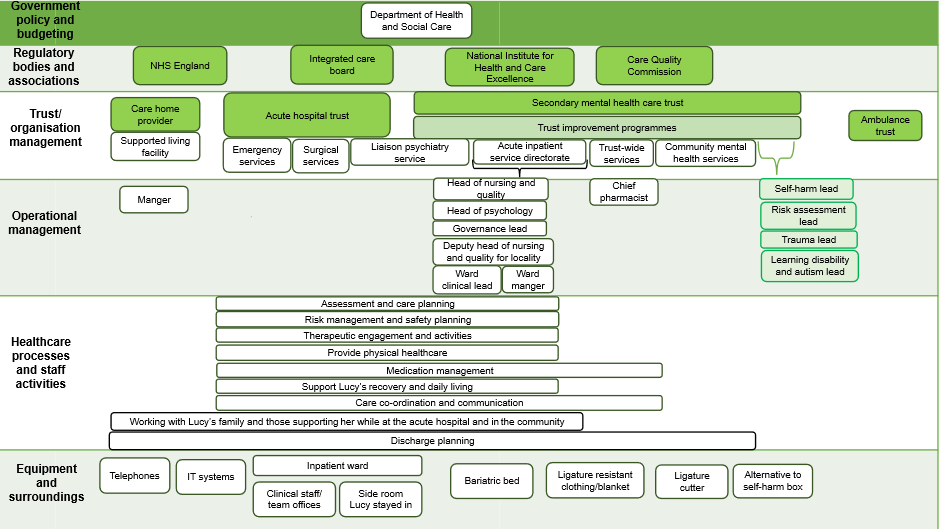
Appendix 3: Systems Engineering Initiative for Patient Safety (SEIPS) framework
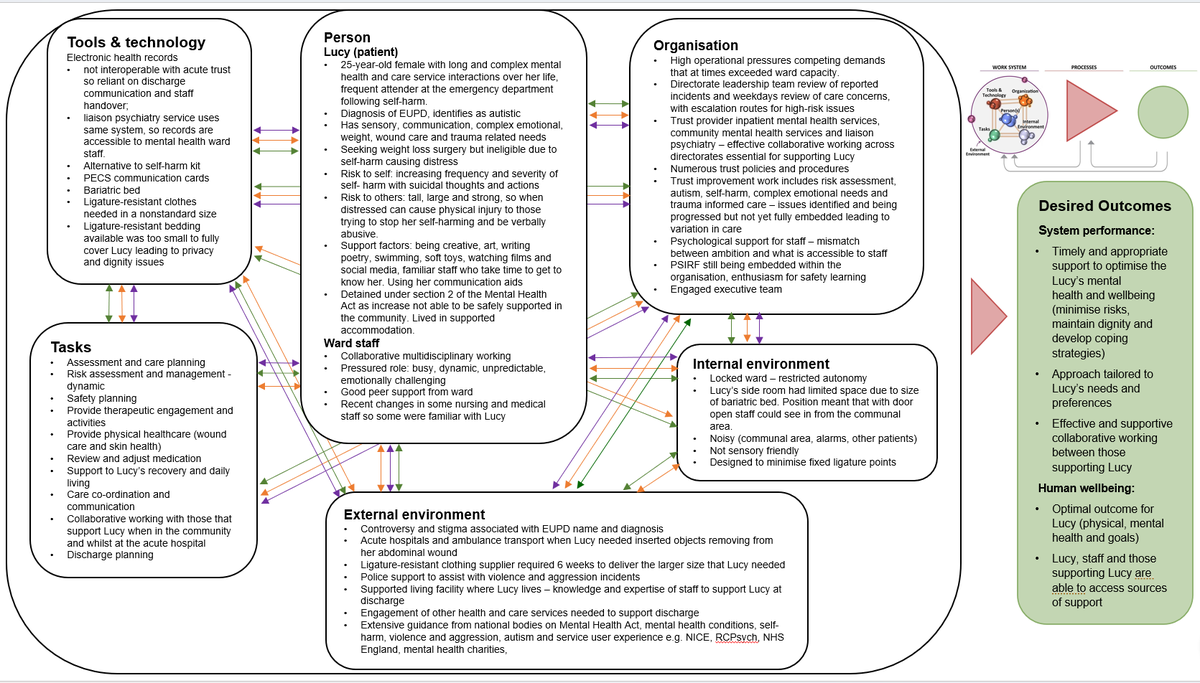
Appendix 3 abbreviations used in figure:
EUPD – Emotionally unstable personality disorder
NICE – National Institute for Health and Care Excellence
PECS – picture exchange communication system
RCPsych – Royal College of Psychiatry
Key interactions
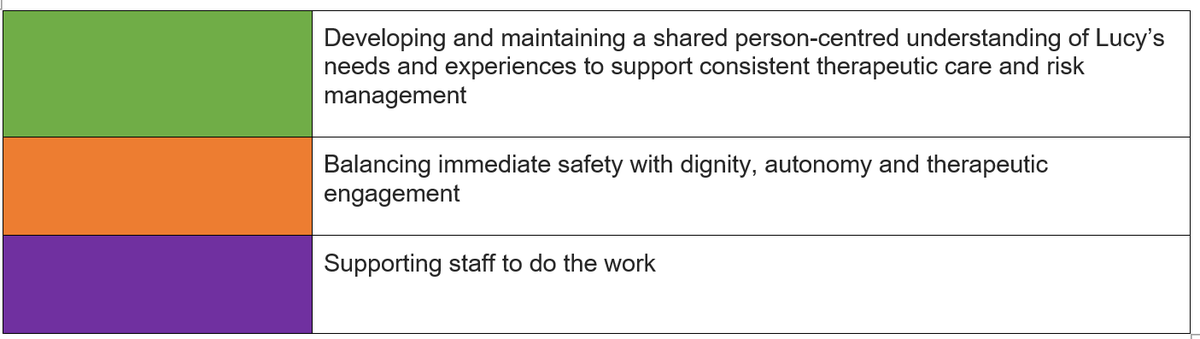
References
British Psychological Society and Association of Clinical Psychologists UK (2021) Psychological services within the Acute Adult Mental Health Care Pathway: guidelines for service providers, policy makers and decision makers. Available at https://www.bps.org.uk/guideline/psychological-services-within-acute-adult-mental-health-care-pathway (Accessed 2 November 2026).
Department of Health and Social Care (2022) Working definition of trauma-informed practice. Available at https://www.gov.uk/government/publications/working-definition-of-trauma-informed-practice/working-definition-of-trauma-informed-practice (Accessed 15 September 2026).
Doyle, N. (2020) Neurodiversity at work: a biopsychosocial model and the impact on working adults, British Medical Bulletin, 135(1), pp. 108–125. doi: 10.1093/bmb/ldaa021
Equality Act (2010) (UK Public General Acts). Available at https://www.legislation.gov.uk/ukpga/2010/15/contents (Accessed 15 September 2026).
Mind (2025) Borderline personality disorder. Treatment and support. Available at https://www.mind.org.uk/information-support/types-of-mental-health-problems/borderline-personality-disorder-bpd/treatment-and-support/ (Accessed 24 July 2026).
Mental Health Act (1983) (UK Public General Acts). Available at https://www.legislation.gov.uk/ukpga/1983/20/contents (Accessed 15 September 2026).
Mental Health Law Online (2026) Section 2: admission for assessment. Available at https://www.mentalhealthlaw.co.uk/Section_2:_admission_for_assessment (Accessed 15 September 2026).
National Institute for Health and Care Excellence (2015) Violence and aggression: short-term management in mental health, health and community settings. NICE guideline NG10. Available at https://www.nice.org.uk/guidance/ng10 (Accessed 15 September 2026).
National Institute for Health and Care Excellence (2021) Autism spectrum disorder in adults: diagnosis and management. Clinical guideline CG142. Available at https://www.nice.org.uk/guidance/cg142 (Accessed 24 July 2026).
National Institute for Health and Care Excellence (2022) Self-harm: assessment, management and preventing recurrence. NICE guideline NG225. Available at https://www.nice.org.uk/guidance/ng225 (Accessed 15 September 2026).
National Institute for Health and Care Excellence (2024) Borderline personality disorder: recognition and management. Clinical guideline CG78. Available at https://www.nice.org.uk/guidance/cg78 (Accessed 24 July 2026).
NHS (n.d.) Why people self-harm. Available at https://www.nhs.uk/mental-health/feelings-symptoms-behaviours/behaviours/self-harm/why-people-self-harm/ (Accessed 15 September 2026).
NHS (2025a) Overview – borderline personality disorder. Available at https://www.nhs.uk/mental-health/conditions/borderline-personality-disorder/overview/ (Accessed 24 July 2026).
NHS (2025b) Autism. Available at https://www.nhs.uk/conditions/autism/ (Accessed 24 July 2026).
NHS England (n.d.a) Community mental health services. Available at https://www.england.nhs.uk/mental-health/adults/cmhs/ (Accessed 24 July 2026).
NHS England (n.d.b) Mental health personalised care framework: the modern care programme approach. Available at https://www.england.nhs.uk/long-read/mental-health-personalised-care-framework-the-modern-care-programme-approach/ (Accessed 24 July 2026).
NHS England (n.d.c) Making information and the words we use accessible. Available at https://www.england.nhs.uk/learning-disabilities/about/get-involved/involving-people/making-information-and-the-words-we-use-accessible/ (Accessed 15 September 2026).
NHS England (2025a) Enhanced therapeutic observations and care: embedding therapeutic practice. Available at https://www.england.nhs.uk/long-read/etoc-embedding-therapeutic-practice/ (Accessed 15 September 2026).
NHS England (2025b) Autism-informed inpatient care. Available at https://www.england.nhs.uk/long-read/autism-informed-inpatient-care/ (Accessed 15 September 2026).
NHS England (2026) Mental health personalised care framework: the modern care programme approach – annex A: safety assessment, formulation and management planning. Available at https://www.england.nhs.uk/long-read/mental-health-personalised-care-framework-the-modern-care-programme-approach-annex-a-safety-assessment-formulation-and-management-planning/ (Accessed 2 November 2026).
Patient.info (2022) Emotionally unstable personality disorder. Available at https://patient.info/doctor/mental-health/emotionally-unstable-personality-disorder (Accessed 15 September 2026).
Royal College of Psychiatrists (2023) Strategic Plan 2024–26: Advocating, educating and collaborating to achieve excellence in psychiatry. Available at https://www.rcpsych.ac.uk/docs/default-source/about-us/corporate-publications/strategic-plan-2024---2026.pdf (Accessed 2 November 2026).
Royal College of Psychiatrists (2025) Personality disorder. Available at https://www.rcpsych.ac.uk/mental-health/mental-illnesses-and-mental-health-problems/personality-disorder (Accessed 15 September 2026).
Royal College of Psychiatrists (2026) Reflective practice in mental healthcare. Position Statement PS03/26. Available at https://www.rcpsych.ac.uk/improving-care/campaigning-for-better-mental-health-policy/position-statements/2026-position-statements/reflective-practice-%28ps03-26%29 (Accessed 2 November 2026).
Stiles, C., Batchelor, R., et al. (2023) Experiences of stigma and discrimination in borderline personality disorder: a systematic review and qualitative meta-synthesis, Journal of Personality Disorders, 37(2), pp. 177–194. doi: 10.1521/pedi.2023.37.2.177
Sweeney, A., Filson, B., et al. (2018) A paradigm shift: relationships in trauma-informed mental health services, BJPsych Advances, 24(5), pp. 319–333. doi: 10.1192/bja.2018.29
Trauma Action Group (n.d.) Trauma-informed practice in action. Available at https://www.tagtrauma.com/ (Accessed 10 July 2026).
Mental health trust guidance
Acute directorate inpatients operational policy (2023)
Antipsychotic guidelines (2025)
Bariatric and complex patient guidance (2025)
Care Programme Approach (CPA) policy (2021) – included as although superseded by the Dialog+ policy and clinical risk assessment and management policy, these were being embedded in the Trust during the time period of this investigation
DIALOG+ and care plan/next steps policy (2025)
Physical health and examination policy (2025)
Principles for care: support for people who self-harm (2026)
Rapid tranquilisation policy and guidance (2024)
Risk formulation and safety planning guidance (2026)
Service users’ clinical risk assessment, formulation and management policy (2026)
Suicide prevention approach 2023–2026
The control of ligatures and ligature anchor points on Trust premises policy and procedure (2025)
Therapeutic observation and engagement of patients policy (2022)
Understanding complex emotional difficulties (CED) (date of approval not stated)
Violence and aggression policy (2025).