About this report
HSSIB has modelled an approach to investigating patient safety events under the NHS Patient Safety Incident Response Framework (PSIRF). This is to support NHS organisations and investigation staff to increase their learning about how to investigate under this framework and provide examples of how PSIRF tools and guidance can be used to improve investigations. This report differs from the usual HSSIB report template as it uses the PSIRF patient safety incident investigation template.
The report also contains learning relevant to healthcare organisations and staff on potential areas for safety improvement within mental health care, specifically community mental health services.
Before reading this report
This report considers the care of a person with a mental health condition who was being cared for on a mental health low secure unit. His physical health deteriorated and he had to be admitted to an emergency department. Some readers may find the contents of this report distressing. Information about how to access mental health support can be found on the NHS website.
Introduction
HSSIB engaged with a wide range of stakeholders, including clinicians and national leads, to learn more about the issues surrounding learning from patient safety events in mental health settings and to identify areas on which an investigation could focus to help improve patient safety.
People with a mental health condition often suffer from poor physical health, for a variety of reasons. This investigation set out to understand how deterioration of patients’ physical health is monitored in a mental health inpatient setting, and how staff respond if a patient’s physical health deteriorates. Evidence from stakeholders suggested that greater insight into the challenges faced at an organisational level would be helpful.
To support NHS organisations and local investigation staff, HSSIB identified an opportunity to model approaches to patient safety incident investigations (PSIIs) under PSIRF. Stakeholders told HSSIB this would help to increase local learning and provide examples of how PSIRF tools can be used to improve investigations. HSSIB has also used this opportunity to identify learning that may help improve how PSIRF can support staff in carrying out incident investigations.
This investigation has used the PSII report template and PSIRF tools to investigate the physical health deterioration of an inpatient in a low secure mental health setting. Findings and areas for improvement are listed for the organisations involved in the incident. However, the learning may be relevant to other organisations.
Patient safety incident investigation (PSII) report Mental health: physical health deterioration while under the care of a low secure unit
Terms used in this report
| Incident ID number: | I-039810 (HSSIB) |
|---|---|
| Dates incident occurred: | 17-18 December 2025 |
| Report approved date: | 16 July 2026 |
| Approved by: | HSSIB |
This patient safety incident investigation involves a mental health trust that provides secure mental health inpatient care, and physical health care services including an emergency department and sleep clinics. To protect anonymity, the organisations are not named.
Distribution list
| The patient and his family | Associate director of clinical governance x 2 |
| Ward manager | Consultant in anaesthesia and intensive care |
| Quality matron | Clinical director of emergency care |
| Clinical services manager | Ear, nose and throat consultant |
| Clinical director of psychiatry | Head of quality |
| Specialty doctor | Head of patient safety and clinical effectiveness |
| Mental health nurse x 2 | Deputy head of patient safety |
| Nursing assistant | Patient safety officer |
| Respiratory consultant x 2 | Urgent and emergency care nurse |
| Deputy Chief Nurse |
About patient safety incident investigations
Patient safety incident investigations (PSIIs) are undertaken to identify new opportunities for learning and improvement. PSIIs focus on improving healthcare systems; they do not look to blame individuals. Other organisations and investigation types consider issues such as criminality, culpability or cause of death. Including blame or trying to determine whether an incident was preventable within an investigation designed for learning can lead to a culture of fear, resulting in missed opportunities for improvement.
The key aim of a PSII is to provide a clear explanation of how an organisation’s systems and processes contributed to a patient safety incident. Recognising that mistakes are human, PSIIs examine ‘system factors’ such as the tools, technologies, environments, tasks and work processes involved. Findings from a PSII are then used to identify actions that will lead to improvements in the safety of the care patients receive.
PSIIs begin as soon as possible after the incident and are normally completed within 3 months. This timeframe may be extended with the agreement of those affected, including patients, families, carers and staff. HSSIB started this investigation in March 2026, and it was completed in July 2026. The draft report was shared with the patient, his family and the staff involved in the patient safety incident for comments and feedback before being finalised.
If a PSII finds significant risks that require immediate action to improve patient safety, this action will be taken as soon as possible. Some safety actions for system improvement may not follow until later, according to a safety improvement plan that is based on the findings from several investigations or other learning responses.
An NHS organisation’s investigation team follows the Duty of Candour and the Engaging and involving patients, families and staff after a patient safety incident guidance in their collaboration with those affected, to help them identify what happened and how this resulted in a patient safety incident. Investigators encourage human resources teams to follow the being fair tool in the minority of cases when staff may be referred to them.
PSIIs within NHS organisations are led by a senior lead investigator who is trained to conduct investigations for learning. The investigators follow the guidance set out in the Patient Safety Incident Response Framework and in the national patient safety incident response standards.
A note of acknowledgement
We would like to thank James and his family for supporting the investigation to explore his care.
We would also like to thank the healthcare staff who participated in the investigation and who were keen to discuss and support improvements that might help make care safer in the future for people being cared for in mental health inpatient settings.
About James
At the time of this investigation, James was 43 years old and detained as an inpatient on a low secure forensic mental health unit. He has close relationships with his parents, brothers and sister. He enjoys fishing and music, and he likes DJ-ing.
Before he was admitted to mental health services, James lived on his own independently for several years in his flat. He was in a relationship and worked as a qualified heating engineer. He also enjoys watching rugby union and supports Ireland. Staff on the ward described James as someone who takes pride in his appearance. They said he often talks with staff about music and fishing and his other interests.
James told us that he experienced a mental health crisis in his early twenties. He said that some difficult life experiences have had a lasting effect on his mental health. He has a diagnosis of schizoaffective disorder, which means he experiences symptoms such as psychosis and changes in mood, and is receiving treatment from the mental health trust. James was being assessed by a specialist sleep clinic for suspected sleep apnoea at the time of the safety incident. He has since been diagnosed with obstructive sleep apnoea and is receiving treatment for this.
James said he would like to work towards returning to life in the community. He wants to strengthen his relationships with his friends and family. He described this as “heaven on earth” – a life where he feels cared for, can care for others, feels calm and content, and where he would like to start a family one day. At the time of publication, James was enjoying escorted days out from the ward and cooking for his family.
Executive summary
Incident summary
At the time of this investigation, James was detained as an inpatient on a low secure forensic mental health unit. A forensic mental health unit is a secure service that treats people with mental health conditions who may pose a risk or are involved in the criminal justice system.
He was there under a Section 37/41 hospital order with restrictions, which means he had to have escorts to accompany him to medical appointments. During his time on the low secure unit (LSU), James was prescribed antipsychotic medication and a mood stabiliser for schizoaffective disorder – a mental health condition that can affect how a person thinks, feels and behaves.
James was transferred from a psychiatric intensive care unit to the LSU on 18 February 2025. At the point of transfer, there were concerns that James may have obstructive sleep apnoea (OSA), a condition where a person’s breathing stops and starts while they sleep. James had previously been referred to a specialist sleep clinic for assessment. James completed a sleep questionnaire, and the results did not suggest significant OSA as he reported that he was usually refreshed and did not have any significant daytime drowsiness at that time. James did not want to wear the equipment for a sleep study, and the sleep clinic discharged him. After James arrived on the LSU, a further referral was made to a second specialist sleep clinic to progress his assessment and treatment.
From July 2025 onwards, James’ healthcare records describe a number of challenges in relation to his sleep, including excessive daytime sleepiness, falling asleep while standing, sleeping during conversations, anxiety about sleep, and repeated reports of breathing difficulties. In September 2025, James reported episodes of chest pain and breathlessness, and between October and December 2025 staff continued to document drowsiness and continued worsening of his respiratory symptoms. Efforts were made to obtain results from a sleep study to facilitate a sleep apnoea diagnosis, but non-attendance due to James not wanting to engage, and problems with the use of monitoring equipment, meant that the assessment was delayed.
On 14 and 15 December 2025, James’ respiratory condition rapidly deteriorated. He repeatedly reported to the nursing team that he could not breathe, and his oxygen saturation levels (the level of oxygen in his blood) dropped while he drifted in and out of sleep. The on-call doctor advised that physical observations (such as heart rate and blood pressure) should be taken every hour.
On 15 December 2025, James’ condition worsened and he was escorted to the emergency department (ED) at an acute hospital accompanied by mental health staff escorts. He was discharged back to the LSU the same day while further respiratory assessment was awaited. Following his return, his respiratory symptoms worsened, with new confusion, disorientation and unsteadiness.
On 17 December 2025, James was again escorted to the emergency department. In the early hours of 18 December 2025, after a period of agitation and attempts to calm James to complete his physical assessment and observations, he was given intramuscular lorazepam and later levomepromazine (sedatives). James became unresponsive and stopped breathing on his own (a respiratory arrest). He required immediate resuscitation and was transferred to the intensive care unit (ICU) for ventilatory support to assist his breathing.
James was transferred from the ICU to a respiratory ward on 8 January 2026 for a planned transition from an intensive level of medical treatment to a less intensive one as he recovered (step down care). James was then discharged and transferred to a different LSU on 20 February 2026, at the request of his family.
Summary of key findings
The investigation found that:
- The mental health staff had been monitoring James’ physical health in line with local policies. The mental health team believed that James had undiagnosed obstructive sleep apnoea (OSA) and proactively tried to get him assessed so he would be eligible for the appropriate treatment.
- It was challenging to find medication for James’ mental ill health that was clinically effective, that James could tolerate, and that did not have an adverse impact on his suspected OSA.
- The secure mental health ward environment and medication side effects presented challenges for patients to live a healthy lifestyle, exacerbated by limited food choice and a reduced ability to exercise. This contributed to James’ weight gain and OSA.
- There was a difference in understanding between the staff in the emergency department (ED) and the mental health ward staff about the deterioration in James’ physical health.
- James’ agitation on his second visit to the ED posed significant challenges for the staff treating him and their ability to obtain consent to carry out physical observations to inform their assessment.
- There was uncertainty about the oversight and lines of accountability for James’ healthcare while he was in the ED, specifically in relation to the prescribing and administration of medication for his acute agitation.
- There was ambiguity between the mental health trust policy on rapid tranquilisation and how it applied in ED alongside the acute hospitals medication management policy.
- It was reported that several factors contributed to James' respiratory arrest in the ED, including his undiagnosed OSA, obesity, respiratory exhaustion, and the administration of the sedative medications.
- There was a lack of joint working between the mental health services, the acute hospital services and the specialist sleep clinics. This included ineffective communication between providers, separate mental health and physical health healthcare records running concurrently with separate prescription charts, and no single medical record of James’ care in the emergency department.
- There was no trauma informed approach to a shared debrief between the mental health unit and the acute hospital to facilitate learning, and limited opportunities for the mental health unit staff to have dedicated time and space to process and deal with the distress they experienced because of James’ respiratory arrest.
- The specialist sleep clinic services were overstretched and unable to meet increased demand for sleep assessments.
- James needed a personalised approach to facilitate his engagement with sleep clinic services that acknowledged that he resided in a low secure mental health environment with restrictions that required being escorted.
Summary of areas for improvement
The investigation identified five areas for improvement which the mental health trust could develop safety actions to address.
Area for improvement 1
The opportunities available for people to make healthy lifestyle choices, including weight management, smoking cessation and exercise, while detained on the low secure unit.
Area for improvement 2
Access to a suitable area within the low secure unit for staff to carry out physical health observations and assessments.
Area for improvement 3
Clarify clinician roles, responsibilities, and processes, including those for prescribing, between mental health and physical health staff when caring for patients with acute agitation, to help effective assessment in the emergency department.
Area for improvement 4
Trauma-informed organisational support for staff, and shared safety learning for patient safety events where care spans more than one healthcare provider.
Area for improvement 5
The ability to identify and apply a personalised approach to care planning to encourage people detained in inpatient mental health settings to engage with specialist services.
Background and context
Low secure mental health units
Low secure units (LSUs) provide inpatient mental health care for adults detained under the Mental Health Act 1983 (NHS England, 2021). LSUs provide services for people who may have long-term and complex mental health needs and who present a significant risk of harm to others, but do not require the high levels of security found in medium or high secure hospitals (NHS England, 2021).
The aim of the LSU care pathway is to build patients’ confidence and help them to learn skills to cope with their mental illness, in the least restrictive environment possible. The focus is on integrating them back into their local communities and re-establishing social networks. This is done through a wide range of treatments and therapeutic interventions.
Section 37/41 hospital orders with restrictions
Criminal courts may issue hospital orders under Section 37 of the Mental Health Act when someone has a mental disorder that needs treatment in hospital, and where it is considered the best route for the individual, given the circumstances of their case (Rethink Mental Illness, n.d.).
Section 41 is an additional restriction that may be added if a criminal court thinks the restrictions are necessary to protect the public from serious harm (Mind, 2024). This means that the Ministry of Justice must agree before the individual is discharged from hospital, is granted leave from hospital, or can be transferred to another hospital or facility.
A combined Section 37/41 is a hospital order with restrictions on leave. It lasts until an individual is discharged by the responsible clinician (the clinician in charge of the person’s care and treatment while they are detained under the Mental Health Act). If the responsible clinician thinks an individual should be discharged, they will need to get permission from the Ministry of Justice (Mind, 2024).
There are occasions when restricted patients (those under a Section 37/41 order) are required to attend medical appointments for assessment or treatment. Section 17 of the Mental Health Act allows a detained patient to be absent from the ward, subject to conditions set by the responsible clinician.
Ministry of Justice permission is required for a restricted patient to leave the mental health inpatient ward unless permission for escorted leave has been granted by the responsible clinician (Ministry of Justice, 2015). This leave can be granted for various reasons, including for medical care outside of the mental health ward. In these circumstances, the patient must be escorted, meaning the patient is accompanied by staff.
Schizoaffective disorder
Schizoaffective disorder is a chronic mental health condition in which people experience both psychotic symptoms and mood symptoms (Royal College of Psychiatrists, 2025). It can affect how a person thinks, feels and behaves. Psychotic symptoms may include hallucinations (seeing or hearing things others do not), delusions (false beliefs), disorganised thinking, or a person believing that they are being influenced or controlled by an external force.
Schizoaffective disorder and schizophrenia are different conditions, though they share some symptoms and treatments (Royal College of Psychiatrists, 2025). The main difference is schizoaffective disorder has a mood component, whereas schizophrenia does not.
Each person’s experience of schizoaffective disorder will vary, as will the treatments that work best for them (Mind, 2023). With treatment, a person’s psychotic symptoms may permanently disappear, come and go, or remain but can be managed (National Institute for Health and Care Excellence, 2014).
Medication for schizoaffective disorder
There are different medications that can help to improve the symptoms of schizoaffective disorder. The type of medication prescribed will depend on the kinds of symptoms an individual has, the kinds of symptoms they are struggling with the most, and how well an individual responds to different medications (Royal College of Psychiatrists, 2025). A person may be treated with one or a combination of:
- an antipsychotic – to help with symptoms of psychosis and/or mania
- a mood stabiliser – to help prevent or reduce the symptoms of mood episodes
- an antidepressant – to help treat depressive symptoms (Mind, 2023).
Antipsychotic medication works by blocking the effect of chemicals that transmit messages in the brain to help reduce psychotic symptoms (NHS, 2023). The aim of medication treatment is to reduce and control psychotic symptoms while keeping side-effects at a minimum. Some people find a particular antipsychotic works better for them, causes fewer side effects or causes side effects that are easier to deal with.
The National Institute of Clinical Excellence (NICE) recommends that people prescribed antipsychotic medication should:
- ‘have routine monitoring of their weight, and for cardiovascular (heart and blood vessels) and metabolic effects’ (National Institute for Health and Care Excellence, 2014)
- be offered a combined healthy eating and physical activity programme by their mental health care provider
- be offered treatment for rapid or excessive weight gain, abnormal lipid levels or problems with blood glucose management in line with relevant NICE guidelines, such as overweight and obesity management (National Institute for Health and Care Excellence, 2026), and preventing type 2 diabetes (National Institute for Health and Care Excellence, 2017) which is a chronic condition characterised by insulin resistance and high blood sugar levels.
Obstructive sleep apnoea
Obstructive sleep apnoea (OSA) is a common condition where the muscles and soft tissues in a person’s upper airway (nose, mouth and throat) relax and collapse, blocking their airway. During these episodes the person wakes up or their sleep lightens, allowing the airway to open up so they can resume breathing. This can happen many times per night meaning that people with OSA may feel tired and sleepy during waking hours (Sleep Apnoea Trust, 2024). OSA can adversely affect a person’s cognitive function, mood and quality of life (National Institute for Health and Care Excellence, 2021a).
People with suspected OSA need to be referred to a specialist sleep clinic for assessment and, if diagnosed, for treatment and monitoring. National guidance recommends:
- which people the sleep service should prioritise for rapid assessment
- that those diagnosed receive ‘support and information on losing weight, stop smoking, reduce alcohol intake and improve sleep hygiene, tailored to the person’s needs’ and in line with national guidance on these topics (National Institute for Health and Care Excellence, 2021b).
The most common treatment for moderate to severe OSA is the use of a continuous positive airway pressure (CPAP) machine. This is a device that consists of a mask worn by the person during sleep, which is connected to a pump that creates a flow of air. The airflow is slightly pressurised, which stops the person’s throat from closing or narrowing while they are asleep (National Institute for Health and Care Excellence, 2021b). Care needs to be taken when considering the use of sedative medication in people with OSA (National Institute for Health and Care Excellence, 2021a). Lifestyle management is also helpful to encourage people to lose weight, stop smoking and decrease alcohol consumption (National Institute for Health and Care Excellence, 2021a).
Incident summary
At the time of this investigation, James was detained as an inpatient on a low secure forensic mental health unit. A forensic mental health unit is a secure service that treats people with mental health conditions who may pose a risk or are involved in the criminal justice system. James was subject to a Section 37/41 hospital order with restrictions. This meant that he needed escorts to accompany him to medical appointments for assessment or treatment. During his time on the low secure unit (LSU), James was prescribed an antipsychotic and a mood stabiliser to help with the symptoms of schizoaffective disorder.
February 2025
James was transferred from a psychiatric intensive care unit to an LSU on 18 February 2025. At the point of transfer, there were concerns that James may have obstructive sleep apnoea (OSA). James had previously been referred to a specialist sleep clinic for assessment. James completed a sleep questionnaire, and the results did not suggest significant OSA as he reported that he was usually refreshed and did not have any significant daytime drowsiness at that time. James did not want to wear the equipment for a sleep study, and the sleep clinic discharged him.
The LSU specialty doctor made another referral to a second specialist sleep clinic to progress James’ assessment and treatment. Meanwhile, the specialty doctor recorded in James’ healthcare records that he should not receive several medications that may have respiratory (breathing-related) side effects or make him very drowsy. He was prescribed alternative medication (levomepromazine by mouth) on an ‘as required’ basis should he be agitated. The healthcare records also documented that James had been prescribed a nicotine patch to help him stop smoking.
July to August 2025
From July to August 2025, the healthcare records described a number of challenges in relation to James’ sleep, including excessive daytime sleepiness, falling asleep while standing, sleeping during conversations, anxiety about breathing while asleep, and repeated reports of breathing difficulties. The psychologist documented that James was ‘visibly falling asleep at points during conversation’ with them. During this time James was also receiving pain relief (paracetamol and codeine) and occupational therapy for a foot fracture.
Following a medical review on 11 July, it was documented in James’ healthcare records that he ‘reported significant sedation from his medications’ that were prescribed for his schizoaffective disorder. James himself linked some of these symptoms to the sedating effects of his medication while clinicians were also attempting to investigate suspected sleep apnoea.
September 2025
On 17 September 2025 at approximately 02:00 hours, James pressed his nurse call bell and reported that he could not breathe and felt like he had ‘pins and needles and was going to die’. After physical observations, James was reassured that his observations were within expected ranges. James later declined his prescribed medications.
The healthcare records reported that James experienced further deterioration with breathing throughout September 2025, and his ‘pain was worsening when breathing in and out’. James ‘declined on five occasions’ to have blood tests to monitor his heart health to investigate his reports of chest pain.
The specialty doctor sought advice from the pharmacy team about James’ medication, as he had been aggressive and at times was declining medication. A senior clinical pharmacist replied by letter on 18 September 2025 describing the possible medication options available to manage James’ schizoaffective disorder, including whether these had previously been effective, the side effects that James had experienced and whether James would agree to take them.
October to early December 2025
James’ healthcare records documented that he had an appointment with a specialist sleep clinic on 13 October 2025, but did not attend. On 4 November, James went to an appointment at the specialist sleep clinic and was given equipment to monitor his breathing while he was asleep (referred to as a sleep study). A nurse on the LSU documented that James was ‘reminded a few times by staff to wear his sleeping equipment but he was resistant to wearing it’. The equipment was not worn correctly which meant the sleep clinic did not have the information it needed to assess whether James had OSA. A new appointment was booked for 5 December 2025 to repeat the sleep study, following intervention from the clinical director of psychiatry and speciality doctor who requested an urgent assessment date.
Meanwhile, James continued to report drowsiness and was observed by the LSU staff to be asleep while standing against a wall in the lounge, falling asleep during conversations with peers and clinicians, and feeling anxious about sleep and struggling to breathe while asleep.
On 20 November 2025, the healthcare records show that a multidisciplinary team met to review James’ care. James continued to report increased daytime sleepiness, which he attributed to his medication. It was documented in his healthcare records that since a medication change in September ‘his mental health symptoms are better controlled’, so he was to remain on the same antipsychotic, but given less often to minimise any sedating effects. His respiratory symptoms were reviewed, and a plan was agreed to continue observations every 15 minutes.
On 5 December, James went to his appointment at the specialist sleep clinic, and the sleep study was repeated.
On 9 December 2025, the healthcare records reported that James continued to ‘struggle to breathe’, ‘fell asleep during conversations’ and ‘fell asleep during a coffee morning and spilt hot coffee on himself’. James was reported to wake up with panic attacks and his physical health continued to get worse. James’ parents were worried about James’ breathing and raised concerns with the LSU medical team.
On 14 December 2025 at 12:55 hours, James approached the nursing office and asked to go to the emergency department (ED). The nurses documented that James reported feeling frustrated, upset and angry throughout the day and felt ‘scared to sleep’ at night. Physical observations were taken and James had low oxygen saturation levels. The on-call doctor was contacted and said there was no immediate concern, but that James’ physical observations should be taken every hour and to contact them again if there was a clinical concern. Over the course of the afternoon, James’ oxygen saturation continued to drop (91% at its lowest as documented in the healthcare records) and he appeared drowsy and agitated.
At 14:55 hours, the mental health nurses contacted the on-call doctor again because of their ongoing concerns. The records stated that while he was assessed: ‘James would drop in and out of sleep, in doing so, he would start to snore, and his oxygen levels would drop to 91% for around 30 seconds and then rise again to around 93%. When they woke James up, he would stop snoring and his oxygen levels would rise to around 98%.’ The on-call doctor sought advice from the ED consultant who advised ‘frequent oxygen monitoring and that if the oxygen levels are 90% for more than 1-2 minutes then to ‘wake the patient up’’ and to ‘expediate the sleep clinic assessment’. James continued to have issues with his breathing and oxygen saturation levels throughout the night as he drifted in and out of sleep.
On 15 December 2025 at 04:26 hours, James’ respiratory condition acutely deteriorated. It was recorded that James’ oxygen saturation levels continued to drop, and his respiratory symptoms continued to worsen. The on-call doctor assessed James and sought advice from another ED consultant who advised that if his oxygen ‘saturation [is] dropping persistently, James may need some oxygen support’ from the ED.
First emergency department attendance
On 15 December 2025 at 06:39 hours, James was taken to the ED by ambulance, accompanied by two mental health escorts. The ED healthcare records stated that ‘he was suspected of having a chest infection, reviewed medically, and ENT [specialists from the ear, nose and throat department] were involved’.
James was discharged early that afternoon back to the LSU while awaiting a sleep study assessment.
Transfer back to the LSU
Following James’ return to the LSU, his respiratory symptoms worsened, with new confusion, disorientation and unsteadiness. The LSU specialty doctor had been contacting the specialist sleep clinic to explain James’ sudden deterioration and asked that his assessment be expedited for urgent follow-up.
On 16 December 2025, the LSU multidisciplinary team reviewed James’ antipsychotic medication with input from the pharmacy team. The pharmacist advised that James’ antipsychotic medication ‘is not the main culprit’ in his breathing difficulties as it ‘does not impact much on the respiratory system’. James’ codeine was stopped to reduce the sedating effects. The specialty doctor had been able to make an appointment at the specialist sleep clinic for James to receive a continuous positive airway pressure (CPAP) machine on 16 January 2026.
At approximately 15:30 hours, staff noted that James was acting ‘out of character’. The mental healthcare records state that he had ‘new confusion’, was ‘chaotic’, ‘unsteady on his feet’, ‘disorientated’ and they ‘couldn’t understand what he way saying’. James was put on continuous observation (a staff member remained with him without leaving his side) and increased physical health monitoring, and the mental health nurses contacted the on-call doctor to review him. James was monitored using the National Early Warning Score (NEWS2) which is a clinical tool used to detect early signs of patient deterioration (Royal College of General Practitioners, 2019). James scored 5 on the NEWS2 score which indicated that he was high risk and needed immediate review. The on-call doctor advised that James should be immediately transferred to the ED because of concerns about his respiratory deterioration.
Second emergency department attendance
On 17 December 2025, James was taken to the ED with two mental health escorts. He was promptly assessed; his new symptoms were noted and ED clinicians ‘assessed this as an ongoing chronic problem without clear acute deterioration’. The ENT team was consulted, and James’ test results were within the expected range although it was noted that he had a large tongue.
For safety reasons, James was accommodated in a modified cubicle designed as a mental health room. The two mental health escorts stayed with him. The initial plan was for the ED team to discharge James back to the LSU. However, the LSU manager and specialty doctor went to the ED and said that they were not happy for James to be discharged. After consultation with the ED team, it was agreed that James would be referred to the medical team for further assessment.
On 18 December 2025, in the early hours of the morning, James became increasingly agitated and aggressive, and physically assaulted two members of ED staff. The investigation found in the healthcare records that James had attempted to self-harm as a manifestation of his distress. It was documented in the ED healthcare records that physical observations could not be undertaken due to James’ increased agitation. At approximately 03:00 hours, James was administered 1 mg lorazepam into his muscle by injection (an intramuscular injection) to manage his agitation, which was reported in the ED healthcare records to have little effect. The mental health escorts documented that James continued to be ‘confused, unsettled in mood and restless’ and ‘wandering around the ward overnight’. By this time, four mental health staff were with James to manage his agitation. Following discussions between the ED team and the LSU specialty doctor, it was agreed that levomepromazine (a sedative antipsychotic), 25 mg by intramuscular injection, would be used to manage James’ agitation and enable him to be assessed. The rationale to administer it via intramuscular injection was based on advice from the pharmacist who said that because of his agitation, James would not be able to be given it by mouth, as per his usual prescription.
At 09:20 hours, while the levomepromazine was being administered to James, he became unresponsive and went into respiratory arrest (he stopped breathing). James required immediate resuscitation and was transferred to the intensive care unit (ICU) for ventilatory support to assist his breathing. It is documented that the LSU team attempted to phone James’ parents, but they could not be reached. Later, when James’ parents phoned the ward to enquire about James, they were told he was in the ED.
James was transferred from the ICU to a respiratory ward on 8 January 2026 for a planned transition from an intensive level of medical treatment to a less intensive one as he recovered (step down care). James was then discharged and transferred to a different LSU on 20 February 2026, at the request of his family.
Investigation approach
Investigation team
| Role | Initials |
Job title |
Dept/directorate and organisation |
|---|---|---|---|
|
Investigation commissioner/convenor: |
This investigation is one of three PSII exemplars about mental health care | HSSIB | |
|
Investigation lead: |
The report is led by, and is a publication of, HSSIB rather than any individual | HSSIB |
Summary of investigation process
Terms of reference
The terms of reference for this investigation were informed by information shared by the mental health and acute trusts. Key staff involved in James’ care also helped to shape the areas of focus and these were shared with James.
This investigation will:
- explore the extent to which James had symptoms of respiratory illness at the low secure unit (LSU) in the days and months preceding his attendance at the emergency department (ED)
- explore processes for escalating concerns about James’ physical health deterioration to the acute trust in December 2025
- explore the care co-ordination between mental health and acute healthcare teams delivering James’ care during his attendances at the ED until his respiratory arrest
- identify opportunities for improvement in the care pathway being investigated.
More details about the terms of reference, and how the investigation addressed these, can be found in appendix 1.
Information gathering
The investigation gathered information from multiple sources and sought different perspectives on events. The investigation considered how factors such as the environment, equipment, tasks, policies and organisational culture influenced the decisions and actions of staff. Information sources included:
- speaking with James and his parents
- speaking with staff directly or indirectly involved in James’ care
- James’ mental healthcare records
- a site visit to the low secure unit
- James’ acute healthcare records from his two visits to the ED
- national and local guidelines about physical health monitoring in mental health trusts, managing patients who are acutely agitated, schizoaffective disorder and associated medications
- articles and research about low secure mental health services, obstructive sleep apnoea, schizoaffective disorder and associated medications.
James gave permission to be named in the report, and he and his family have seen the draft report and had the opportunity to provide feedback.
Drawing on the ‘Patient safety learning response toolkit’, the investigation used a number of different methods to help organise, understand and analyse the information gathered. Methods included:
- developing a timeline to show the sequence of events
- creating a stakeholder map – a map of all the relevant organisations, at different levels of the healthcare system, from government to hospital, to illustrate how these related to the activities of staff (see appendix 2)
- using a framework (called the Systems Engineering Initiative for Patient Safety (SEIPS)) to inform information gathering and help examine the data gathered. The framework prompts investigators to consider how work factors such as the environment, equipment, organisational policies and procedures interact to influence the actions and decisions of staff (see appendix 3)
- developing themes from analysis of the information gathered to help understand and explain why things happened in the way they did
- applying NHS England’s ‘Safety action development guide’ to inform thinking about the development of areas of improvement
- using an evidence log to document the information sources used to inform the investigation.
The investigation considered how far back to gather information about James’ physical health condition and decided to start from the time that he was transferred to the LSU. This allowed the investigation to understand James’ chronic physical health condition and suspected sleep apnoea over a number of months, leading to James’ ED attendances in December 2025.
Findings
This section sets out the findings from the investigation’s analysis of the information gathered. The findings are presented under the following headings:
- Obstructive sleep apnoea and mental health condition
- Management of James’ acute respiratory issue
- Co-ordination between mental health teams and specialist sleep clinics.
Obstructive sleep apnoea and mental health condition
Personal risk factors
The investigation identified from the healthcare records and staff interviews that James had personal and familial risk factors for obstructive sleep apnoea (OSA). At the time of the incident, James was overweight (with a body mass index of more than 38), had a congenital condition of his upper airway, large tongue, and his father was reported to have OSA.
Proactive monitoring and referrals to specialist services
Considering James’ medical history and the symptoms he showed, the investigation identified that medical staff in the low secure unit (LSU) had anticipated that James may have OSA and proactively tried to refer him to a specialist sleep clinic. The LSU specialty doctor told the investigation that he had gone to great lengths to explain to James the importance of engaging with the sleep clinic services to progress his assessment of OSA and subsequent treatment. The specialty doctor was described by the clinical director of psychiatry at the LSU as being “dual qualified in physical health and mental health” and “proactive with physical health issues”. The specialty doctor had assessed that James had mental capacity to be able to make an informed decision to engage with the sleep clinic. James was reported to be reluctant to engage with the sleep clinic services and the diagnostic process, as he believed that his drowsiness was caused by side effects of his prescribed antipsychotic medication. The investigation was told that James had said to the speciality doctor that “I don’t have it [OSA] and if you do the referral, I won’t attend the appointment”. The investigation was informed that James was not offered a continuous positive airway pressure (CPAP) machine for treatment of OSA because he had not been assessed and diagnosed.
The specialty doctor told the investigation that he persevered with the referral because he was concerned about James’ respiratory condition and knew that getting an appointment at the sleep clinic “could take up to 12 months”. He told the investigation “I still made a referral despite James’ views in case he deteriorated.”
Impact of James’ mental health condition
The LSU staff reported that it was challenging to find medication to treat James’ schizoaffective disorder that was clinically effective, that James could tolerate and that he would agree to. A staff member told the investigation that “most antipsychotic medications have sedating properties”, and of the two non-sedating options, one caused behavioural side effects in James, and he did not want to have the other because it required frequent blood tests. This meant that several different antipsychotics had been tried with James since being transferred to the LSU.
The LSU staff tried to involve James in decision making about his medication options, however, his personal beliefs and mental health condition may have influenced his views about his treatment. This made it difficult for the staff to take a person-centred approach.
It was documented in James’ healthcare records that he could not be given certain medications if he became agitated because of their respiratory side effects. The choice of antipsychotics was clearly considered, with specialist input from the pharmacist and agreed at a multidisciplinary team review where it was noted that the antipsychotic was ‘not impacting his respiratory function’. The respiratory consultant that the investigation spoke with said that when it is essential to use a sedating medication in a person who has OSA, it can be used if the person has CPAP to support their breathing. Several of these considerations align with the mental health team’s plans to concurrently manage James’ mental ill health and OSA.
The investigation found that James’ physical health was monitored to identify factors that may put him at risk of physical ill health; these included blood tests to measure cholesterol, glucose and sodium levels in his blood, his weight, heart rate and blood pressure. When needed, medication was prescribed, for example he was prescribed metformin to help prevent elevated blood glucose levels and reduce his weight. Sometimes, the physical health screening recording sheet showed that James declined routine assessment, and it was documented that ‘staff will try again’.
Proactive lifestyle choices on the ward
The mental health trust provided support for people to make healthy lifestyle choices during their time at the LSU. The investigation found that there were co-ordinated activities on the LSU, such as smoothie-making and cookery classes, art classes and coffee mornings, in which James actively participated. James was prescribed and received a nicotine patch to help him stop smoking, as he was documented to frequently use vapes. There was also a courtyard and garden that James had access to and regularly used.
However, the investigation identified factors that restricted the mental health trust’s ability to provide opportunities for people to make healthy lifestyle choices. The mental health staff acknowledged the limitations with meals provided to the patients, as the catering was provided by the adjacent acute trust which was not tailored for long-stay patients, and the menu repeated in cycles. Staff told the investigation there was limited food choice available, and James would often order take-away food several times a week. Staff reported feeling reluctant to challenge this as it was seen as one of the few ‘perks’ available and “a little pleasure for the lads”. During consultation, a respiratory consultant told the investigation that obesity was a significant contributory factor in James’ OSA.
The investigation also identified that the forensic hospital restrictions on the LSU meant there were fewer opportunities to exercise. There was a gym on one of the larger wards in the mental health trust, but not on the LSU James was staying on. Some patients on the LSU were able to go for walks outside the ward, visit friends and family, and go for trips to the swimming pool and cinema. However, James had not been authorised Section 17 leave for months due to aggressive behaviour towards staff members, which meant these options were not available to him. In addition, James was also recovering from a foot fracture, which further limited his opportunity to move around.
While it was up to patients to choose healthy lifestyle choices, the mental health trust was limited in its ability to provide them. This impacted on patients’ ability to manage their physical health and avoid chronic or acute deterioration of any pre-existing physical condition.
Area for improvement 1
The opportunities available for people to make healthy lifestyle choices, including weight management, smoking cessation and exercise, while detained on the low secure unit.
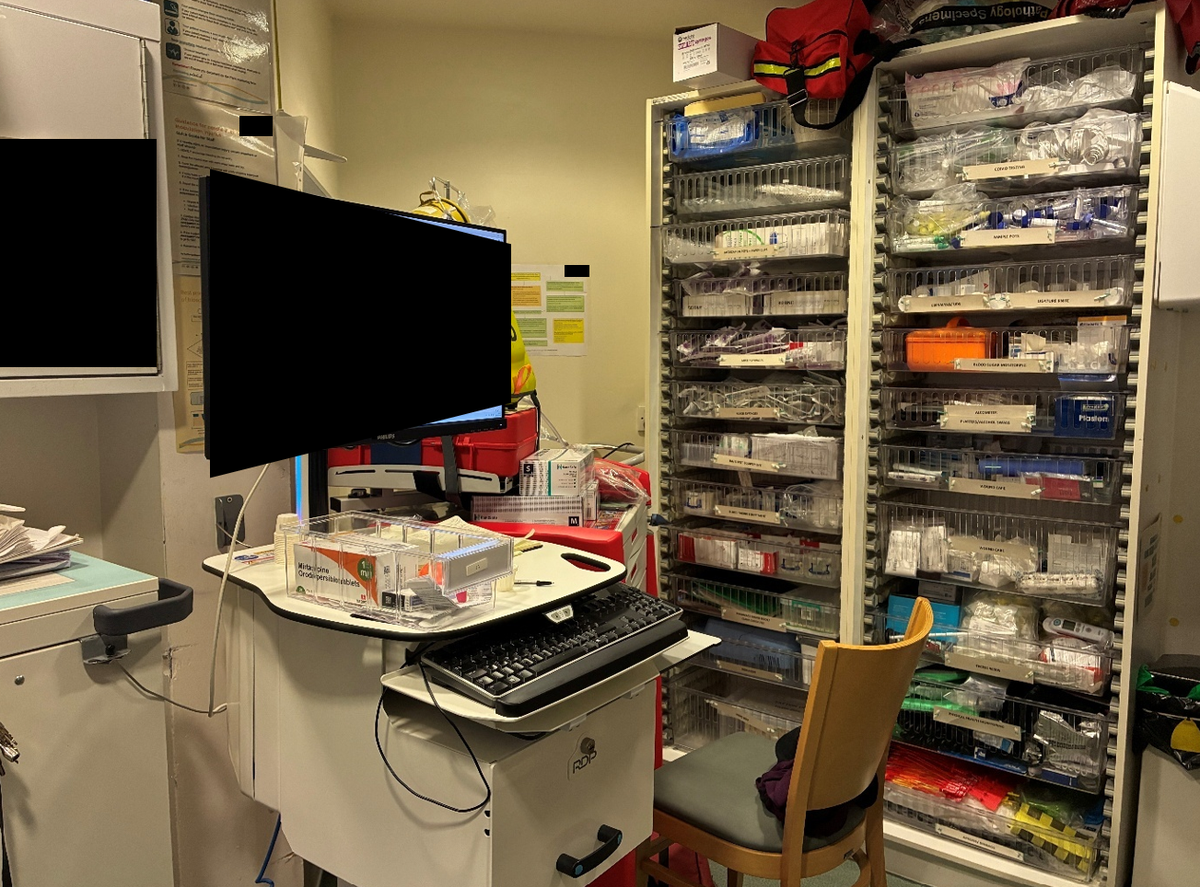
James’ physical health was regularly monitored on the LSU, although the ward manager told the investigation that the LSU did not have a dedicated physical health examination room on the ward. The investigation observed that a multipurpose room was available for physical health examinations, but it was also used for medication storage and administration, and equipment storage. Given the circumstances in which people were detained on the LSU, this could be a safety risk in terms of having patients in the same room as medications and equipment that they could use to harm themselves or others. The investigation identified that access to the resuscitation trolley (the red trolley shown behind monitor in the photo) may be delayed because of limited space, which could delay treatment in a medical emergency, such as if James stopped breathing.
Having the right environment on the ward to be able to carry out physical examinations, with appropriate privacy and dignity for patients, was highlighted as necessary to accommodate these tasks safely.
Figure 1 The multipurpose room used for physical examinations
Area for improvement 2
Access to a suitable area within the low secure unit for staff to carry out physical health observations and assessments.
Management of James’ acute respiratory issue
Escalation pathway and responsiveness to acute health concerns
The investigation found the mental health trust had carried out regular routine physical health observations of James’ condition, and staff had consulted with medical staff from the acute trust when they had concerns about the deterioration of his physical health. The investigation identified in James’ healthcare records that the mental health staff had completed physical health observations every 15 minutes during his deterioration, including measuring his oxygen saturation levels, blood pressure and heart rate, and had bleeped the on-call acute doctor on multiple occasions that same day for urgent assessment.
Assessment of James’ acute deterioration during his second visit to the emergency department
The investigation identified that immediately before James went to the emergency department (ED) the second time, the healthcare records documented that he had had recurrent oxygen desaturation (where the oxygen level in James’ blood had dropped and was unable to meet his body’s needs), worsening respiratory symptoms overnight, marked drowsiness and fluctuating alertness. The investigation was told by a consultant in anaesthesia and intensive care that James’ OSA was “a time bomb” and that “anything could have triggered him to go into a respiratory distress of some sort”.
First ED attendance
When James returned to the LSU from the ED on 15 December 2025, LSU staff told the investigation that he developed “new confusion”, disorientation and worsening respiratory symptoms. The charge nurse told the investigation that James was “tearful and angry at times” and “scared to fall asleep” despite being exhausted. The investigation heard from staff interviews that the mental health staff knew James well and were able to identify that his physical health was worsening. These symptoms were monitored at the LSU as part of James’ monitoring plan.
Second ED attendance
The investigation identified from healthcare records and staff interviews that on 17 December 2025, during James’ second ED attendance, the ED clinicians assessed the situation as an ongoing chronic problem without clear acute deterioration. During this second attendance, ED staff told the investigation that James’ “numbers were not really showing very much deterioration” and his case was “assessed as an ongoing chronic problem” that would be resolved by the sleep clinic assessment. It was initially assessed by the acute team that “this is not something new” and “there is nothing acute to be done now”. The ED staff’s initial plan was to discharge James back to the LSU. The investigation was told that further medical assessment was agreed only after the LSU ward manager and specialty doctor intervened.
The investigation identified from the medical notes that James’ OSA was the LSU staff’s primary concern when he was sleeping. However, because James was very agitated during his second attendance at the ED, and is documented to have had little sleep while he was there, the ED staff may not have seen the OSA symptoms the LSU staff were concerned about.
James’ healthcare records and staff interviews identified that his acute agitation and refusal to give consent to have physical observations taken affected the ED staff’s ability to carry out physical observations to inform their assessment of his condition. The investigation was told that the intensive care unit (ICU) staff recognised that James’ agitation was a result of his compromised breathing. A consultant in anaesthesia and intensive care told the investigation that James’ “severe agitation would have been an expression of his disease [OSA], not by choice” and “anybody would have been scared to death of not being able to breathe”. The consultant told the investigation that “if somebody would have come without any mental health illness, I believe they would have behaved the same way with the amount of pathology [ill health] that they were carrying around”. The investigation found that, because James’ physical observations could not be undertaken while he was experiencing respiratory compromise, his deterioration may have gone undetected.
The investigation identified that both the mental health trust and the acute trust had relevant policies for managing acutely agitated patients. An urgent and emergency care nurse told the investigation that the ED staff “are used to dealing with patients that present like that quite a lot”. However, the mental health escorts said that the ED staff relied on them heavily to manage James’ agitation. The investigation identified that James was placed in a mental health safe cubicle and remained with mental health escorts, for his immediate safety and to meet the conditions of his Section. However, it was reported to the investigation that there were significant challenges caring for James, who was acutely agitated, physically unwell and medically unstable.
To manage James’ agitation, he was given intramuscular lorazepam, then levomepromazine, to enable staff to carry out physical observations and assessment. The investigation identified that this was given in the context of suspected sleep-disordered breathing, recent desaturation, confusion and unsteadiness and unresolved physical deterioration. This is explored further in the next section.
Co-ordination between mental health and acute healthcare teams
Staff told the investigation that during James’ second visit to the ED, the LSU specialty doctor and the ward manager had anticipated that James would be discharged early. They had instructed the mental health escorts to inform them if James was going to be discharged so they could intervene if necessary. The investigation identified good communication between the mental health escorts and the senior mental health staff during this time. The LSU specialty doctor and ward manager walked over to the ED to advocate for James and to request he remain within the care of the acute physical health team because of serious concerns about his acute physical health deterioration. The ED consultant discussed this with the acute psychiatrist and the mental health senior team, and they agreed that James would be referred to the medical team for further review.
The LSU ward manager asked that James be sedated so he could receive the tests and assessment he needed, as neither the earlier lorazepam nor four mental health escorts had been able to manage his agitation. The ED nurse documented in the healthcare records that they explained to the LSU ward manager that because of James’ suspected OSA it ‘might not be best to sedate him’, he was under the care of the ED medical team and ‘no sedation was prescribed yet’. The ED nurse escalated this to the ED medical registrar, who, after reviewing James, confirmed he should be sedated. One of the LSU nurses escorting James gave him 25 mg levomepromazine via intramuscular injection as a sedative, as James was too agitated to accept medication by mouth. The ED medical registrar advised that James should be moved to the resuscitation area after he had received the sedation to ‘keep an eye on his airways’. Obesity can increase the risks associated with using sedation. Factors such as reduced airway and lung capacity, together with the effects of sedative medications, may increase a person’s likelihood of breathing difficulties, low oxygen levels, and variability in how sedative medications are processed by the body.
On the LSU, James had previously been prescribed and given 25 to 50 mg levomepromazine by mouth for agitation, with no documented concerns. The investigation was told that levomepromazine was prescribed, however, it was not documented on James’ paper ED medication chart and did not appear to be on his LSU digital medication chart that was provided to the investigation. The mental health trust also had a separate medication chart for rapid tranquilisation, but this was not able to be provided to the investigation team.
The acute trust medication policy stated that where the prescription chart of a newly admitted patient differs from the prescription chart the ward normally uses, then it should be rewritten on the chart ‘normally in use in that clinical area or if revision of therapy is needed because of transfer to another medical team’. The investigation was told this did not happen and both the digital LSU and paper ED prescription chart were used concurrently, without cross-referring to each other. The policy did not cover the situation that staff found themselves in when James needed to be given medication for acute agitation. There was a risk that staff using and/or reviewing either prescription chart had an incomplete overview of any documented allergies and the medication prescribed and administered to him.
The investigation found there was ambiguity between the mental health trust policy on rapid tranquilisation and how it applied in ED alongside the acute hospitals medication management policy. The mental trust had a policy for rapid tranquilisation, which applied to their staff, including when caring for patients in EDs. The purpose of this policy was to ‘define the short-term management of acutely distressed patients’. The policy states that ‘rapid tranquillisation as an intervention must only be considered in circumstances proportionate to the presenting risks, where an individual may be presenting as highly aroused, agitated, overactive, or making serious threats or gestures towards others, or is being destructive to their surroundings and when all other therapeutic interventions have failed to contain presenting risks or behaviours’.
The investigation also identified potential ambiguity about roles and responsibilities between the mental health staff and acute team. This was in relation to the administration of lorazepam; the investigation was told by the clinical director of emergency care that it was “unusual” for the LSU specialty doctor to prescribe medication in the ED.
The investigation was told by a respiratory consultant that levomepromazine can lead to respiratory depression (when a person breathes too slowly or too shallowly), when combined with benzodiazepines (lorazepam). The clinical director of emergency care told the investigation there were risks of using a sedative, given the combined factors of James’ “risky airway, potential sleep apnoea and noisy breathing”. This was a carefully considered decision, balancing the risk of using a sedative agent against complications when other measures to manage James’ agitation, which posed a risk to himself and others, had proved ineffective, for example having four mental health staff with him in the ED. The investigation was told that the mental health nurse had only just given the sedative when James stopped breathing. For the sedative to have affected James’ breathing, it would have needed to be absorbed into the bloodstream from the muscle that it was injected into and this takes time. Maximum blood levels are achieved 30 to 90 minutes after intramuscular administration of levomepromazine (BenchChem, 2026).
In this case, a respiratory arrest occurred in the context of James’ wider clinical condition, including OSA, exhaustion, a chest infection, sedative medication (levomepromazine and lorazepam), and obesity. This was a complex and challenging situation where the decision to use sedative medication was made in an attempt to balance between assessing and treating James’ clinical presentation and managing his agitation, which posed a risk to himself and to others.
Area for improvement 3
Clarify clinician roles, responsibilities, and processes, including those for prescribing, between mental health and physical health staff when caring for patients with acute agitation, to help effective assessment in the emergency department.
Opportunities for further learning
The LSU staff told the investigation there had not been an opportunity for staff to meet with the acute staff to have a reflective session on learning from the incident. The investigation found issues that staff in other departments were unaware of, such as multiple concurrent prescription charts. The mental health trust told the investigation that often, patient safety incident investigations (PSIIs) would be limited to learning within the trust, rather than addressing cross-organisational learning. The trust highlighted the importance of shared learning across organisations; this has been highlighted in a report published by HSSIB's predecessor organisation HSIB (Health Services Safety Investigations Body, 2022).
The investigation identified that the LSU had undertaken a ‘hot debrief’ (also known as a ‘swarm huddle’) (NHS England, 2022) after the incident and staff “were reassured”, which resonates with a ‘trauma-aware’ approach. Being trauma-aware means recognising that trauma may exist and understanding its potential impact on people. Being ‘trauma-informed’ means actively integrating that understanding into practice to create safe, supportive environments. Effective trauma-informed staff support includes sensitive discussions around trauma, specific support, prevention of re-traumatising the staff member, collaboration and empowerment (Sweeney et al, 2018). The effectiveness of trauma-informed staff support is dependent on the experience of the staff involved, access to training and local cultures.
In interviews with the mental health staff, the investigation identified that some were still processing their role in what had happened and experiencing trauma associated with James’ respiratory arrest. Some staff had no prior experience of administering sedative medication in an ED and reported feeling that they had been left with many unanswered questions. The investigation was told by the senior mental health team that a hot debrief took place; however, there was not an opportunity for the mental health staff and acute trust staff to meet for a learning review after the incident.
Area for improvement 4
Trauma-informed organisational support for staff, and shared safety learning for patient safety events where care spans more than one healthcare provider.
Co-ordination between mental health teams and specialist sleep clinics
The investigation found there were gaps in communication, co-ordination and shared understanding of risk between the LSU and specialist sleep clinics.
Regarding communication, the investigation was told the second specialist sleep clinic sent confirmation of James’ appointment to his GP practice and home address, but did not send confirmation to the specialty LSU doctor who made the referral, or to the LSU ward staff. The investigation was told by the sleep clinic that it sends all correspondence to patients’ GPs by default and an administrator would need to manually add additional medical staff, which had not been done in James’ case. The investigation identified that the communication from the sleep clinic was a barrier to James accessing care and did not take into account that he was detained on a forensic LSU and would have required arrangements in advance for escorted leave.
James was given sleep study equipment and shown how to use it. On return to the ward, staff reminded him to wear it, but it was not used consistently overnight, so no usable data was collected, causing further delays to his assessment.
The investigation found there were challenges around how to obtain diagnostic information for a patient who was at high risk of respiratory compromise and struggling to co-operate with standard testing methods. The specialist sleep clinic pathway depended on prompt attendance at appointments and the correct use of sleep study equipment. This highlights the difficulties for clinics assessing patients who may be reluctant to be diagnosed and treated and a need to personalise their care to make reasonable adjustments to support them to engage.
The investigation identified that James’ rapid clinical deterioration outpaced the sleep service pathway. By the time James had his repeat sleep assessment, he was already experiencing severe daytime sleepiness, repeated breathing complaints, episodes of oxygen desaturation, a fear of sleeping and progressive deterioration in his physical health. The investigation identified that the sleep service pathway may not have been responsive enough to a patient whose risk had moved beyond routine outpatient-style management. The investigation was told by a respiratory consultant that specialist sleep clinic services are overstretched and unable to meet increased demand for sleep assessments. The investigation heard that the specialist sleep clinic “receives over 600 referrals a month and there was an unbelievable number of referrals going through” and “because of James’ OSA severity, he was booked in relatively quickly, but unfortunately there are significant waits for therapy due to the number of patients coming through and the [limited] resources available”. The investigation found that access to treatment from the sleep clinic happened after James’ acute deterioration for the reasons stated above.
The investigation identified communication and co-ordination gaps between the specialist sleep clinic and LSU staff because the sleep clinic pathway was set up to accept referrals from GPs and may not accommodate referrals from other settings. The LSU clinicians had to chase the sleep clinic and seek urgent acceleration of appointments. This suggests possible safety issues around shared understanding of urgency, communication of deterioration, ownership of escalation and co-ordination between specialist and LSU teams.
Area for improvement 5
The ability to identify and apply a personalised approach to care planning to encourage people detained in inpatient mental health settings to engage with specialist services.
Summary of findings and areas for improvement
The investigation found that:
- The mental health staff had been monitoring James’ physical health in line with local policies. The mental health team believed James had undiagnosed obstructive sleep apnoea (OSA) and proactively tried to get him assessed so he would be eligible for the appropriate treatment.
- It was challenging to find medication for James’ mental ill health that was clinically effective, that James could tolerate, and that did not adversely impact on his suspected OSA.
- The secure mental health ward environment and medication side effects presented challenges for patients to live a healthy lifestyle, exacerbated by limited food choice and a reduced ability to exercise. This contributed to James’ weight gain and OSA.
- There was a difference in understanding between the staff in the emergency department (ED) and the mental health ward staff about the deterioration in James’ physical health.
- James’ agitation on his second visit to the ED posed significant challenges for the staff treating him and their ability to obtain consent to carry out physical observations to inform their assessment.
- There was uncertainty about the oversight and lines of accountability for James’ healthcare whilst he was in the ED, specifically in relation to the prescribing and administration of medication for his acute agitation.
- There was ambiguity between the mental health trust policy on rapid tranquilisation and how it applied in ED alongside the acute hospitals medication management policy.
- It was reported that several factors contributed to James’ respiratory arrest in the ED, including his undiagnosed OSA, obesity, respiratory exhaustion, and the administration of the sedative medications.
- There was a lack of joint working between the mental health services, the acute hospital services and the specialist sleep clinics. This included ineffective communication between providers, separate mental health and physical healthcare records running concurrently with separate prescription charts, and no single medical record of James’ care in the emergency department.
- There was no trauma informed approach to a shared debrief between the mental health unit and the acute hospital to facilitate learning, and limited opportunities for the mental health unit staff to have dedicated time and space to process and deal with the distress they experienced because of James’ respiratory arrest.
- The specialist sleep clinic services were overstretched and unable to meet increased demand for sleep assessments.
- James needed a personalised approach to facilitate his engagement with sleep clinic services that acknowledged that he resided in a low secure mental health environment with restrictions that required being escorted.
The investigation identified five areas for improvement:
Area for improvement 1
The opportunities available for people to make healthy lifestyle choices, including weight management, smoking cessation and exercise, while detained on the low secure unit.
Area for improvement 2
Access to a suitable area within the low secure unit for staff to carry out physical health observations and assessments.
Area for improvement 3
Clarify clinician roles, responsibilities, and processes, including those for prescribing, between mental health and physical health staff when caring for patients with acute agitation, to help effective assessment in the emergency department.
Area for improvement 4
Trauma-informed organisational support for staff, and shared safety learning for patient safety events where care spans more than one healthcare provider.
Area for improvement 5
The ability to identify and apply a personalised approach to care planning to encourage people detained in inpatient mental health settings to engage with specialist services.
Appendices
Appendix 1: Terms of reference (ToR)
| Incident/incident reference | (I-039810 HSSIB) |
|---|---|
| Date agreed/version no. | 10 March 2026, Final |
| Date investigation is to be completed by | 16 July 2026 |
| Learning response lead | HSSIB |
| Staff engaged in the development of ToR |
The investigation team discussed the terms of reference with staff at the mental health trust and the acute trust, who provided feedback. HSSIB staff. |
| Patient/family/carers engaged in the development of ToR | |
| Name | James |
| Relationship to patient | Patient |
The investigation will:
| ToR 1 | Explore the extent to which James had signs/symptoms of respiratory illness in the days and months preceding his attendance for emergency care. |
|---|---|
|
Key questions |
List of questions to be asked to support the aim of the ToR: 1. What was known about James’ past physical health history, particular with regard to respiratory issues, including past referrals for specialist input and to what extent they were taken up? 2. What regular physical health monitoring was in place at the low secure unit that were related to his respiratory symptoms and any emerging physical symptoms? 3. Was there evidence of a change in James’ physical or mental state that may suggest that his respiratory condition was worsening? 4. How did staff respond to clinical signs and/or symptoms? 5. Why was he waiting for a CPAP machine? 6. What tools or prompts are in place to support staff in recognising physical health deterioration? 7. How was James communicated with about his care during this time? 8. What was staffs’ understanding about James’ risk of respiratory deterioration? What influenced that? 9. What safety hazards are there with the current processes? |
| Healthcare settings |
Key areas considered relevant to observe/interact with during the investigation: · the low secure unit · the acute hospital · the initial tertiary sleep clinic · the second tertiary sleep clinic. |
| Healthcare processes |
· Assessment and monitoring of physical health conditions in a mental health inpatient setting. · Multidisciplinary healthcare review of James and communication to the staff caring for James on the mental health unit. |
| ToR 2 | Explore processes for escalating concerns about James to the acute physical health trust in December 2025. |
|---|---|
|
Key questions |
List of questions to be asked to support the aim of the ToR: 1. What are the policies and processes in place for escalating physical health concerns to the acute hospital? 2. How was the escalation carried out? 3. How was James communicated with about his care during this time? 4. What was the role of, and support and care given by, the acute physical health trust? 5. What support was provided by the tertiary sleep service? 6. What were the local sleep services’ arrangements for acceptance of referrals for mental health inpatients who may struggle to engage? 7. What support was in place for James and his family? 8. Identify opportunities for improvement in the timely escalation of physical health deterioration in a mental health inpatient setting. 9. What safety hazards are there with the current processes? |
| Healthcare settings |
Key areas considered relevant to observe/interact with during the investigation: · the low secure unit · the acute hospital · the first specialist sleep clinic · the second tertiary sleep clinic. |
| Healthcare processes |
Known processes that appear significant to consider within the investigation: · Assessment that James needed escalation for physical health input. · Process for transferring a patient from a low secure unit to the emergency department (ED). · Support for James and his family during this time. · The arrangements in place at the physical health trust and tertiary sleep centre to support physical health concerns raised in relation to James. · Access to healthcare records between the low secure unit, acute trust and tertiary sleep clinic where James had been receiving care for his physical health condition. |
| ToR 3 | Explore the care co-ordination between mental health and physical healthcare teams delivering James’ care during his attendances at the ED until his respiratory arrest on the second attendance at ED. |
|---|---|
| Key questions |
List of questions to be asked to support the aim of the ToR: 1. What was known about James’ physical health condition on admission to the ED at the acute hospital? 2. How was information about James’ treatment shared within and across those teams involved with his care? 3. What were the roles and responsibilities of the mental health and physical health staff for James’ care during his time in the ED? 4. What was the role of the critical care team and ear, nose and throat (ENT) team? 5. What was the care co-ordination across and between mental health and physical healthcare teams during James’ time in the ED? 6. What support was provided to James and his family during this time? 7. What support was available to the mental health staff following James’ physical health deterioration? 8. What supported and hindered the management of James’ concurrent physical and mental health needs in the ED? 9. What safety risks are there with the current processes? |
| Healthcare settings |
Key areas considered relevant to observe/interact with during the investigation: · the low secure unit · the acute hospital · (the ambulance transfer is out of scope). |
| Healthcare processes |
Known processes that appear significant to consider within the investigation: · Processes for co-ordinating care when a forensic mental health patient attends the ED. · ED admission and discharge processes for a forensic mental health inpatient. · Staff support for learning/reflection following safety events. · Processes on how EDs manage patients with acute behavioural disturbance. |
Appendix 2: Stakeholder map
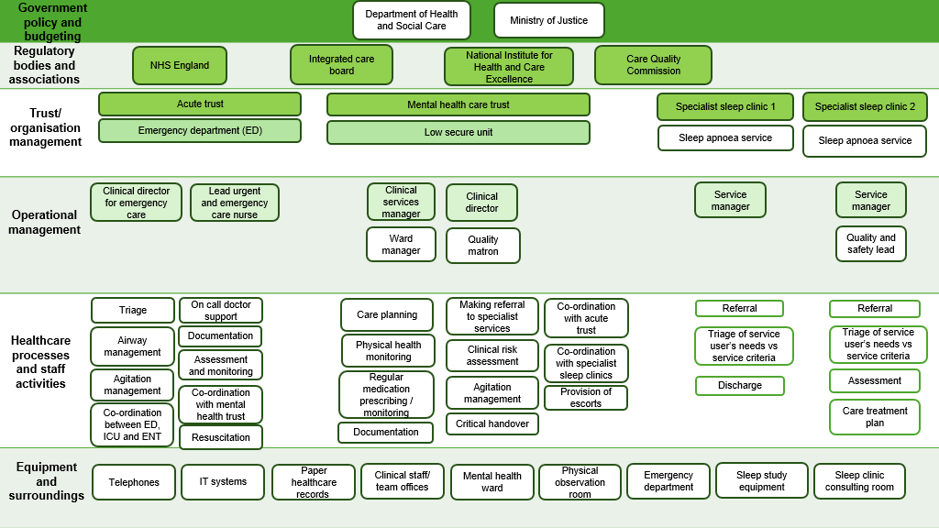
Appendix 2 abbreviations
| ED | Emergency department |
|---|---|
| ENT | Ear, nose and throat |
| ICU | Intensive care unit |
| UEC | Urgent and emergency care |
Appendix 3: Systems Engineering Initiative for Patient Safety (SEIPS) framework
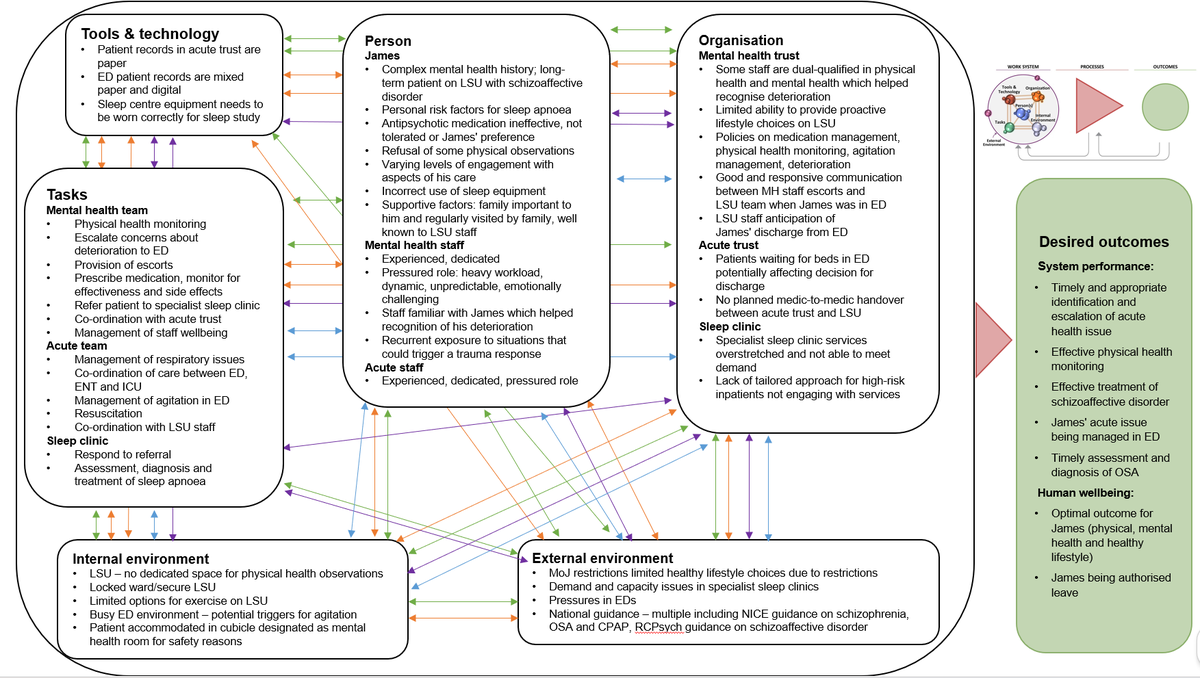
Appendix 3 abbreviations
| CPAP | Continuous positive airway pressure |
|---|---|
| ED | Emergency department |
| ENT | Ear, nose and throat |
| ICU | Intensive care unit |
| LSU | Low secure unit |
| MH | Mental health |
| MoJ | Ministry of Justice |
| OSA | Obstructive sleep apnoea |
| NICE | National Institute for Health and Care Excellence |
| RCPsych | Royal College of Psychiatry |
| UEC | Urgent and emergency care |
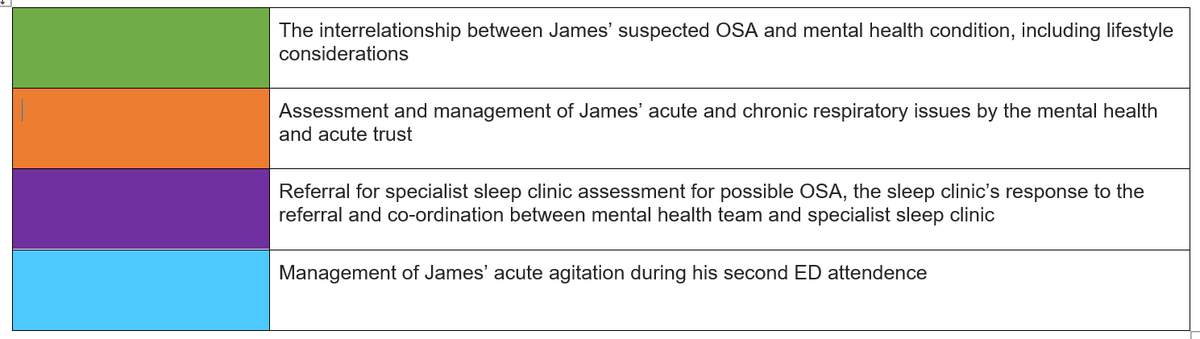
Appendix 3 key interactions
References
BenchChem (2026) Pharmacokinetics of Levo Mepromazine-d3: An in-depth technical guide. Available at https://pdf.benchchem.com/15554/Pharmacokinetics_of_Levo_Mepromazine_d3_An_In_depth_Technical_Guide.pdf (Accessed 2 June 2026).
Health Services Safety Investigations Body (2022) Maternity pre-arrival instructions by 999 call handlers (Originally published by the Healthcare Safety Investigation Branch). Available at https://www.hssib.org.uk/patient-safety-investigations/maternity-pre-arrival-instructions-by-999-call-handlers/ (Accessed 2 June 2026).
Mind (2023) Schizoaffective disorder. Available at https://www.mind.org.uk/information-support/types-of-mental-health-problems/schizoaffective-disorder/treatment/ (Accessed 2 June 2026).
Mind (2024) The courts and mental health. Available at https://www.mind.org.uk/information-support/legal-rights/courts-and-mental-health/section-3741/ (Accessed 2 June 2026).
Ministry of Justice (2015) Mental health casework section: Section 17 – leave of absence. Available at https://view.officeapps.live.com/op/view.aspx?src=https%3A%2F%2Fassets.publishing.service.gov.uk%2Fmedia%2F5d441c4940f0b674a285a081%2Fmhcs-guidance-s17-leave.pdf.docx&wdOrigin=BROWSELINK (Accessed 2 June 2026).
NHS (2023) Treatment – psychosis. Available at https://www.nhs.uk/mental-health/conditions/psychosis/treatment/ (Accessed 2 June 2026).
NHS England (2021) Service specification: low secure mental health services (adult). Available at https://www.england.nhs.uk/publication/service-specification-low-secure-mental-health-services-adult/ (Accessed 2 June 2026).
NHS England (2022) Swarm huddle. Available at https://www.england.nhs.uk/wp-content/uploads/2022/08/B1465-Swarm-huddle-v1-FINAL.pdf (Accessed 2 June 2022).
National Institute for Health and Care Excellence (2014) Psychosis and schizophrenia in adults: prevention and management. Clinical guideline CG178. Available at https://www.nice.org.uk/guidance/cg178 (Accessed 9 February 2026).
National Institute for Health and Care Excellence (2017) Type 2 diabetes: prevention in people at high risk. Public health guideline PH38. Available at https://www.nice.org.uk/guidance/ph38 (Accessed 2 June 2026).
National Institute for Health and Care Excellence (2021a) Continuous positive airway pressure for the treatment of obstructive sleep apnoea/hypopnoea syndrome. Technology appraisal guidance TA139. Available at https://www.nice.org.uk/guidance/ta139 (Accessed 2 June 2026).
National Institute for Health and Care Excellence (2021b) Understanding NICE guidance: Continuous positive airway pressure for the treatment of obstructive sleep apnoea/hypopnoea syndrome. Available at https://www.nice.org.uk/guidance/ta139/resources/continuous-positive-airway-pressure-for-obstructive-sleep-apnoeahypopnoea-syndrome-pdf-374791501 (Accessed 2 June 2026).
National Institute for Health and Care Excellence (2026) Overweight and obesity management. NICE guideline NG246. Available at https://www.nice.org.uk/guidance/ng246 (Accessed 2 June 2026).
Rethink Mental Illness (n.d.) Section 37/41 of the Mental Health Act: hospital orders with restrictions. Available at https://www.rethink.org/advice-and-information/rights-laws-and-criminal-justice/mental-health-laws/section-37-41-of-the-mental-health-act-hospital-orders-with-a-restriction/ (Accessed 2 June 2026).
Royal College of General Practitioners (2019) NEWS2 score for assessing the patient at risk of deterioration. Available at https://www.rcgp.org.uk/representing-you/policy-areas/news2 (Accessed 2 June 2026).
Royal College of Psychiatrists (2025) Available at https://www.rcpsych.ac.uk/mental-health/mental-illnesses-and-mental-health-problems/schizoaffective-disorder (Accessed 2 June 2026).
Sleep Apnoea Trust (2024) Sleep Apnoea Trust information sheet. What is obstructive sleep apnoea. Available at https://sleep-apnoea-trust.org/wp-content/uploads/2024/11/Nov-2024-A4-WhatisSA_Web_Sheet.pdf (Accessed 2 June 2026).
Sweeney, A., Filson, B., et al. (2018) A paradigm shift: relationships in trauma-informed mental health services, BJPsych Advances, 24(5), pp. 319–333. doi: 1192/bja.2018.29
Mental health trust guidance
Care planning policy (2025)
Clinical risk assessment and management policy (2025)
Critical handover policy (2024)
Mental health inpatient services users who require care in the [geographical area] policy (2022)
Physical examination and assessment on admission policy (2025)
Short-term management of acutely distressed patients and rapid tranquilisation policy (2023).
Acute trust guidance
Airway management guideline (2025)
Short-term management of acutely distressed patients and rapid tranquilisation policy (2022)
Prescribing and administration of medicines procedure (2019)
Procedural sedation proforma (2025).
Ministry of Justice guidance
Application for trial leave or full transfer to another hospital guidance (2020).