The report is the fourth in our series examining healthcare provision in prisons and focuses on how health needs are assessed and how safe living conditions are provided for disabled people in prions. This investigation draws on engagement with 120 people in prison who shared their healthcare experiences, national organisations across healthcare and justice systems and prison healthcare providers.
Wheelchair users in prison
The number of wheelchair users in prison is increasing and many prisons are not able to easily accommodate this. Disability access within prisons is complicated by the original design and purpose of prison buildings. Some of the prison estate dates back as far as 1800, making adaptations and provision challenging. None of the prisons HSSIB visited had enough wheelchair accessible cells, and in some regions they had none.
The report highlights that wheelchair users had experienced harm and dignity concerns, including injuries and deteriorating mental health caused by being housed in unsuitable accommodation.
Examples in the report include:
- The investigation team observed one wheelchair user trying to pass through a door that was not wide enough. A second wheelchair had been dismantled and rebuilt inside the cell meaning they had to self-transfer with a gap of 2 to 3 feet between chairs. It was reported that they would “regularly fall between chairs” sustaining minor injuries.
- One prison told HSSIB they had six accessible cells but these were all on a wing for those convicted of sexual offences. This had caused distress for people who were wrongly associated with this cohort of prisoners by others.
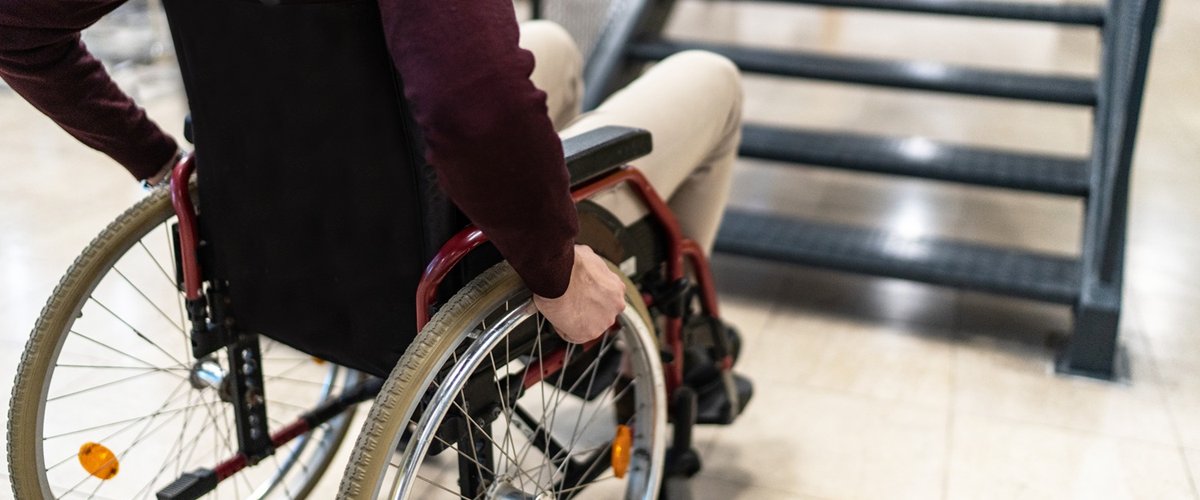
- A prison where accessible cells for those with mobility issues were on the upper level of the wing meaning the occupants had to climb stairs, which they found incredibly difficult and often needed assistance.
The report highlighted that whilst the future plans of prison accommodation is forecast to meet the needs of the rising number of wheelchair users in prison, this increased capacity is not an immediate or short term solution for those currently in prison. HM Prison and Probation Service (HMPPS) told the investigation the currently the data it was given by healthcare departments on whether an individual had a physical disability was not “consistent or validated.”
Health Needs Assessments
HSSIB also identified that the current system for assessing healthcare needs – through Health Needs Assessments (HNAs) – is often out of date by the time it informs commissioning decisions.
Delays in information sharing about population changes further contribute to mismatched staffing, inadequate services and gaps in both health and social care provision. The findings highlight significant variation across the prison estate with some regions trialling new approaches such as digital tools and data dashboards in response to the limits of the HNA process. However, limited stakeholder engagement with relevant bodies and local authorities and the separation of health and social care commissioning continue to hinder holistic planning.
Safety recommendations
The report sets out three recommendations for system improvement which focus on:
- Formalising arrangements for alerting healthcare commissioners and providers to population changes that may affect healthcare needs.
- Re-designing how health and social care needs in prisons are jointly assessed.
- Reviewing and strengthening how physical accommodation needs – particularly for wheelchair users and people with mobility issues – are gathered, recorded and acted upon.

Investigator’s view
Dave Fassam, Senior Safety Investigator, says: “Our investigation shows that wheelchair users in prisons are often placed in environments that fail to meet some of their basic needs. We heard from individuals who had experienced avoidable injuries and emotional distress because the system could not accommodate them safely.
“We recognise that the prison system is under strain, having to navigate issues associated with older buildings that are hard to adapt and needs assessment processes that are outdated. This creates challenges in providing disability access and maintaining an accurate picture of the prison population which then helps inform effective decisions at the commissioning level.
“The findings we have made shine a light on the key issues, and the recommendations are aimed at ensuring meaningful and co-ordinated action is taken to improve disability access and needs assessments. Those in prison who use wheelchairs or have mobility issues should not have daily concerns over potential harm and should be reassured that their wellbeing and dignity is prioritised.”
Related articles

New report charts safety risks associated with managing patients with known ‘difficult airways’ in emergency situations
Read article
Unnecessary 999 calls from prisons lead to a ‘significant’ loss in ambulance crew time
Read article
Dignity fears contribute to prisoners not attending hospital or clinic appointments
Read article