In our latest report, healthcare leaders and NHS trusts are urged to better understand and manage the risks temporary care environments may present to patient safety.
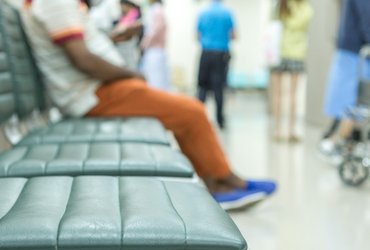
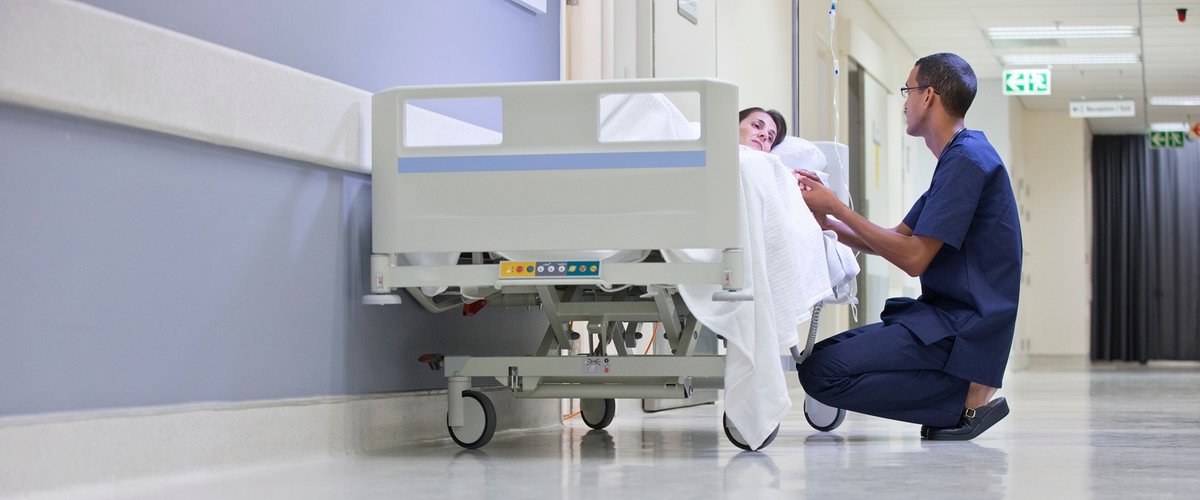
Temporary care environments are spaces not originally designed, staffed or equipped for patient care, such as waiting rooms, corridors, chairs on wards, ambulances outside emergency departments and other hospital areas not designed for inpatient care. They are used when demand exceeds capacity, in an attempt to balance risks across the patient care pathway. However, these decisions often compromise the standard and quality of care delivered impacting on patient's experiences, including the provision of dignity and respect.
In past years, this demand has usually peaked during the colder months when the NHS experiences ‘winter pressures’. However, the HSSIB investigation visited 13 hospitals, and had insights from 4 other hospitals, over the period of August to December 2025. They were all experiencing issues with patient flow – the movement of patients into, through and out of hospital to the right place of care – showing there is no longer significant seasonal variation. HSSIB has reported on patient flow issues previously, however, there has been limited action in response to previous recommendations to address patient flow and reduce the use of temporary care environments.
The patient safety issues faced in temporary care environments include:
- Difficulties in monitoring patients and recognising deterioration.
- Insufficient staff for satisfactory staff to patient ratios.
- Increased infection risk.
- A lack of piped oxygen and suction.
- Compromised response to medical and fire emergencies.
Key findings
Our report calls for:
- The adoption of a nationally agreed definition of temporary care environments.
- Improved understanding of how and when temporary care environments are used in NHS hospitals.
In the absence of an agreed definition and improved data collection of the use of temporary care environments, there is a limited understanding of the safety risks and impact on patients.
What’s the alternative?
The investigation spoke to patients who were being treated in temporary care environments. Many of them said they were grateful they were now on a trolley or bed and described it as “better being here [on a trolley in a corridor] than sitting in a chair in the waiting room”. Patients said that despite privacy and dignity concerns they “felt safe” and “well looked after” in temporary care environments.
This was echoed by many doctors and nurses, who told us that using temporary care environments was the “best worse” option, compared to the alternatives of leaving people at home, in ambulances or unseen in waiting rooms.
Until the challenges of patient flow into and out of hospitals are overcome, the use of these environments will unfortunately continue in order to prevent significant safety risks arising elsewhere, for example leaving patients unattended in the community.
Actions hospitals are taking
Our investigation observed the actions hospitals are already taking to mitigate the patient safety risks associated with temporary care environments. This includes how and where in the hospital temporary care environments are used, patient observations, assessing individual patient risks, the physical environment, staffing and delivery of care.
In hospitals where adaptations have been made, the investigation found that caring for people feels calmer and looks more organised than temporary care environments in hospitals where there is a reluctance to adapt spaces for fear of normalising this type of care.
Examples of adaptations:
- Some hospitals have policies and risk assessments for selecting patients suitable for care in a temporary environment, with exclusion criteria outlining which patients should not be placed in them (such as those who require heart monitoring, people at high risk of a fall, children and patients with mental health needs).
- Some hospitals had made physical adaptations to their temporary care environments by installing plug sockets, emergency call bells, patient call bells and communication systems to support patient safety.
- Some hospitals tried to ensure they had enhanced staff to patient ratios by bringing in bank and agency nursing staff, and having support from speciality doctors, allied health professionals, such as physiotherapy and occupational therapy, and mental health staff.

Saskia Fursland, Senior Safety Investigator at HSSIB, said: “Until there is a solution to the complex underlying issues related to patient flow, we must recognise that hospitals may have no choice but to use temporary care environments.
“By working together with a shared understanding, healthcare leaders and NHS trusts can better understand the use of temporary care environments and their impact on patient safety in a consistent way and systematically address the risks to patient safety.
“In contrast to the chaotic picture that’s often presented of ‘corridor care’, in the course of our investigation we saw first-hand how individual NHS trusts are adapting to ensure that the patient safety risks associated with using temporary care environments are being mitigated.”
Related articles